
 361.43


Thirty-five community service improvement projects implemented in Armenia over two years
6 minute read

A closing event titled “Local Leadership, Partnerships and Impact” was held under the United Nations Development Programme (UNDP) initiative “Resilience from the Start,” the UN Office in Armenia said in a statement.
Between 2024 and 2026, UNDP, with financial support from the Government of the Republic of Serbia and in cooperation with Armenia’s Ministry of Territorial Administration and Infrastructure, implemented the “Resilience from the Start” programme.
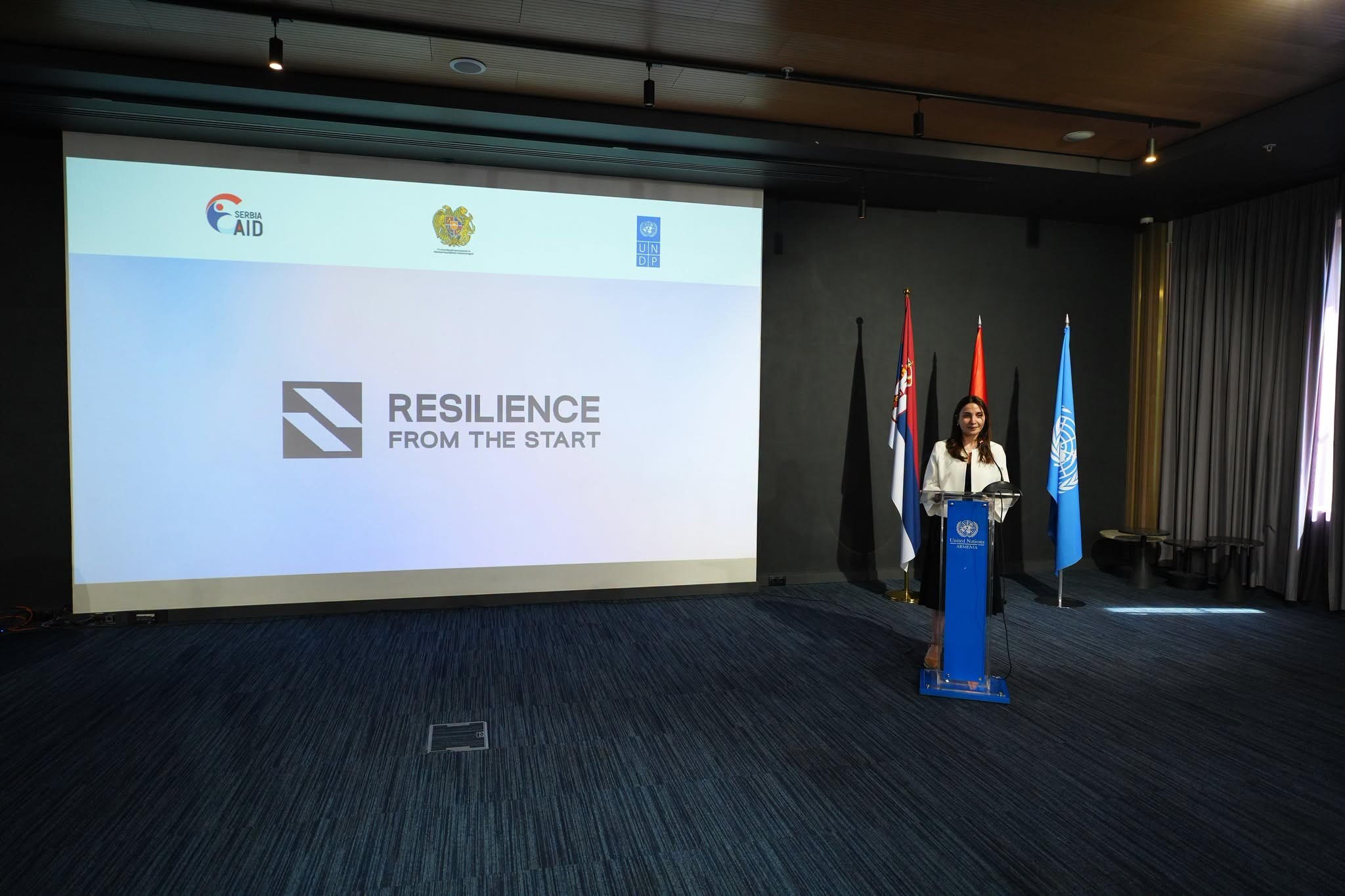
The initiative aimed to strengthen the resilience of refugees and host communities through innovative and gender-responsive models for designing and delivering services, community-driven solutions, and investments in sustainable infrastructure.
A total of 35 micro-projects were implemented under the programme to improve community services, transform public spaces, develop irrigation infrastructure and introduce renewable energy solutions.
According to the statement, opening remarks were delivered by Ambassador of the Republic of Serbia to Armenia Tatjana Panajotović Cvetković, UNDP Resident Representative in Armenia Natia Natsvlishvili, Deputy Minister of Territorial Administration and Infrastructure Arnak Avetisyan, Deputy Minister of Education, Science, Culture and Sport Arthur Martirosyan, and Head of the UN and Sustainable Development Division at Armenia’s Foreign Ministry Hrachuhi Katvalyan.
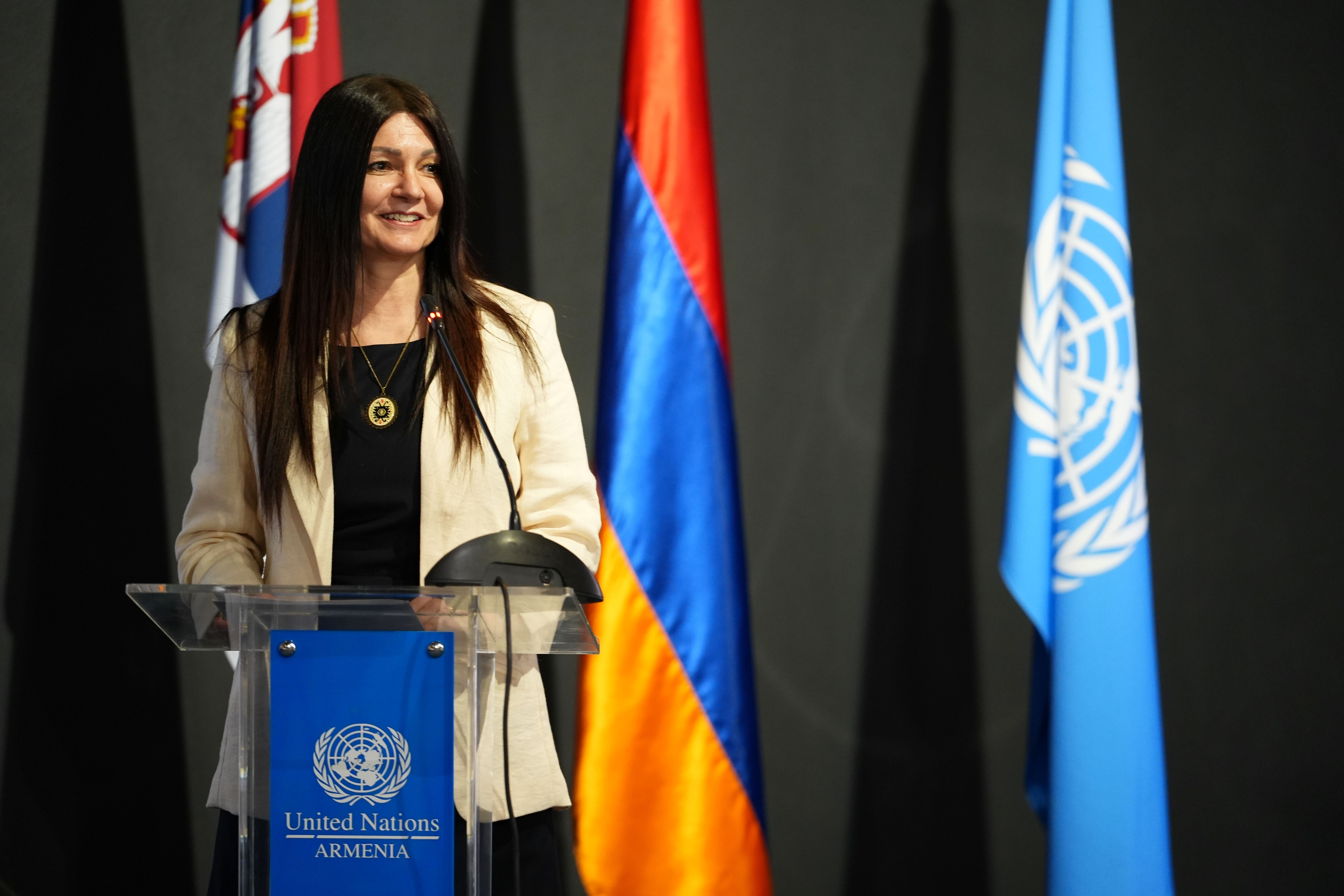
The event brought together representatives of government institutions, local self-government bodies, development partners, diplomatic missions, civil society organisations, as well as community officials and sector experts.
The programme’s key results were presented during the event, including achievements in promoting the participation of women and refugees, establishing multifunctional public spaces, improving energy efficiency and expanding access to water. Communities also shared their experience in co-design and service evaluation processes, while videos showcasing the programme’s impact and achievements were screened.
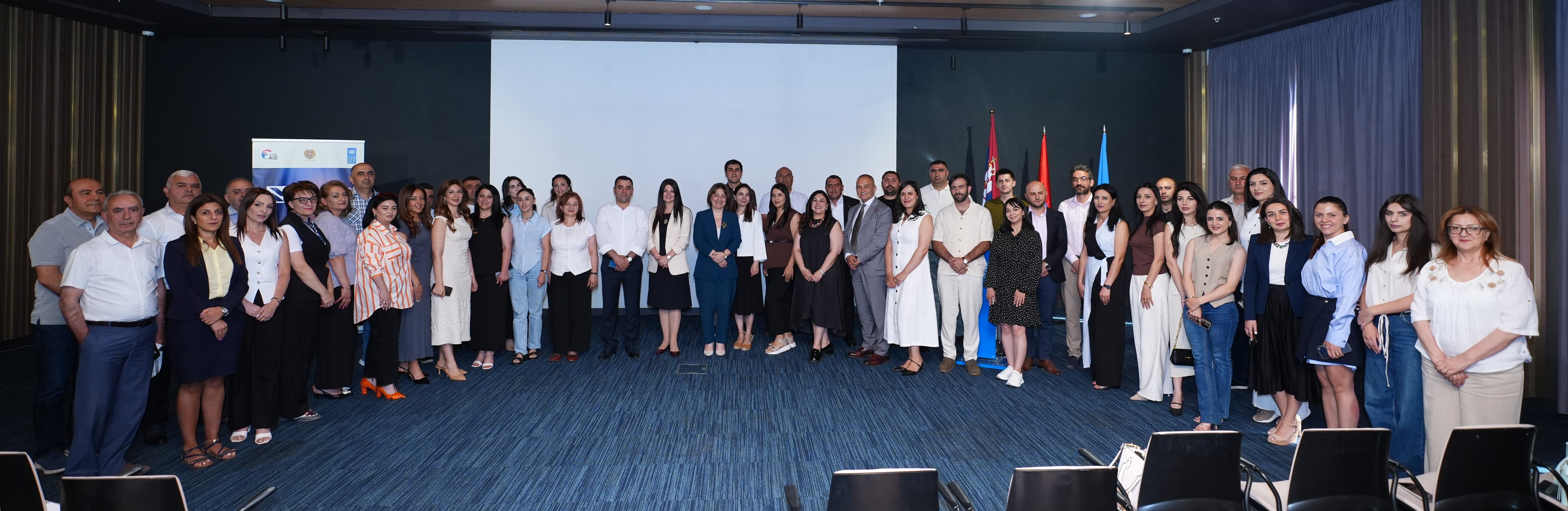
Thanking the Government of Serbia for its financial support, UNDP Resident Representative Natia Natsvlishvili stressed that resilient communities cannot be built through one-sided initiatives.
“They require comprehensive solutions that improve services, strengthen institutions and create opportunities for people to participate in shaping their own future,” she said, emphasizing the importance of investments that deliver sustainable, long-term results by supporting stronger institutions, more inclusive governance and more resilient communities.
The initiative included the creation of multifunctional public spaces in the communities of Masis, Vagharshapat, Ijevan and Pambak, improved access to community cultural services in Areni, the introduction of a digital community service assessment tool, and the development of irrigation and solar energy infrastructure in several settlements in Tavush and Lori provinces.
The multifunctional public space in Ijevan is expected to benefit around 19,000 people, 53% of whom are women.
In Areni, the number of potential beneficiaries is about 10,000, with women accounting for more than 50%. In Masis, the space is expected to serve more than 10,000 people, over 60% of them women. In Pambak, it will benefit more than 7,000 residents, more than 57% of whom are women, while in Vagharshapat the number of beneficiaries is estimated at around 8,000. Reservoirs constructed in the settlements of Hovnanadzor and Achajur provide irrigation for a total of 520 hectares.
The Hovnanadzor facility includes a daily regulating reservoir with a usable capacity of 8,900 cubic metres and a 450-metre supply pipeline, while the Achajur facility consists of a daily regulating reservoir with a usable capacity of 5,600 cubic metres and a 1,000-metre supply pipeline. Solar energy systems were installed at various facilities, including systems with a total capacity of 124 kilowatts in 14 residential buildings and systems with a combined capacity of 99 kilowatts in 13 public facilities across several communities in Tavush Province and the Pambak community in Lori Province.
According to the statement, these measures have strengthened community resilience, enhanced social cohesion and created more inclusive and sustainable development opportunities for both refugees and host communities.
A key component of the programme was its participatory co-design process, through which representatives of local self-government bodies, women, young people, refugees and other community members jointly identified priorities and developed solutions tailored to local needs.