
 361.93


Armenian students mostly prefer educational institutions of China
4 minute read
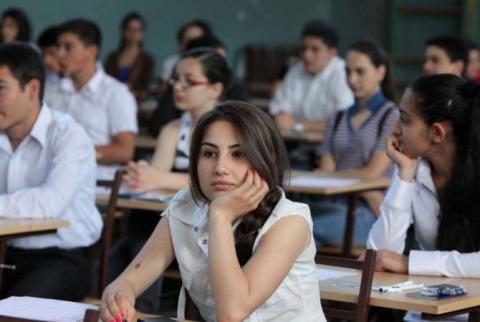
YEREVAN, APRIL 11, ARMENPRESS. Within the framework of intergovernmental agreements currently Armenia carries out educational programs with 7 countries – Russia, Jordan, Georgia, Bulgaria, Romania, Poland and China.
Artur Ghazaryan – Head of Foreign Affairs and Diaspora Department at the Ministry of Education and Science, told Armenpress the Armenian students are more interested in China’s educational institutions, then comes Russia. We have an annual average of 250-300 students in different countries.
“China is the one where students are mainly interested in since more than 3 dozens of Chinese universities are in the list of top 500 world rankings. Although more than a dozen Russian universities are included in the world ranking list, in any case our students are also interested in Russian universities. The Russian lifestyle and culture is closer to us, the country is also closer to us geographically, therefore, some part of students prefers Russia. Moreover, Russia provides more seats, for instance, it has provided 187 seats for the current educational year”, he said.
Which professions are the most demanded, Artur Ghazaryan couldn’t answer, stating that it differs depending on the country. For instance, in case of selecting natural science professions, the preference is given to Russian universities, in case of humanitarian professions, China, Poland are preferred.
“For instance, in case of Jordan, there are two professions, Arabic language and literature, Arabic studies. Coming to Georgia, cultural studies, language and literature are widespread. As for Poland, all professions are almost available. I want to state that the memorandum of understanding clearly defines that the educational programs are being implemented at three-degree level, BA, MA and PhD. The experience shows that undergraduate students more prefer to depart for other countries to continue their studies, although there had also been competition for MA in Russia, China and Poland”, Artur Ghazaryan said.
Within the frames of intergovernmental agreements, students study for free, free accommodation is provided, and each country provides stipend monthly in accordance with its legislation.
“Of course, students are proposed to return back to Armenia to work for several years. The experience shows that in Russia’s case they mainly stay there, whereas in case of other countries nearly 90% of them returns back”, the department head said.
Ghazaryan informed that the Ministry plans to expand the number of countries with which they will carry out educational programs through intergovernmental agreements. The issue of working with educational institutions of Iran, Ukraine, Slovakia, Italy is being discussed. Artur Ghazaryan expressed hope the number of that countries will increase next educational year.
He stated that students of Russia, Georgia, China also prefer Armenian universities. They study at Conservatory, History Faculty of Yerevan State University, Engineering universities and etc.
Except from intergovernmental agreements, more students from India, Iraq, other Arabic countries arrive in Armenia to study. In this case students come at their own initiative.