
 361.73


Ani: Preserving a centuries-old legacy and a global cultural treasure

7 minute read

The preservation of Ani, once a powerful center of medieval Armenia, has become not only a matter of architectural conservation but also a key issue in safeguarding global cultural heritage.
The Cathedral of Ani, in particular, is an exceptional monument of medieval architecture and one of the most important examples of the Armenian architectural tradition. It holds not only historical significance but also outstanding universal cultural value.
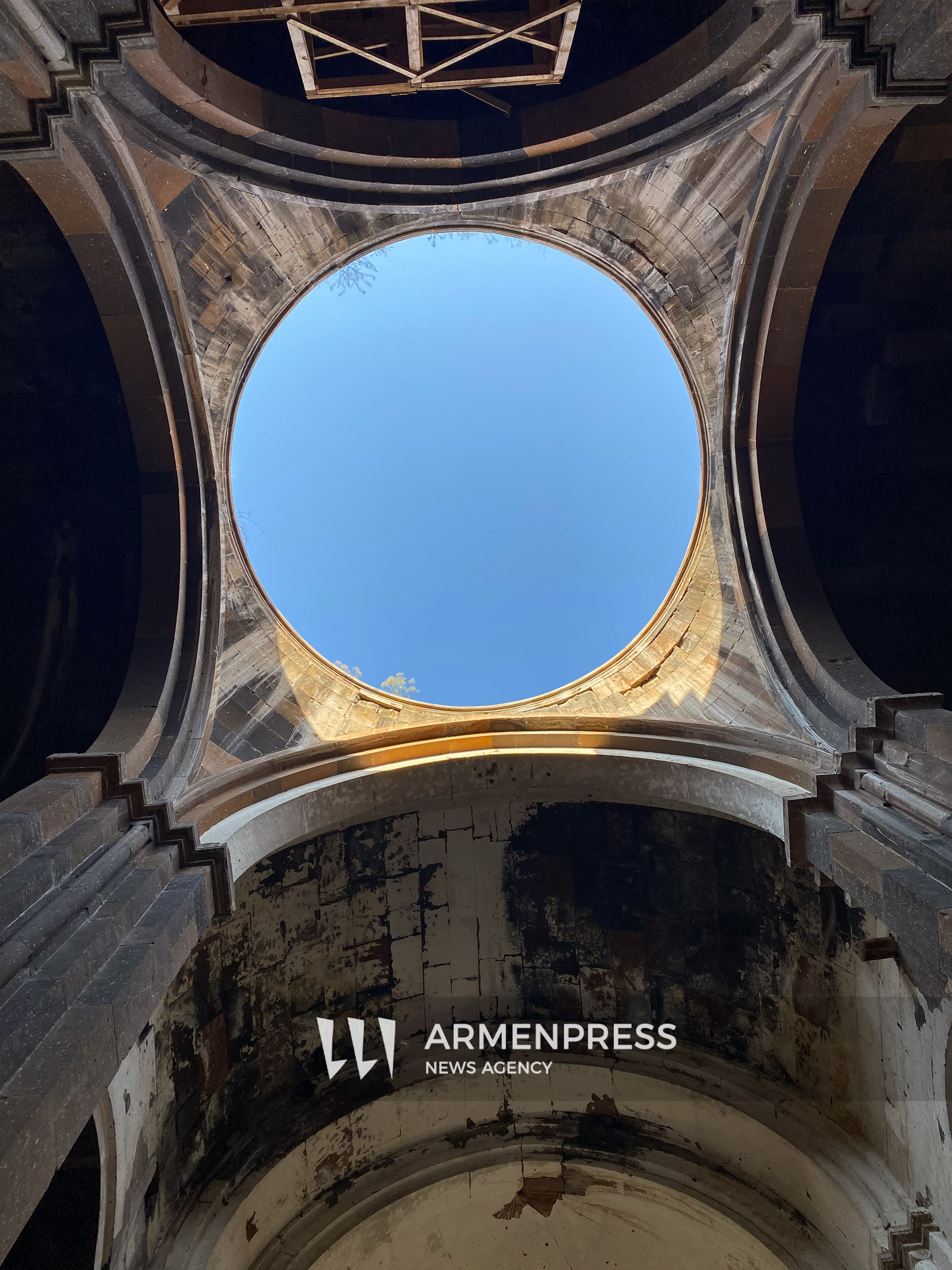
Restoration efforts are currently underway at this remarkable cultural monument, now located in modern-day Türkiye. The main goal of the project is to reinforce the structure with metal supports to ensure its preservation for future generations. Restoration work is also being carried out on other surviving monuments of the once-powerful city of Ani.
In addition, archaeological research continues at the site of Ani, which bears traces of various civilizations throughout the centuries. The excavations are being conducted by a specialized team from the University of the Caucasus.
Ani has been included on the UNESCO World Heritage List since 2016. Prior to that, it was also placed on the World Monuments Fund’s list of endangered heritage sites. These two international designations provide additional recognition and support for preservation efforts.
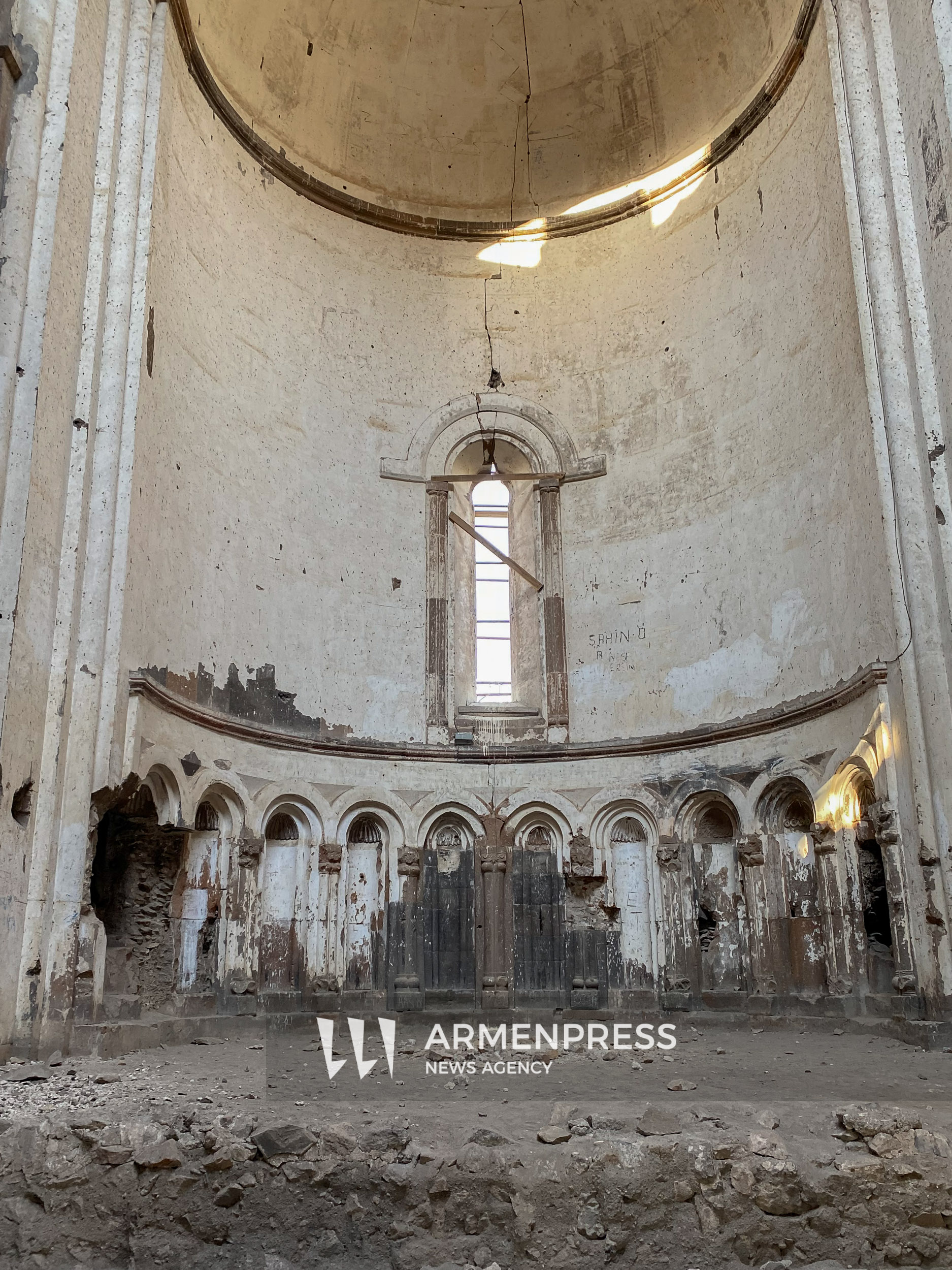
Armenpress spoke with art historian and cultural researcher Ibrahim Suleymanoglu about Ani’s history, the architectural significance of the Cathedral of Ani, and the ongoing restoration work.
The interview with the expert took place during a visit to Ani by a group of Armenian journalists participating in an exchange program in Türkiye.
Speaking about the history of Ani, once known as the “city of a thousand and one churches,” Suleymanoglu noted that its story is not limited to a single historical period. The city came under the rule of different states throughout various eras. The Cathedral of Ani was built during the reign of the Armenian Bagratuni dynasty; it later came under Byzantine and then Seljuk rule and was later used as a mosque for a period of time.
According to him, all of these historical layers are part of the monument’s history and should be viewed within a broader historical context.
“It cannot be ignored that this area is connected to the period of the Bagratuni dynasty. However, Ani’s history is much broader. It has passed through different eras, and each period has left its mark on this site,” he said.
Speaking about the ongoing restoration work, Ibrahim Suleymanoglu noted that the projects are based on the studies, drawings, and photographs of renowned Armenian architect Toros Toramanian and archaeologist Nikolay Marr.
Toros Toramanian was one of the most important researchers of medieval Armenian architecture. He began studying Ani’s monuments in 1903, carrying out detailed measurements, photographic documentation, and architectural reconstructions of the Cathedral of Ani and other structures. His work played a significant role in the scholarly study and preservation of Ani’s architectural heritage.
Nikolay Marr was a Russian orientalist, linguist, and archaeologist who led the first major scientific archaeological expeditions at Ani. Under his leadership, extensive excavations were carried out between 1892 and 1917, during which the city’s structures, churches, urban environment, and numerous artifacts were studied. Marr’s expedition laid the foundation for systematic archaeological research at Ani, involving various specialists, including Toros Toramanian.
“The goal is not complete reconstruction, but rather the careful and scientifically justified restoration of parts that have been lost over time,” Suleymanoglu said.
According to him, the restoration of the dome of the Cathedral of Ani is particularly challenging. In the medieval period, it was built without modern construction materials such as concrete, cement, or metal frameworks. Applying such materials today could place additional stress on the structure and potentially compromise its stability. Therefore, specialists prefer structural reinforcement rather than complete reconstruction.
He also noted that relevant scientific institutions in Armenia are carrying out three-dimensional modeling of Ani’s monuments, describing it as an important step. However, creating a digital model and conducting actual restoration are entirely different processes, with restoration requiring far more complex engineering solutions.
Suleymanoglu also dismissed reports occasionally circulated in the media claiming that the Cathedral of Ani has been destroyed or altered. According to him, Ani should be treated as an exceptional monument of global cultural heritage rather than as a subject of political or ideological interpretations.
Suleymanoglu also spoke about ongoing archaeological studies at the site of Ani.
He emphasized that the research does not concern an “underground city,” as it is sometimes described, but rather the natural terrain, ravines, and passages formed between them, which are being studied as part of archaeological work.