
 363.34


YSU lecturer presented a report on media literacy at ECER 2022
4 minute read
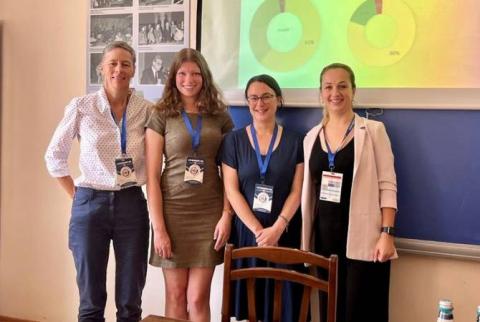
YEREVAN, AUGUST 24, ARMENPRESS.The annual conference of the European Educational Research Association (EERA) (ECER 2022) on “Education in a Changing World: the Impact of Global Realities on the Prospects and Experiences of Educational Research” theme for the first time is being held at Yerevan State University from August 22 to 25, with more than 1,500 delegates from 54 countries participating.
As writes "Armenpress", lecturer of the Faculty of Sociology, YSU, author of the professional book “Communication Challenges in the Information Society" Lilit Shakaryan became a Chairperson on “Science and Environment Education” Session and presenter at the conference. She has a presentation on the topic "Challenges of Mass Communication in the Modern Era: Media Literacy” stating that the ability to decipher media messages is crucial for modern humans. Therefore, media literacy - the ability to select, analyze and correctly evaluate information of all kinds – becomes relevant in a media-saturated world.
«Media literacy is based on a model that encourages people to ask questions about what they watch, see or read. It allows consumers to analyze media messages in order to see propaganda, censorship or one-sidedness in news and public programs, as well as understand the structural elements such as the media owners, their funding models, which actually affects the information”, Shakaryan emphasizes.
She states that focusing on the use and dissemination of the information received from the different media passive and active users can be identified. In general, Armenians are more likely to passively consume information than actively. This refers to television, radio and the press, as well as the virtual domain: social networks, electronic press. In the virtual domain, despite the fact that there is relatively high activity in the sense that people tend to share information, passive consumers still dominate, since the interpretation of information and "live" are considered indicators of activity, the weight of which is quite low. The higher the level of activity, the less likely is its application. Active use of information is more typical for women than men, more for middle-aged people, and for people living in urban areas, notes Lilit Shakaryan, adding that in modern reality media not only constructs our sense of reality; media represent reality by framing events and situations. Within the scope of this context Media literacy skills become actual, which help media users to take a critical position, recognize the methods of persuasion used in media messages, distinguish propaganda from objective information, and avoid negative impact of the media.
Karine Terteryan