
 361.81


Conflicting countries seek new Middle East status quo based on a new balance of power, says expert
6 minute read

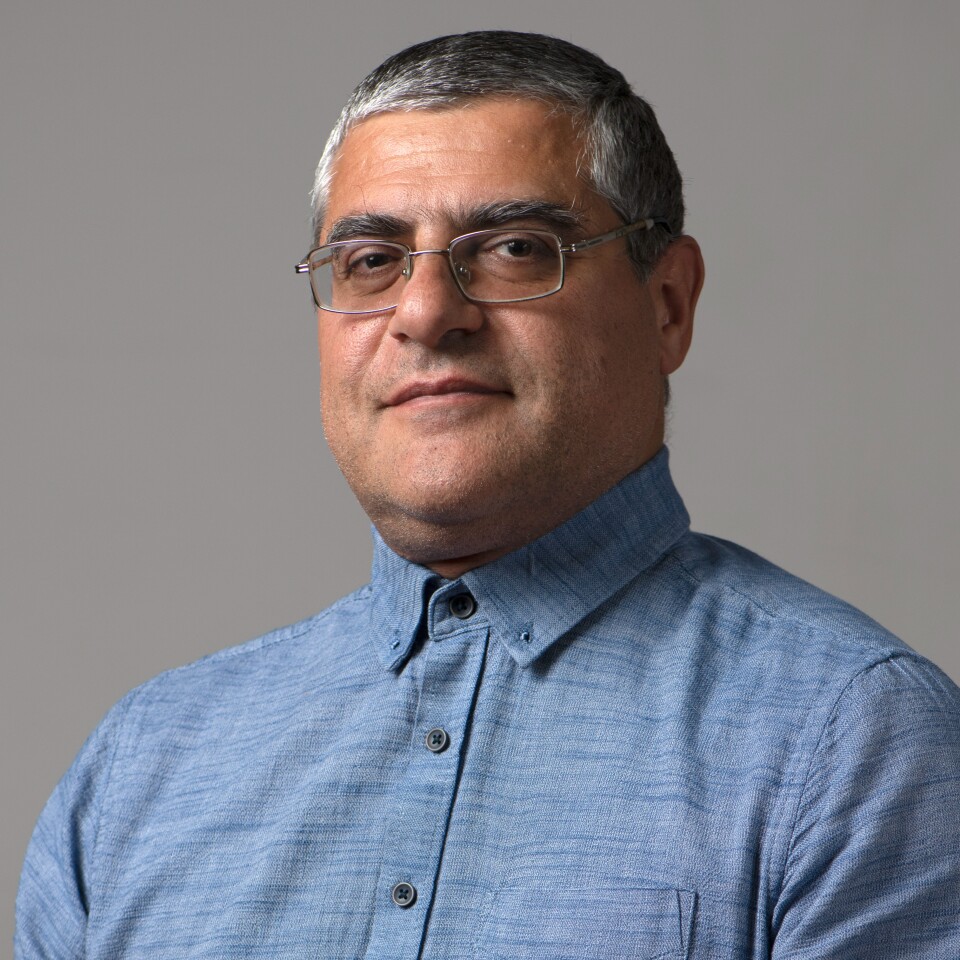
Several Middle Eastern countries directly or indirectly involved in the conflict are seeking a new status quo in the region based on a new balance of power, according to Sergei Melkonyan, a senior researcher at APRI Armenia analytical center and an international affairs expert.
In an interview with Armenpress, Melkonyan addressed the situation in the Middle East and, in this context, developments concerning Israel, Türkiye, Syria and Lebanon.
“Israel’s policy toward its neighbors in the Middle East, whether it is Syria, Gaza, Lebanon or Türkiye, has not changed, as the country, citing its national security needs, continues to expand its security buffers and seize new territories for that purpose. For example, the same dilemma has emerged in Gaza and Lebanon in this regard: should the Israeli army first withdraw from the seized territories, or should Hamas and Hezbollah first be completely disarmed? The approaches and positions of the conflicting parties are extremely contradictory and mutually exclusive,” Melkonyan said.
According to him, the situation in Syria is somewhat different in nature because since 2024, Israel has expanded its zones of influence in the country, bringing Israel and Türkiye to the brink of confrontation. The Israeli side has repeatedly stated its red lines and is therefore doing everything to prevent Türkiye from crossing them.
“When Tel Aviv learned that Turkish officials in Syria had visited a military base to familiarize themselves with the reconstruction work, with the intention of later using the military base at their discretion, Israel immediately bombed that military infrastructure. Israel previously applied the same approach toward Iran, and today it is applying it toward Türkiye. Nevertheless, the two countries do not appear to be interested in moving from sharp mutual statements and threats to military action. On the one hand, Türkiye is not increasing its military presence in Syria; on the other hand, Israel is not taking steps that would force it into a direct confrontation with Türkiye. Both sides are avoiding direct conflict,” Melkonyan explained.
According to Melkonyan, the effectiveness of international mediation missions is important in resolving the conflict. The question of whether the United States will ultimately be able to influence its ally Israel in a way that prevents the escalation in the Middle East from intensifying is of interest to everyone.
“At this stage, the United States is as active as it can be, although it is interested in preventing clashes between its two allies, Türkiye and Israel. Washington strongly condemned the Israeli army strikes targeting southern Lebanon. The U.S. side is also aware that the status quo in southern Lebanon is changing. Whereas previously peacekeeping forces operated on the basis of UN Security Council Resolution 1701, an entirely different model is now expected there. Accordingly, various issues are being discussed, such as which countries’ peacekeeping forces should be involved in the process, whether the Lebanese army should take control of the southern areas of the country, and whether Hezbollah should first be completely disarmed or whether Israeli forces should first withdraw from southern Lebanon. In reality, a fairly complex mission has been assigned to international mediators,” Melkonyan said.
He drew attention to the fact that elections will soon be held in the United States and Israel, in November and October, respectively. Therefore, both sides understand that they cannot afford to take steps that would be perceived negatively, as this would increase the likelihood of losing the upcoming elections.
“What the emerging status quo in the Middle East will look like remains uncertain, although developments are moving in that direction. The struggle over the status quo in the Persian Gulf, involving Iran, neighboring Arab countries and the United States, is also not over. The fact is that a number of countries in the region are directly or indirectly involved in the conflict and are therefore seeking a new status quo in the Middle East based on a new balance of power, which could be facilitated by the formation of new alliances. It is from this perspective that the recently formed alliance between Türkiye, Pakistan and Saudi Arabia in Mecca should be viewed,” Melkonyan elaborated.