
 362.55


Türkiye seeks to rule out Kurdish autonomy in Syria, displays caution toward Iran, says scholar
6 minute read

A leading Armenian scholar believes that Türkiye’s strategy toward Syria is based on the conviction that the Arab country should be preserved as a unified state, and that the Kurdish forces active in northeastern Syria should be integrated into the country’s existing governmental and state structures.
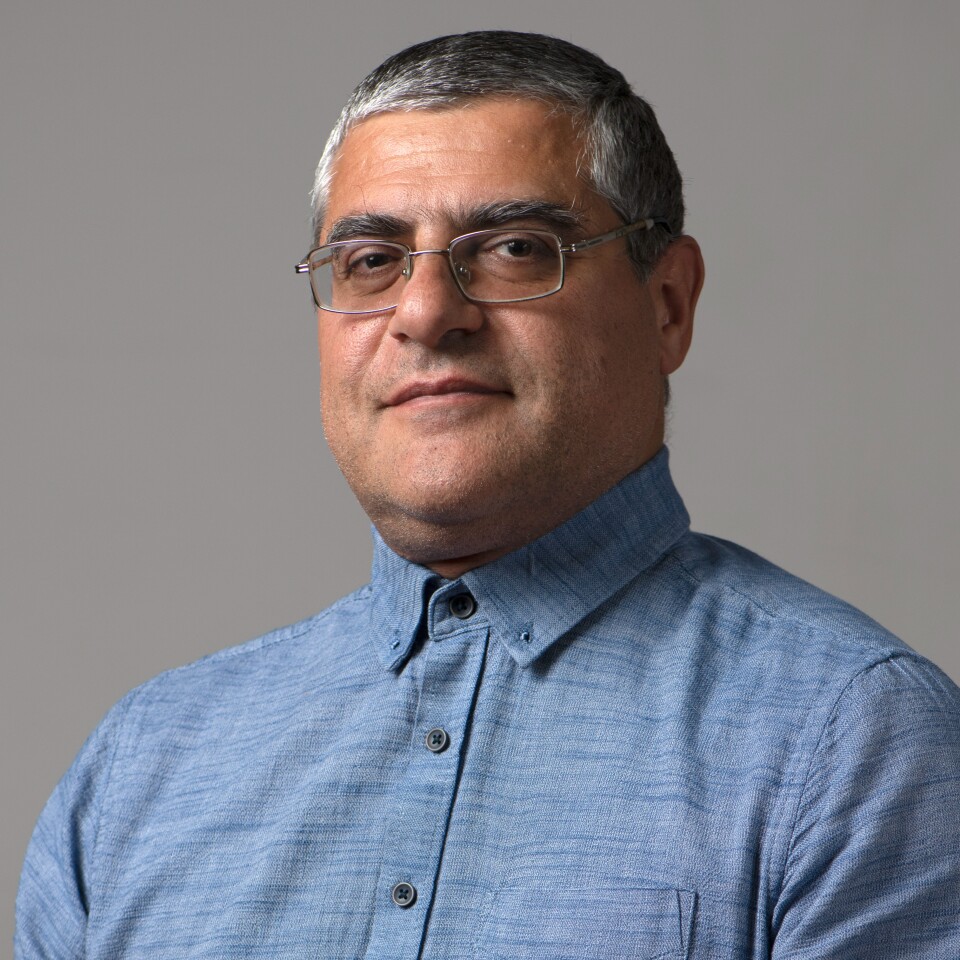
Ruben Safrastyan, a senior scholar and Turkologist, spoke about recent developments in the Middle East in an interview with Armenpress. He noted that Türkiye also exercises caution in its approach toward Iran.
“Türkiye is doing everything it can to ensure that there is no Kurdish autonomy in Syria and that Kurdish armed groups are integrated into the Syrian army. Ankara’s position is driven by the fact that the Kurdish factor is still considered a threat to Türkiye, and therefore it seeks to neutralize this threat as much as possible within the limits of its capabilities. In the current situation, Türkiye’s policy stems precisely from this objective,” Safrastyan said.
Safrastyan believes that Türkiye has recently managed to enhance its role in the Middle East by employing various tactics. According to him, Türkiye’s regional policy is guided by the view that Ankara should preserve and strengthen its favorable positions amid various developments in the Middle East.
Addressing the question of how Türkiye interacts with the various proxy forces operating in the region, the scholar emphasized that Ankara’s approaches in this regard are not unambiguous.
“Hezbollah, based in Lebanon, operates mainly under Iran’s influence; therefore, its contacts with Türkiye are not intensive in nature or, perhaps, do not exist at all. Hamas, in turn, has recently suffered major blows, is significantly weakened, and cannot represent significant interest for Türkiye. In this case, Ankara will not show any particular activity in its relations with Hamas, as it did in the past, when the group had not yet been struck by Israel,” the Turkologist noted.
Taking into account the fact that, as a result of developments unfolding in the Middle East, the United States and Israel are seeking to tighten the noose around Iran, Safrastyan also spoke about how Türkiye positions itself with regard to the anti-Iranian coalition.
“On the one hand, Türkiye is trying to position itself so as not to find itself among the adversaries of the United States and Israel; yet, on the other hand, it does not support the idea of direct military intervention in Iran’s internal developments. In its relations with Iran, Türkiye is quite cautious and has concerns regarding internal developments within the country. It does not want Iran to be fragmented or to lose its territorial integrity as a result of strikes, as it considers such a prospect extremely dangerous for the entire region and something that must be avoided at all costs.
Türkiye consistently demonstrates that it highly values its neighborhood with Iran; therefore, it is no coincidence that the Turkish press reacts very cautiously to the latest internal developments in Iran. Türkiye’s official statements also stem from this approach,” the Turkologist said.
According to Safrastyan, Türkiye is interested in resolving issues related to Iran through peaceful means so that the conflicting sides can ultimately reach an agreement. He noted that Türkiye’s stance regarding the possibility of an external attack on Iran and potential internal escalations is based more on diplomatic instruments and the search for compromise solutions, rather than on taking drastic steps.
Touching upon the question of whether developments in the Middle East provide Türkiye with room to act freely and without constraints, or instead limit the scope of its actions and diplomatic efforts, Safrastyan emphasized that, in this context, Ankara is trying to maneuver as much as possible.
“Türkiye’s position toward both Syria and Iran is shaped by the use of diplomatic instruments. The option of drastic steps—especially military action—is ruled out. This indicates that, against the backdrop of the latest developments in the Middle East, Turkish diplomacy is quite flexible,” Safrastyan concluded.