
 363.41


From Armenia to Georgia and America: Journalist Arus Hakobyan’s Path to Success
10 minute read

Arus Hakobyan once considered careers in botany, veterinary medicine, and winemaking. Journalism wasn’t among them. Yet by circumstance, she became a journalist, and today, with 15 years of experience, she also teaches and mentors young professionals on the same path.
After graduating from the Faculty of Journalism at Yerevan State University, Arus, alongside her master’s studies, worked as a correspondent for several local media outlets. At that time, Armenia was going through an active political period, which drew her further into reporting and deepened her love for the profession.
“A turning point in my professional life was my admission to the Georgian Institute of Public Affairs (GIPA). The program was implemented with the support of the US Embassy, giving journalists in the region the opportunity to develop and contribute to the creation of independent and viable media outlets. I was one of the winners of the program, and the quality of my professional life changed 180 degrees, opening new opportunities for me,” says Arus Hakobyan.
After GIPA, she began working at the Armenian office of Radio Free Europe/Radio Liberty. Alongside her daily reporting, she created the original program “Գյուղամեջ” (Rural), which received awards and became popular in Armenia and in the Diaspora. “Rural” was also recognized in 2018 as one of the best programs among all of Radio Free Europe/Radio Liberty’s services.
“Throughout this time, I maintained contact with GIPA. We implemented a number of programs for ethnic minorities in Georgia, including Armenians. We also carried out programs in Javakhk, where I was a co-organizer. I taught high school students how to make video stories and shoot documentaries, and most of these programs were funded by the United States,” recalls Arus.
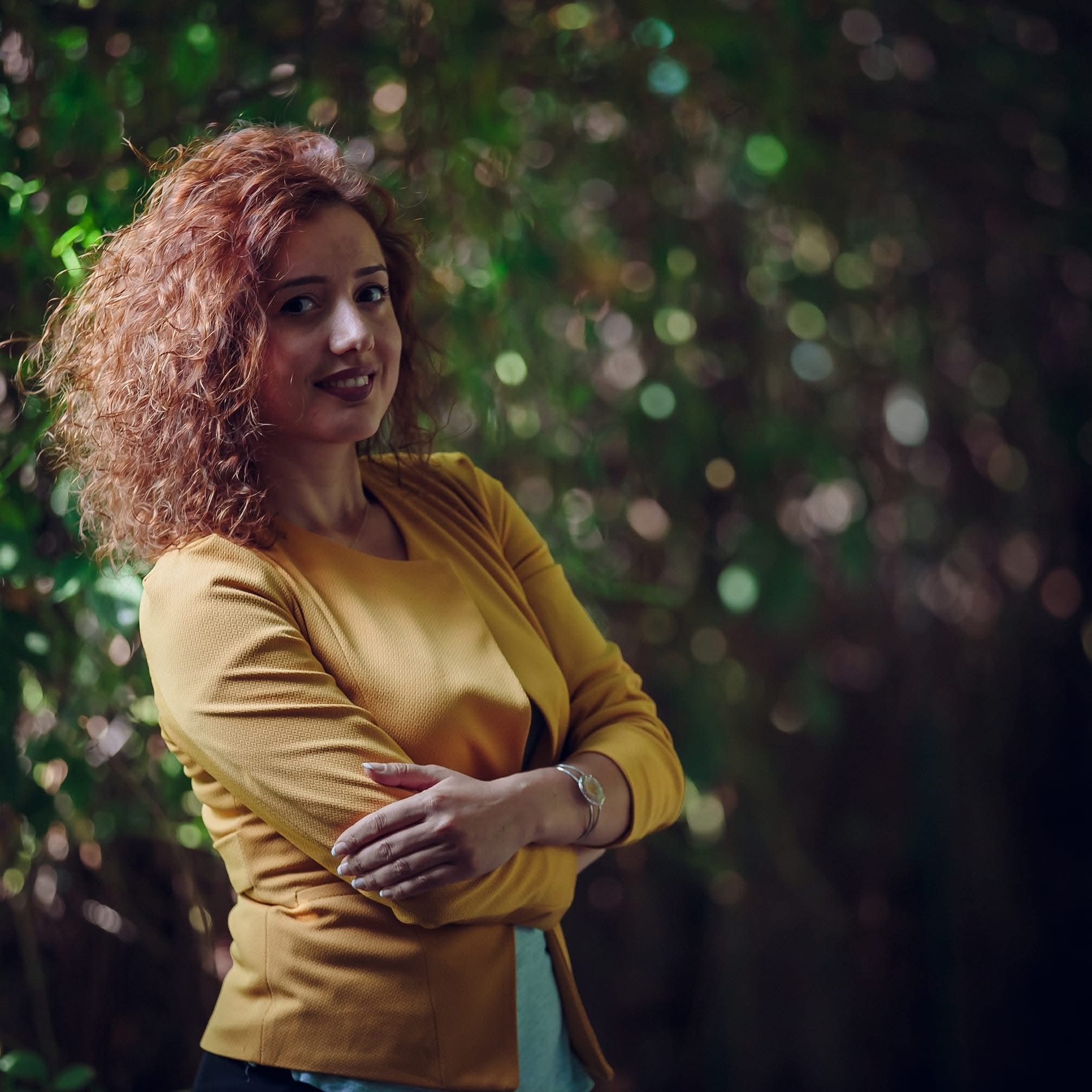
Later, Arus faced a difficult choice when she received two offers from prestigious international organizations: one from Reuters, to work as a correspondent from Armenia, and the other from Voice of America, to move to the United States.
“In Armenia, I was a big fish in a lake, and in America, a small fish in the ocean. The choice was very difficult. If I had chosen America, I would have had to leave behind years of experience and start again in a new environment. The desire to test myself in a new place and to overcome new challenges won, and I chose to swim in the ocean as a small fish among predators.”
She moved to the United States on a work visa and joined the small team of the Armenian Service of Voice of America. From there, they work for the Armenian audience, presenting both Armenian and American culture, news, and events.
The work in America was different and brought new difficulties. But thanks to her skills and her colleagues’ support, she quickly overcame them.
“In Armenia, you can pick up the phone at any time, call a politician and ask for an interview. Here, everything is more complicated: official correspondence, permissions, and Voice of America has its own internal regulations that must be followed. The hardest part was establishing connections again and gathering contacts. It was also difficult to recognize officials by face and name. In Armenia, I knew all the current and former officials. For the first time in the US, I had to interview congressmen. I had downloaded their photos to my phone so I could identify them, but it turned out that most had posted photos of themselves when they were young. So I missed a very important interview, because an older congressman came out and passed by, while I was waiting for a young man. These were interesting experiences that I overcame, and I began to show myself as a journalist,” she notes.
By late 2019, Arus Hakobyan had moved to the United States and soon covered several major events, including the presidential elections of 2020 and 2024, when representatives of the world’s leading media gathered in front of the White House to follow the elections and report the news.
“It is an unforgettable feeling when you realize that you are at the center of events and you are the one reporting the news,” she says.
She also covered protests.
“Although I had covered many protests in Armenia, here I was only familiar with the live broadcast device.”, recalls Arus.
She jokes that this period of work coincided with her pregnancy, and that her unborn child was already familiar with world leaders and had a good sense of the world order.
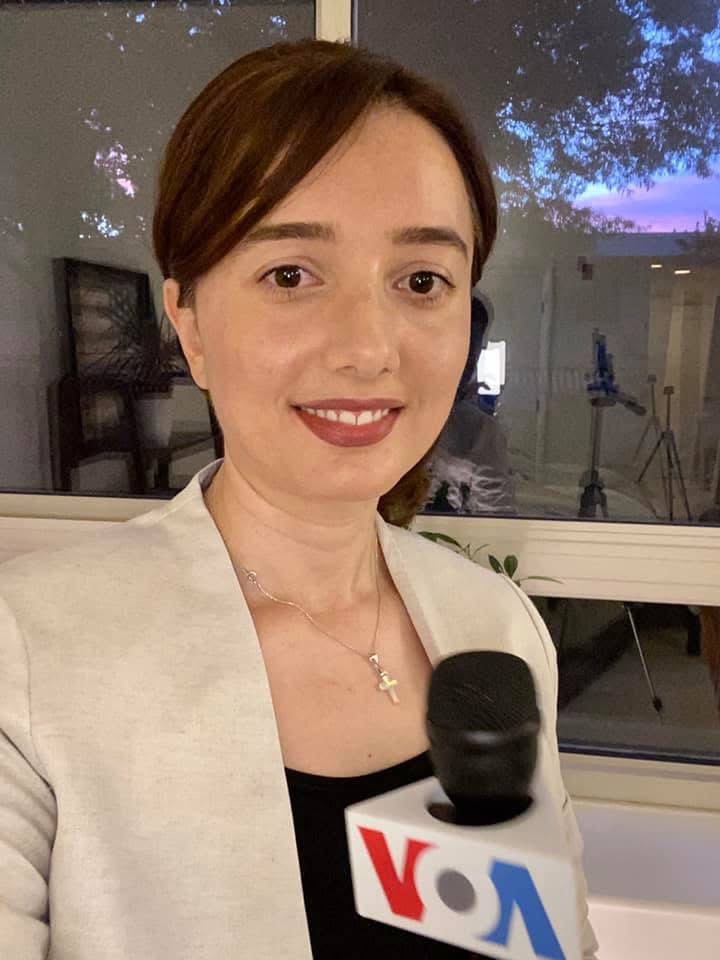
At Voice of America, Arus also launched her own program series. “Ընտանիքում” (In the Family) tells the stories of marriages between Armenians and people of other nationalities. Together with “Մի կնոջ պատմություն” (The Story of a Woman), these series also created opportunities to collaborate with video journalists in Armenia.
“I coordinate this work, and for me it is one of the most enjoyable processes, because we give Armenian journalists the opportunity to create video stories for us. We have a large audience in Armenia, we cooperate with the best journalists, and we also tell about American programs,” says Arus.
“Living in the US and interacting with American culture, I have a strong desire to work for an American audience as well, to tell stories for them. When you live in this country, you also begin to be interested in its culture. The US, where even representatives of enemy nations live peacefully side by side, has a rich history and culture, which makes the country even more attractive. In the US, as a journalist, you can both carry American culture and live with your national culture, and no one will pressure you for it. Here, workers’ rights are strongly protected, and all of this creates the conditions to live and work with love.”
She has not regretted her choice for a second. She set herself challenges and overcame them, and this became another valuable experience in her journalistic life.
“There are so many positive things in America that you also want to share that experience with your country. You want to show how well the state system works, how workers’ rights are respected. They will never make you work overtime without pay, whereas in Armenia there are still many places where labor rights are violated. I am also very glad that many programs are being implemented in Armenia with US funding that contribute to the independence and development of the media. Being a country at war and heavily burdened by Russian propaganda, the American perspective that balances the situation becomes more important than ever. The US provides an opportunity to have alternative news alongside Armenia’s partisan media, which is independent and not sponsored by any structure,” emphasizes Arus.
In 2021, Arus returned to Armenia and for a year and a half worked for Voice of America from there. Later, within the framework of another US-funded program called “Stories from the South,” she went to Goris and taught young people how to create video stories.
Arus was included in the Armenian jury of GIPA, as well as the jury of another successful US-funded project, “Hetq Media Factory.” She has repeatedly shared her experience with young people and has also created opportunities for them to correspond with leading Armenian media outlets and prepare paid stories for Voice of America.
After returning from GIPA, she even had the opportunity to try her hand at winemaking but soon realized that she could not follow journalism from the sidelines. She returned to the media field, this time certain that journalism is her true calling.
Satenik Hayrapetyan