
 360.5


COP17’s results to become more evident over the next two years: Simon Papyan

10 minute read

An environmental expert has said that Armenia’s hosting of the 17th meeting of the Conference of the Parties (COP17) to the Convention on Biological Diversity will be of great importance for the country’s environmental policy, public attitudes, and environmental protection efforts, with its actual impact expected to become evident over the next two years, during Armenia’s presidency of the process.
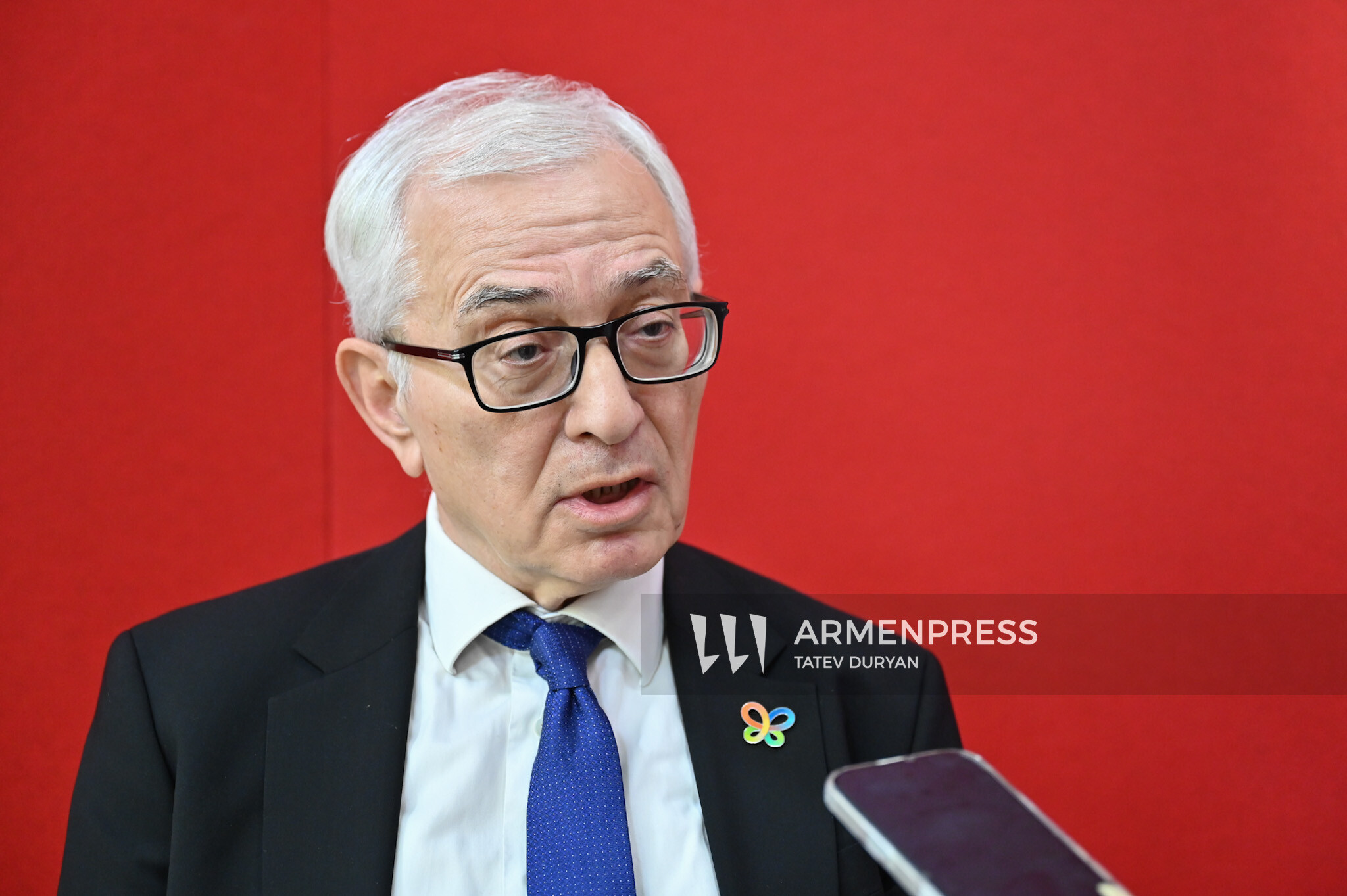
Environmental expert and former Deputy Minister of Nature Protection Simon Papyan made the remarks in an interview with Armenpress, commenting on the organization of COP17, the issues discussed, the significance of the conference for Armenia, and the country’s priority environmental challenges.
“Holding the Conference of the Parties to the UN Convention on Biological Diversity was a very responsible undertaking for us, because an environmental event of this scale had never been held in Armenia before. I can say that we came through this test with honor. I am impressed both by the organizational work and by the way the conference was conducted,” Papyan said.
Addressing the discussions held as part of the conference, Papyan noted that their main topic was biodiversity conservation, but that they also covered numerous other areas related to environmental protection.
“Since biodiversity is one of the components of an ecosystem, issues such as water resources, air pollution, forest conservation, and other matters were naturally also discussed, in terms of their interconnection with biodiversity. The discussions focused not only on biodiversity conservation but also on the sustainable use of natural resources and financing issues,” he said.
Papyan recalled that the Kunming-Montreal Global Biodiversity Framework was adopted in 2022, setting a number of important targets that the world must achieve by 2030.
“One of the most important targets is that at least 30 percent of the planet’s terrestrial and aquatic areas must be under protection by 2030. This refers to specially protected natural areas, including nature reserves and sanctuaries. Another important target is the restoration of at least 30 percent of degraded ecosystems. However, progress remains limited, and there are serious challenges to address in this regard,” he stressed.
In Papyan’s assessment, it is still too early to draw final conclusions about the conference’s results, as implementing the adopted decisions requires ongoing work.
“It is still too early to speak about the overall results of COP17. They will become clearer over the next two years, while Armenia presides over the process, because the decisions adopted at COP17 must be put into practice during that period,” he said.
Speaking about the significance of the conference for Armenia, Papyan singled out changes in environmental attitudes as the foremost priority.
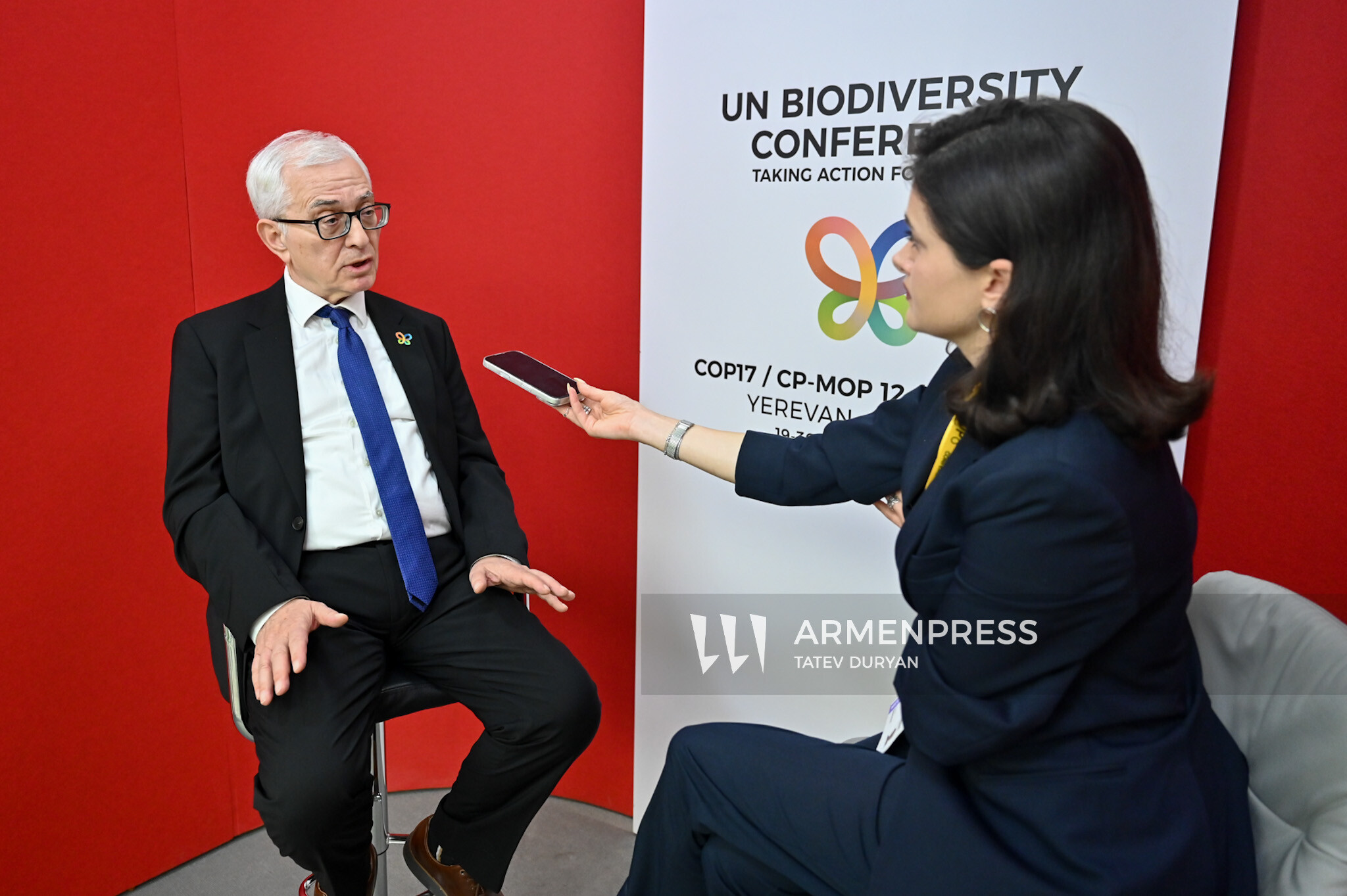
“I believe this conference will have a serious impact on our environmental mindset. This applies not only to decision-makers, most of whom took part in various discussions, delivered speeches, and sought to contribute to biodiversity conservation, but also to society as a whole, starting with schoolchildren. It is very important that our attitude toward the animal and plant worlds changes,” Papyan said.
He stressed that human activity is one of the main causes of negative impacts on nature.
“Animals and plants do not take more from nature than they need. Humans, however, often upset this balance and have a negative impact on the environment through their activities. One of the key objectives of the Convention on Biological Diversity is to reduce the negative impact of human activities, including economic activities. This is a very important and, at the same time, difficult challenge to address,” he said.
According to Papyan, another important factor for Armenia is its presidency of the Conference of the Parties to the Convention on Biological Diversity.
“Over the next two years, Armenia will preside over this process, and we must set an example for other countries by showing how we are moving forward with the implementation of the targets set for 2030. Naturally, everyone’s attention will be focused on Armenia. We will be asked: as the presiding country, how are you implementing these commitments in your own country? I hope that, as a result of all this, the overall state of the environment in Armenia will improve,” he stressed.
According to him, the balanced use of natural resources is of particular importance in biodiversity conservation.
Addressing Armenia’s priority environmental challenges, he singled out the restoration and preservation of Lake Sevan’s ecological balance as the foremost issue.
“Our top environmental priority is restoring and preserving Lake Sevan’s ecological balance. This is the most important issue because Lake Sevan is significant to us not only environmentally and socioeconomically but is also a key component of national security. We must protect it as the apple of our eye,” he stressed.
The second important area, according to Papyan, is forest conservation and restoration. “Taking climate change into account as well, we must pay great attention to forest conservation, preventing illegal logging, and reforestation efforts. This is a very important area.”
The expert also highlighted the need for the efficient and prudent use of water resources.
“If we do not use our water resources prudently, we will face serious problems. Prudent use means not only efficiently managing water quantities in households, industry, and other sectors, but also addressing pollution issues. We have serious problems when it comes to wastewater treatment,” Papyan noted.
According to him, certain investments are already being made in this area, and one of the priorities is treating wastewater flowing into Lake Sevan and improving the lake’s water quality. Papyan also addressed air pollution in cities, describing it as one of the important environmental challenges.
He stressed that effectively addressing environmental problems requires not only the work of government bodies but also the active participation of the private sector.
Papyan also emphasized the importance of international cooperation, particularly in the areas of financial assistance, the introduction of new technologies, and technology transfer.
Addressing the conservation of land resources, he stressed that land degradation is also one of Armenia’s major environmental challenges.
“The issue of land is very important because its restoration is a lengthy process. For example, 30 percent of the land in the Ararat Valley is degraded, and there are also serious salinization problems. For this reason, efforts to conserve and restore land must receive special attention,” Papyan said.
Concluding his remarks, he expressed hope that holding COP17 and Armenia’s presidency over the next two years would contribute to the development of the country’s environmental policy, more efficient use of natural resources, and improvement of the state of the environment.
COP17 took place in Yerevan from October 19 to 31, 2026. It was held alongside the 12th meeting of the Parties to the Cartagena Protocol on Biosafety (CP-MOP-12) and the sixth meeting of the Parties to the Nagoya Protocol on Access and Benefit-sharing (NP-MOP-6).
COP17 marked the first global review of collective progress toward implementing the Kunming-Montreal Global Biodiversity Framework (KMGBF).