
 360.88


Armenia’s culinary heritage showcased at French Embassy event as part of COP17 and HATIK project
10 minute read

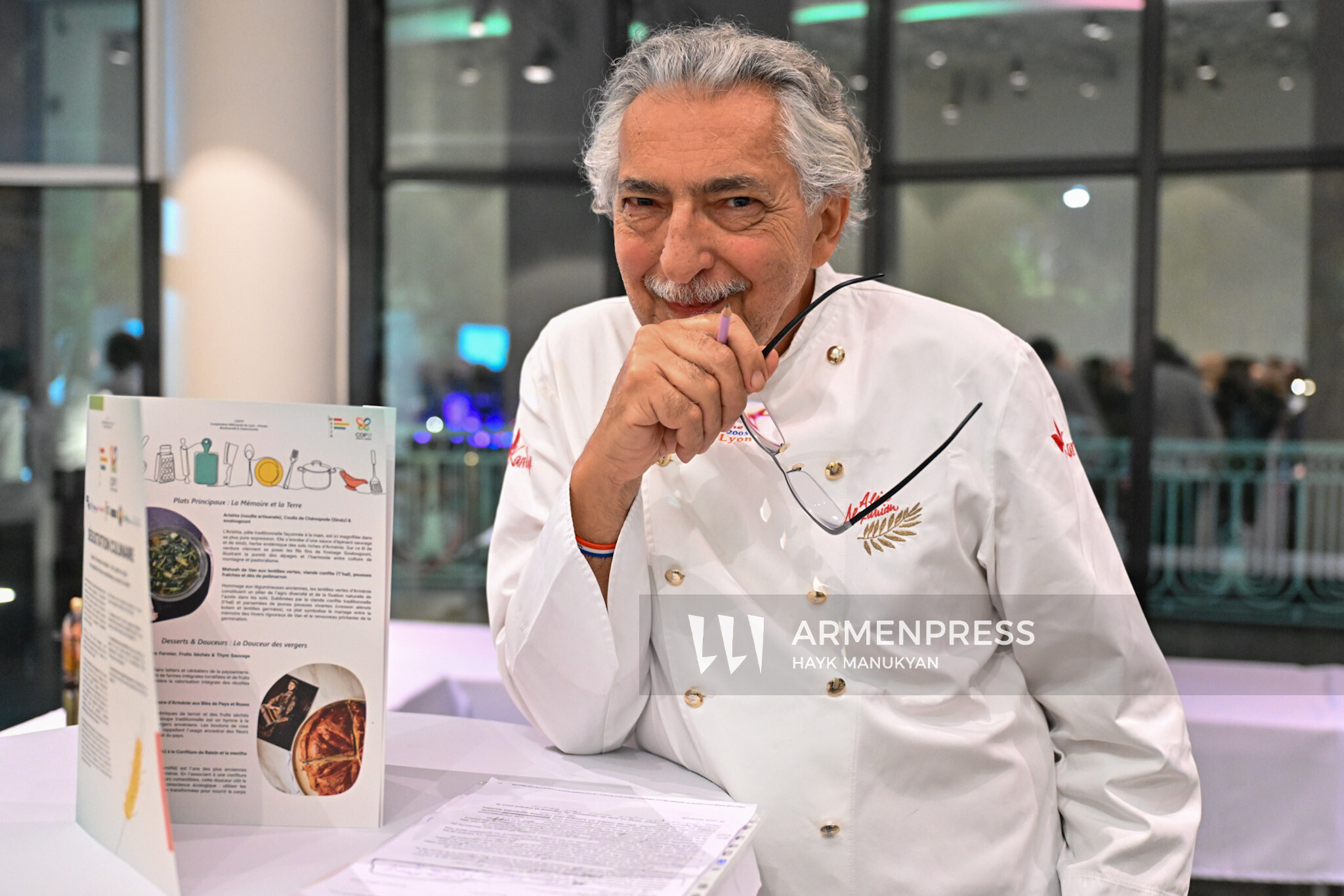
A tasting event featuring French-Armenian Michelin-starred chef Alain Alexanian was held at the Embassy of France in Armenia as part of COP17 on Biodiversity and the “HATIK: Preserving and Valuing Endemic Seeds for Food Sovereignty and Climate Change Adaptation” project.
The HATIK project is coordinated by the Lyon Metropolis in cooperation with Yerevan Municipality and co-funded by the French Ministry for Europe and Foreign Affairs. The project was implemented at the initiative of the Center for Applied Botany Resources (CRBA), in partnership with the Scientific Center of Agrobiotechnology of the Armenian National Agrarian University and the GOTI NGO. The Office of the United Nations High Commissioner for Refugees is also among the initiative’s institutional partners.
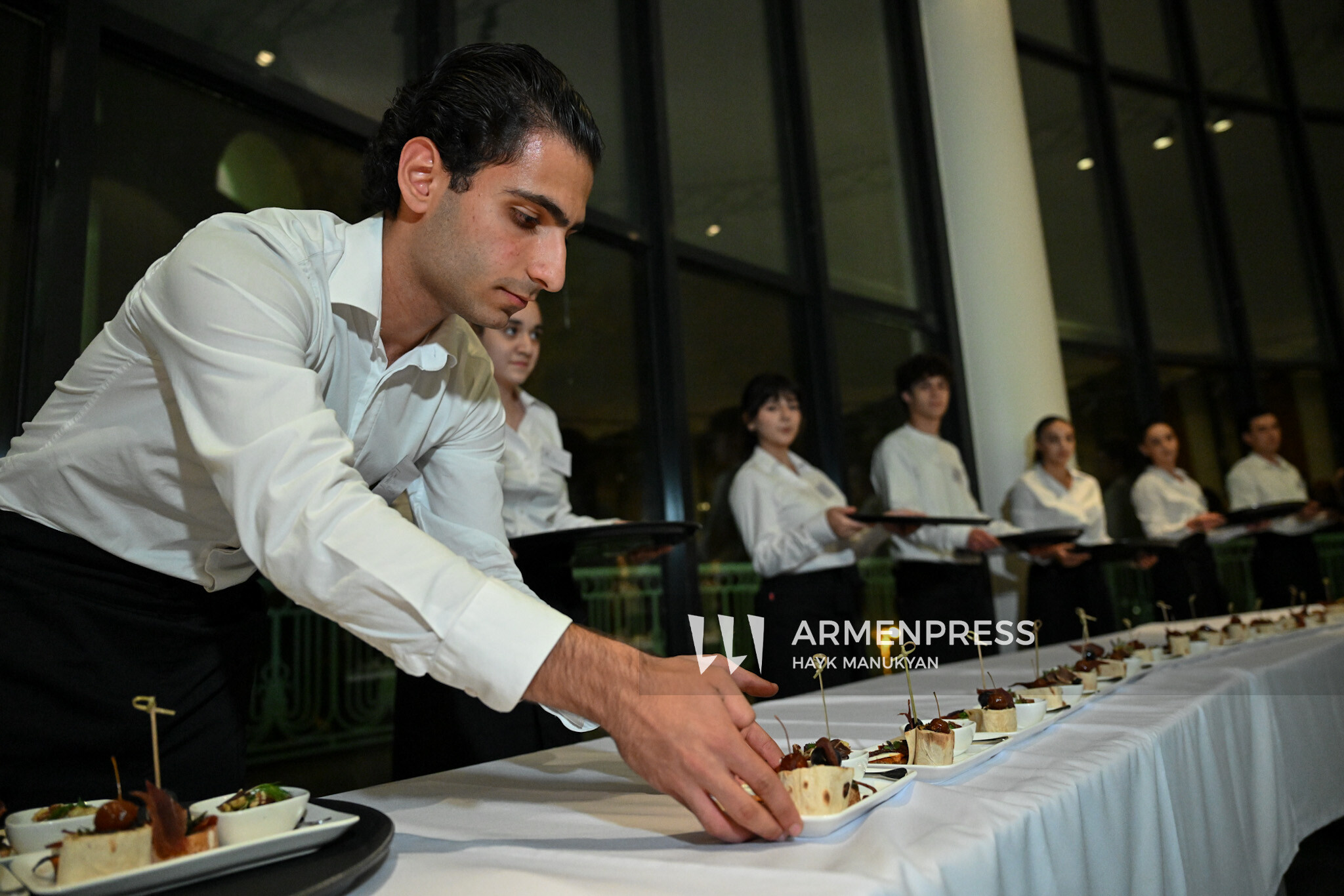
Preparations for the tasting and menu were carried out jointly with the team and students of the French-Armenian Vocational Training Center as part of the Lyon–Yerevan cooperation.
France’s Ambassador to Armenia, Florian Escudié, said in his remarks that the event was a unique presentation of Armenian culture, agriculture and gastronomy, reminding participants that Armenia and France have a special relationship. In the Ambassador’s view, close cooperation makes it possible to implement such projects.
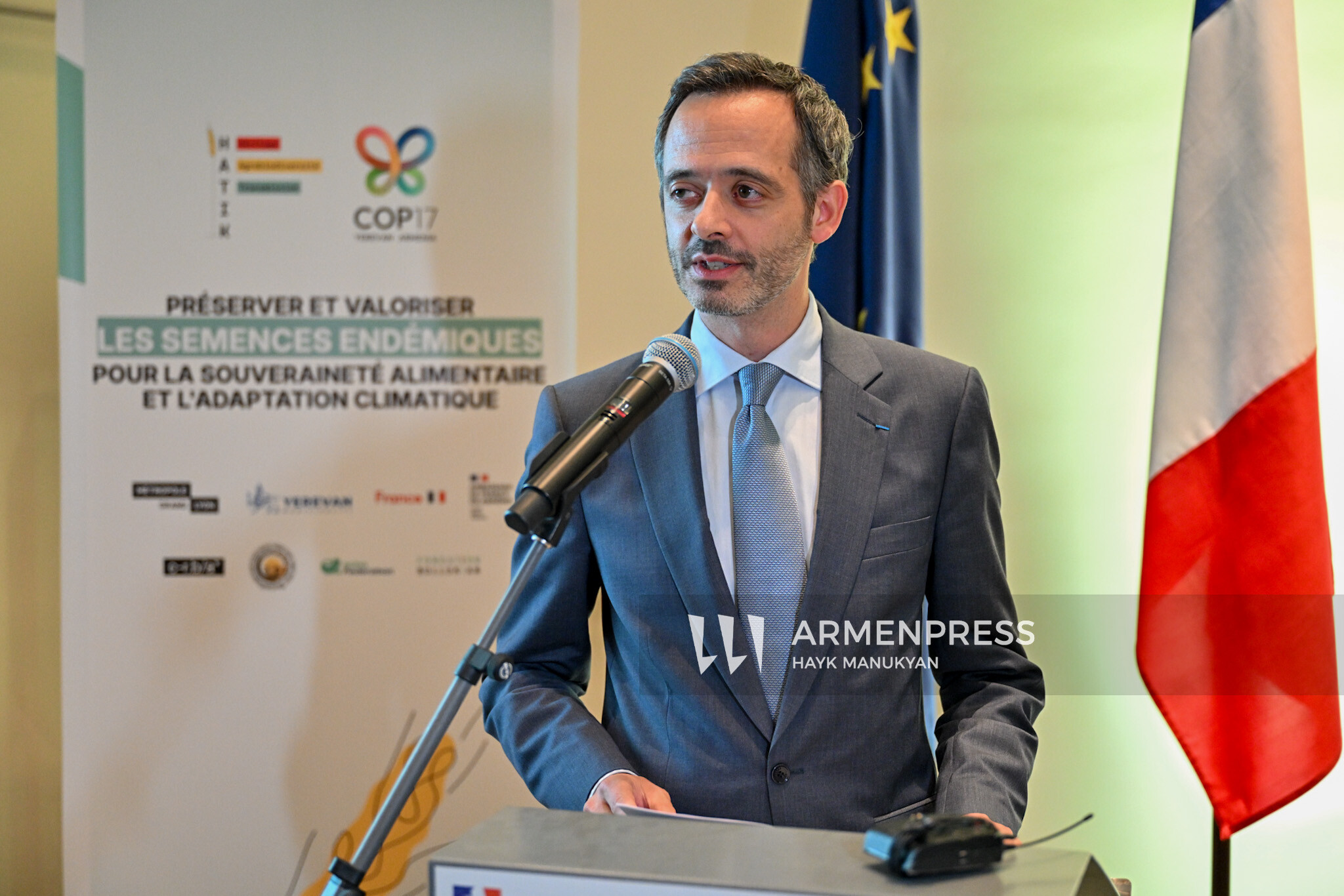
“Armenian-French friendship has very deep roots. But we should not look only at the roots; we also need to see what grows from them. Diversity is not an abstract idea; it is in the food we taste and the seeds we grow. With this event, we are truly valuing the threefold potential of biodiversity found in Armenian seeds. We also appreciate their gastronomic potential. The HATIK project has a simple and shared goal: to collect, value and pass on knowledge about seeds and the flavors they contain. All of this needs to be documented in order to protect them better,” the Ambassador said.
He noted that this summer, a group of scientists collected around 300 types of seeds across Armenia’s nine regions that are resilient to various climatic conditions. The project aims to contribute to Armenia’s self-sufficiency and resilience. According to the Ambassador, a better understanding of biological heritage makes it possible to better withstand climate change.
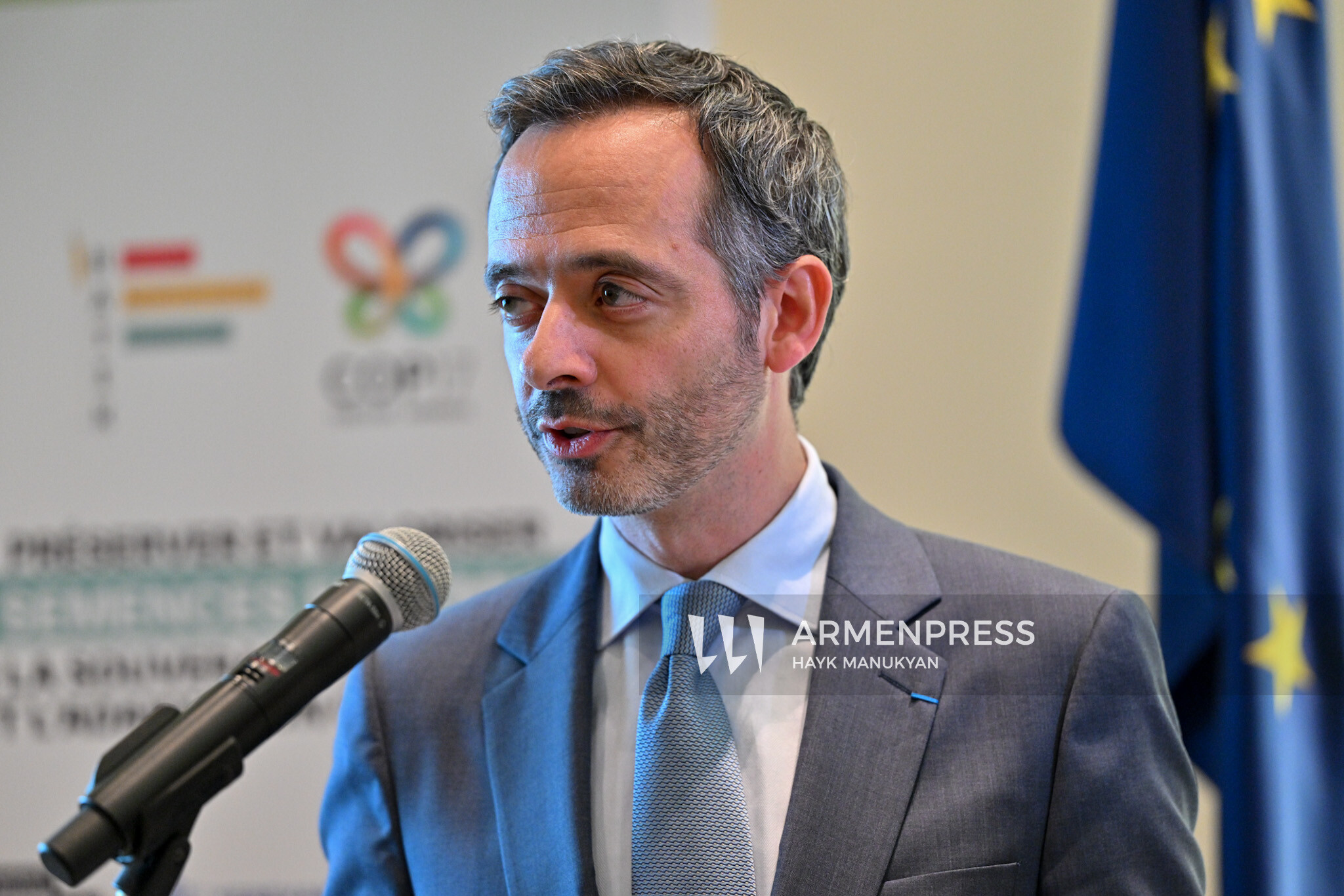
“Armenia has a great need to develop its agricultural resources and knowledge. As you know, Russia has closed its doors to Armenian agro-industry. You understand very well the impact this has on local businesses and the economy. Fortunately, Armenia has friends in Europe who helped it in this situation. Today’s event gives meaning to the spirit of this cooperation as we taste delicious Armenian dishes. In doing so, we express our gratitude to Armenian farmers. Armenian agriculture is also of interest to European consumers, so the French Embassy is also working to find solutions in this sector. This means taking concrete logistical steps to find new partners and helping Armenia bring its agriculture into line with European standards,” Escudié said.
The diplomat noted that preserving Armenia’s agricultural heritage is important for ensuring an independent and secure future. According to him, the event celebrates Armenian cuisine by conveying the distinctive characteristics of the seeds and the knowledge passed down from generation to generation.
Olivier Araujo, Vice-President of the Lyon Metropolis for International Relations and Tourism, said in his remarks that the previous day he had visited Tsitsernakaberd with great emotion to pay tribute to the memory of the victims of the Armenian Genocide.
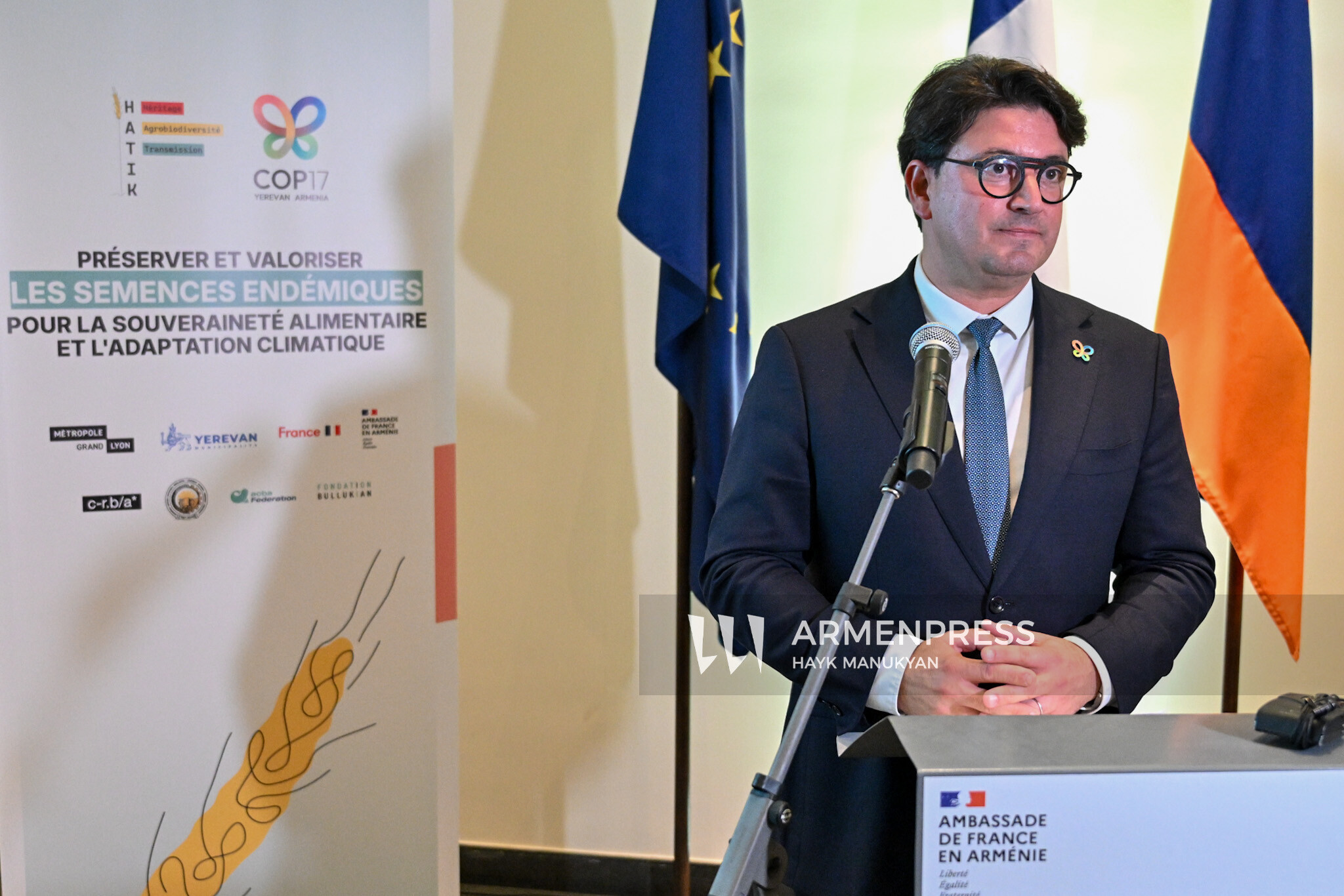
“There are places where words are secondary and silence says more than speeches. I have boundless respect for the Armenian people, who, after so many tragedies, have managed to survive and preserve their identity, culture and dignity. The commemoration reminded me of an important conviction: memory belongs not only to the past; it also gives us a sense of responsibility for the future, a responsibility to protect human dignity and to keep solidarity among peoples alive, especially in difficult times,” Araujo said.
He added that this is precisely what gives Armenian-French relations a special dimension. In his view, this is not merely cooperation formed by circumstances, but a commitment forged through history and passed down from generation to generation.
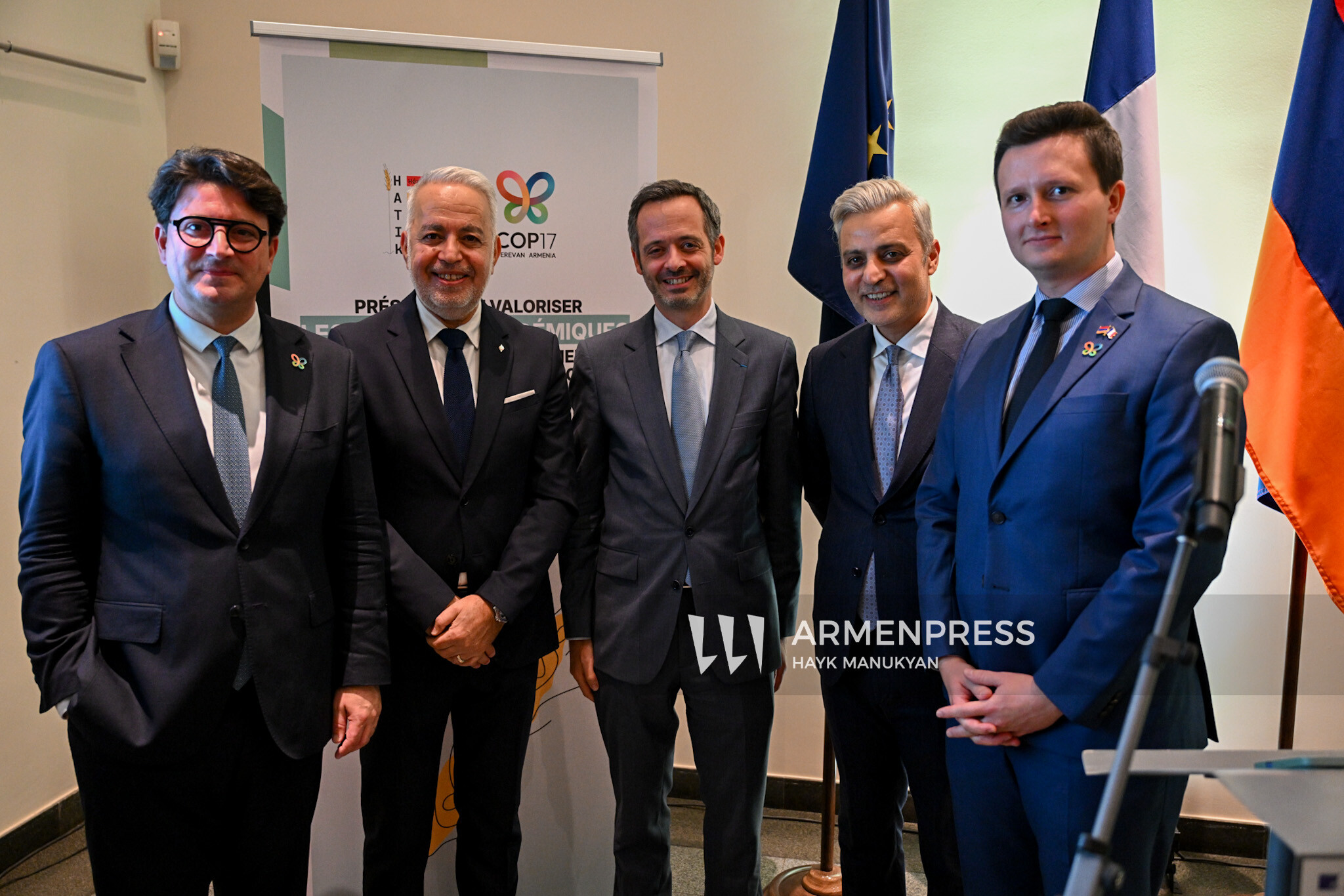
“The great challenges of our time extend beyond the borders of our territories; therefore, local authorities today have a crucial role to play in developing international relations by supporting the deepening of diplomatic ties between states. We want to develop decentralized cooperation based on trust, mutual respect and beneficial outcomes. Our relations with Yerevan fit perfectly into this framework. The agreement renewed in 2025 obliges us to cooperate closely in a number of key areas,” Araujo said.
According to him, gastronomy is one of those areas, and the HATIK project contributes to preserving Armenian endemic seeds, as well as protecting biodiversity and agricultural knowledge. Araujo noted that preserving seeds also means preserving memory.
“Gastronomy is much more than simply a shared pleasure. It tells the story of our native environment and our attitude toward nature. Cuisine is also a form of diplomacy. Our new mandate makes decentralized cooperation an instrument of economic diplomacy. We have also come to learn from you, and in this spirit, we want to deepen relations with Armenian authorities and local stakeholders,” the Lyon Metropolis representative said.
Chef Alain Alexanian, in turn, noted that although he was born in Lyon, considered the center of French gastronomy, he feels deeply connected to Armenia, respects the land, lives according to the rhythm of the seasons and recognizes the importance of passing culinary traditions down through generations.
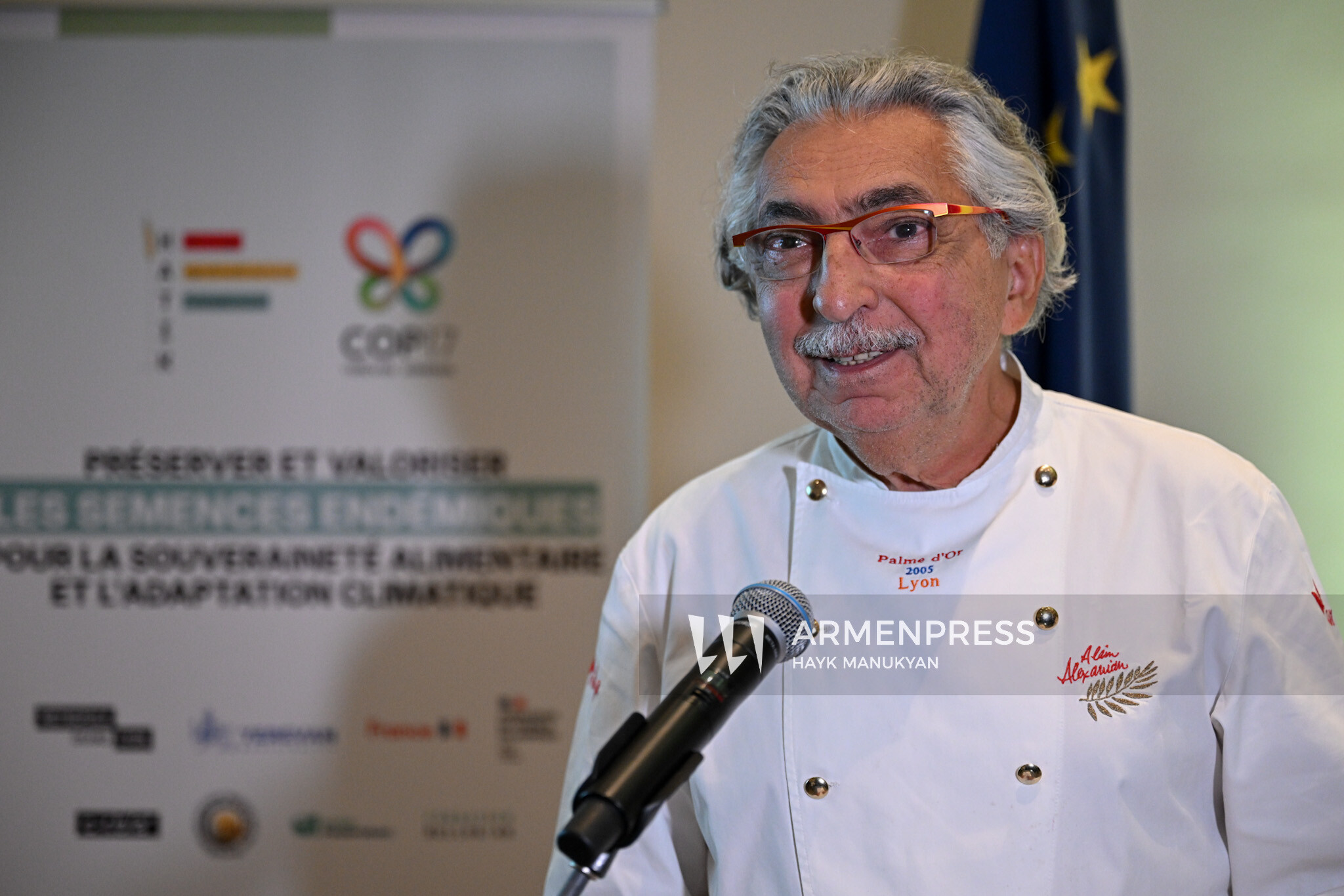
“Agriculture and science go hand in hand, so I try to view gastronomy in the context of the world around us. As president of the Center for Applied Botany Resources (CRBA), I would like to note that our message at COP17 is central: protecting biodiversity through the plate as well. The living world is not preserved only in laboratories and international agreements; it is preserved through everyday care, in our fields, gardens and kitchens. With the agronomic and culinary support of expert Tatev Grigoryan, as well as the participation of students from the French-Armenian Vocational Training Center, we are bringing responsible gastronomy to life. It is our shared responsibility to preserve the treasures of Armenian soil and grape varieties, which are true shields against climate change,” Alexanian said.
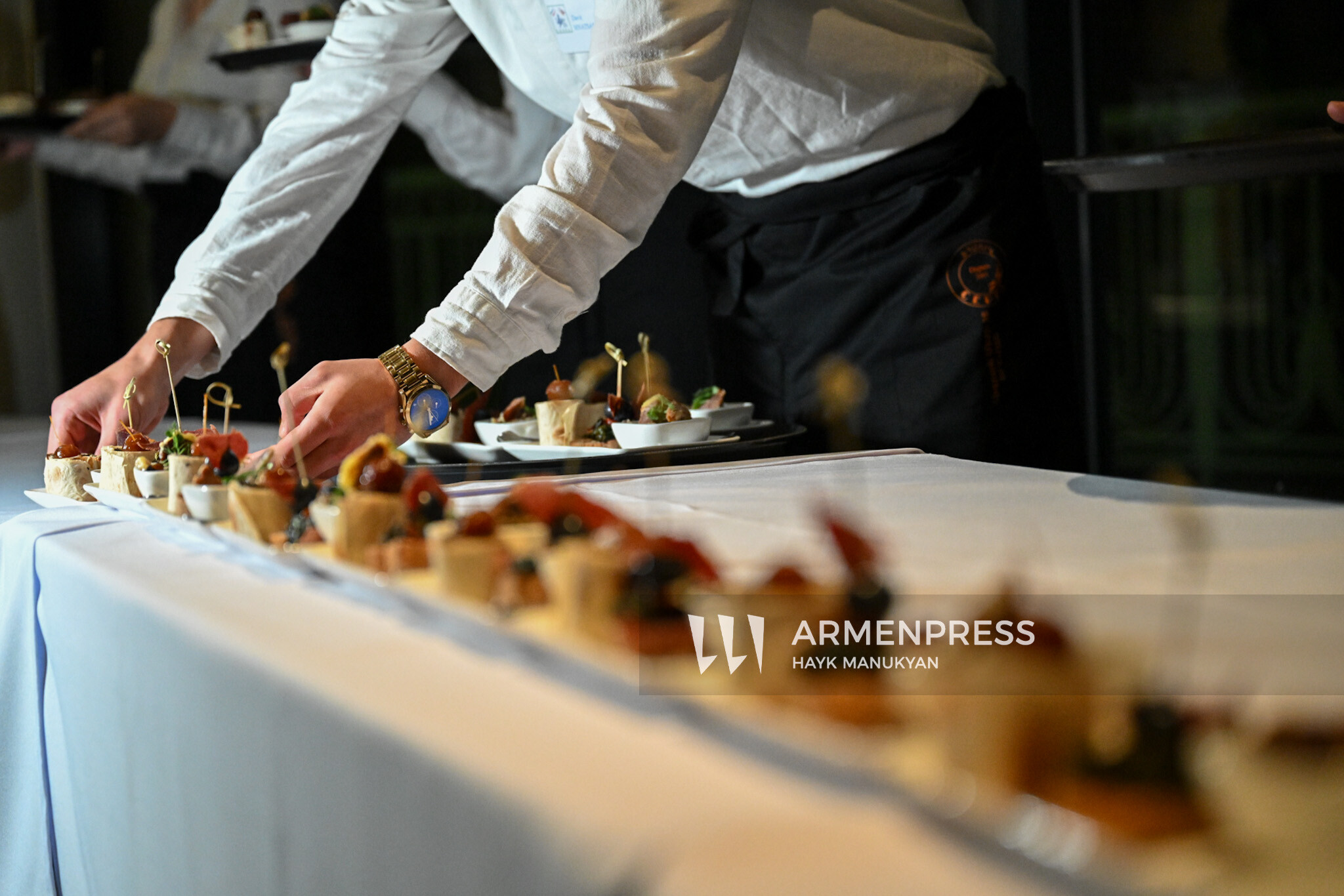
He emphasized that, for him, preparing food has become an expression of responsibility and commitment to the planet, and promised to present traditional yet reimagined cuisine during the event. Following the official remarks, a selection of delicacies was served to those present under his direction.
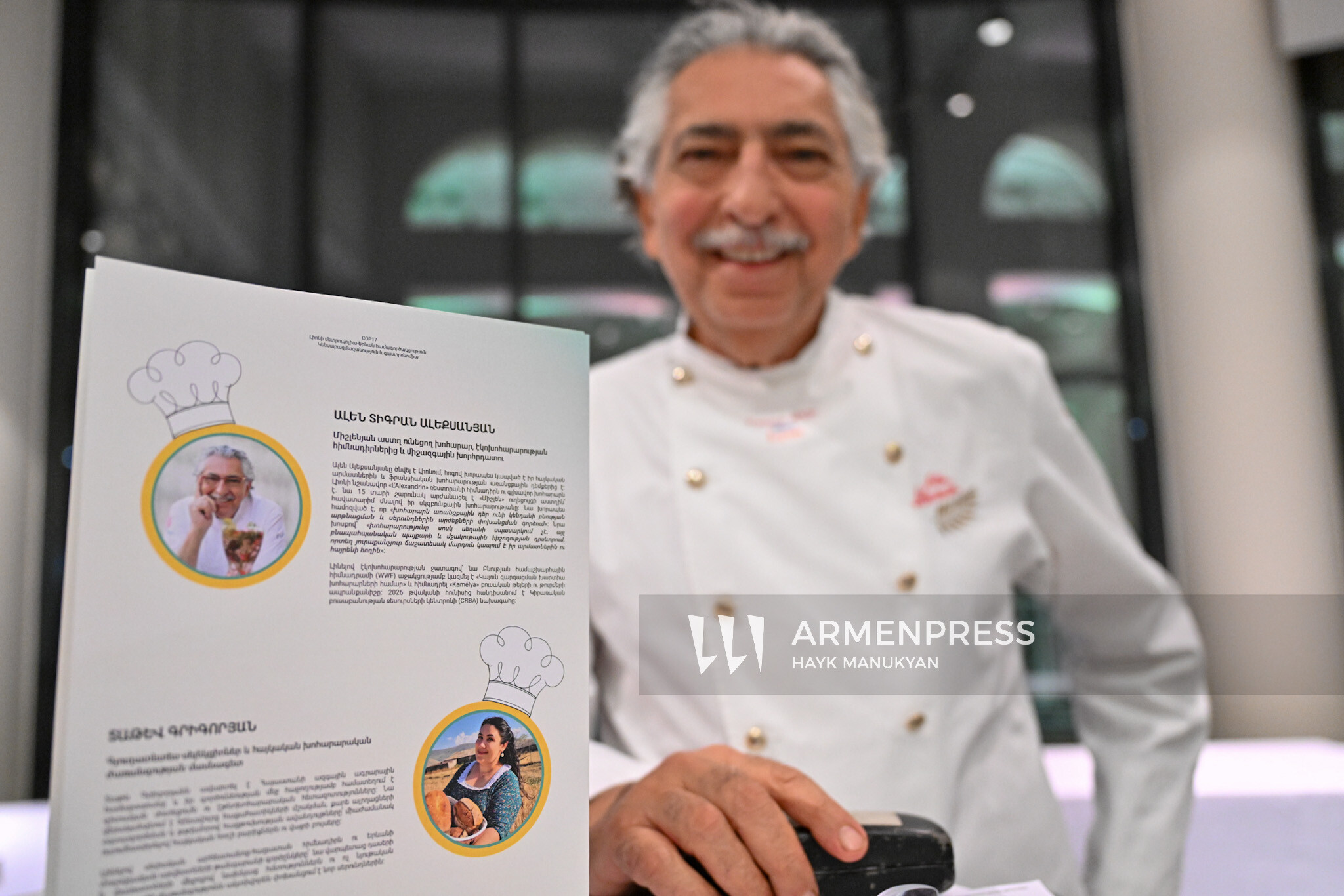
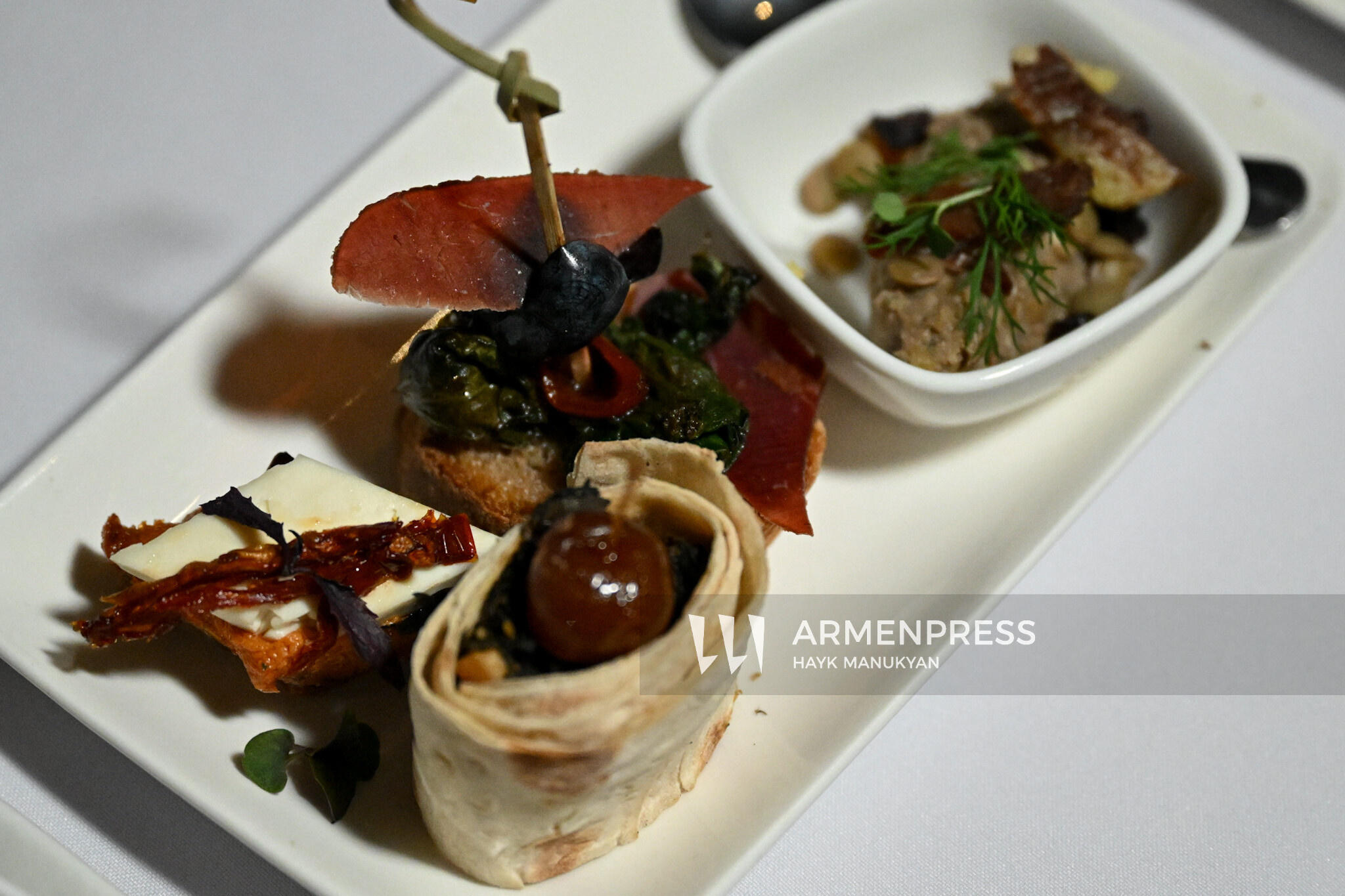
The appetizers included bites of rye bread topped with goat cheese, sun-dried tomatoes and purple basil; wild mallow accompanied by a thin slice of basturma, flaxseed bread and grilled mountain fruit; and lavash rolls filled with aveluk (wild sorrel) and red onion, served with rosehip jam and mountain herbs.
The main courses included a rustic pumpkin dish with a thick sindz sauce, topped with strands of suluguni cheese, as well as Van mushosh made with green lentils and t’hal (dried meat), garnished with fresh sprouts and diced pumpkin.
The desserts included Armenian gata made with churned butter, dried fruits and wild thyme; anoush apur, a traditional Armenian sweet soup made with native wheat and roses; and a dish made with toasted wheat flour (pohindz), grape jam and fresh mint.