
 361.14


‘Our children will be the first humans to live on a planet without coral reefs’: biologist Katherine Richardson’s exclusive interview with Armenpress

19 minute read

The ocean is becoming more acidic. The planet is warming. Biodiversity is under pressure. And the environmental boundaries scientists have identified as essential to keeping Earth stable are being crossed one after another.
For Katherine Richardson, an American-Danish marine biologist and professor of biological oceanography at the University of Copenhagen, the warning signs are clear. Her research focuses on marine ecosystems, biodiversity and the ocean’s role in the global carbon cycle. She is also one of the scientists behind the planetary boundaries framework, which identifies nine critical processes that help maintain the stability of the Earth system.
For Richardson, the most alarming part is not simply how far humanity has gone beyond these limits. It is that the pressure continues to increase.
“What scares me is not the fact that we’re on the wrong side of the boundaries. What scares me is that we’re increasing,” Richardson told Armenpress during STARMUS VIII, the science and music festival held in Tenerife and La Palma.
Developed by an international group of scientists, the planetary boundaries framework identifies limits to the pressure humanity can place on Earth’s systems without increasing the risk of destabilizing the planet. The nine boundaries are climate change; biosphere integrity, encompassing biodiversity and ecosystem health; land-system change; freshwater change; biogeochemical flows, including nitrogen and phosphorus cycles; ocean acidification; atmospheric aerosol loading; stratospheric ozone depletion; and novel entities, including human-made chemicals, plastics and other pollutants.
Research discussed by Richardson indicates that humanity has crossed seven of these nine boundaries.
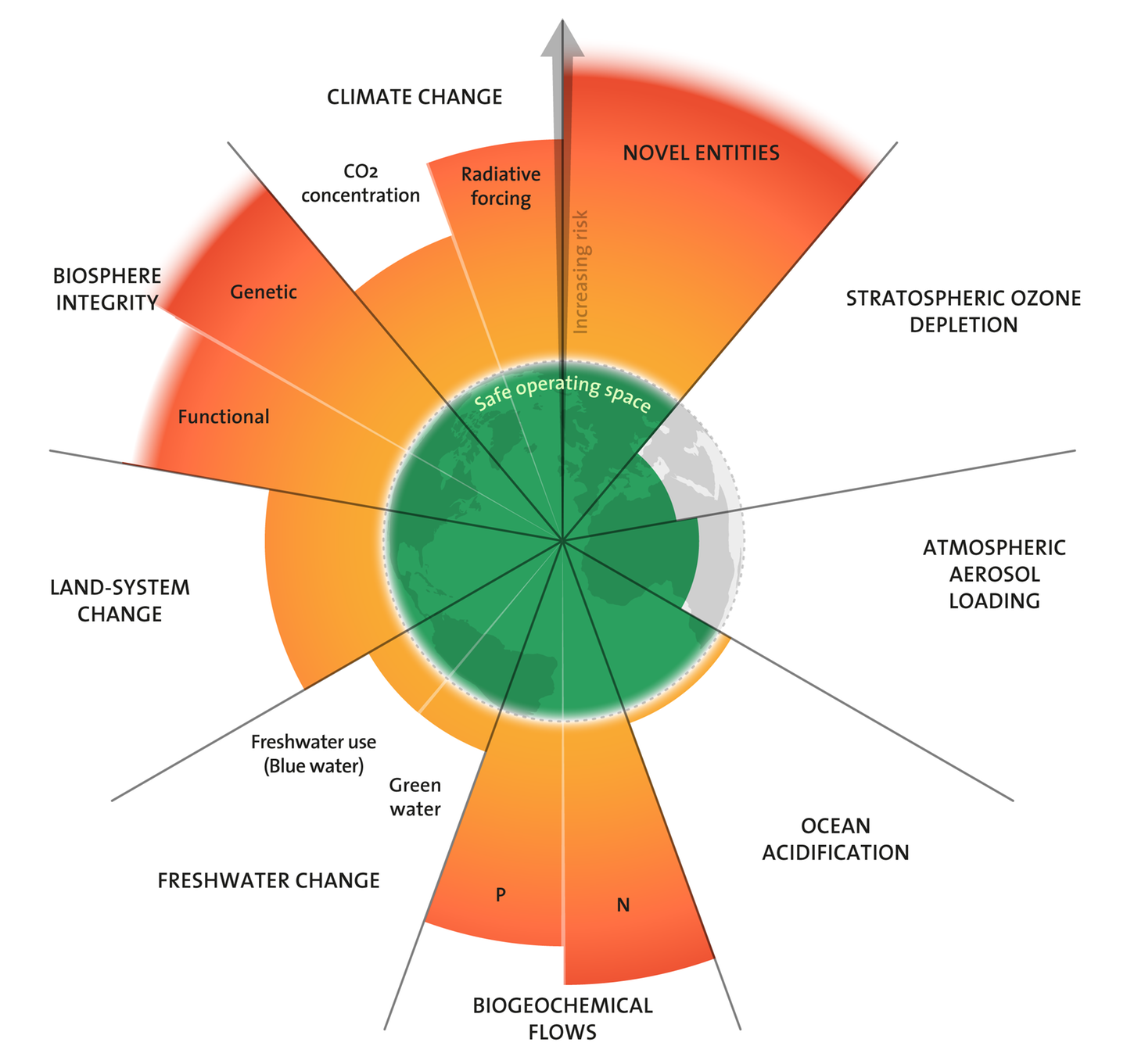
That does not mean the planet is about to collapse, she said. Crossing a boundary increases the risk of destabilizing the systems on which life depends, but it does not make a particular catastrophe inevitable.
Richardson compares it to high blood pressure: a reading above 120 over 80 does not guarantee a heart attack or stroke, but it raises the risk.
“So we’re in a really risky territory now,” she said.
The concern is that several environmental pressures are moving further into dangerous territory rather than stabilizing. Scientists assessed the planetary boundaries in 2009, 2015 and 2023. Comparing the 2015 and 2023 assessments, Richardson said, showed that the boundaries already crossed had been exceeded even further.
“We know there must be a limit,” she said. “We’ve done the best we can on available data, but we do know there must be a limit, and we are barreling out of those axes of impact.”
Yet there is a precedent for reversing environmental damage. Humanity crossed the boundary associated with ozone depletion, but international cooperation helped bring the ozone layer back into a safer operating space.
The question now is whether humanity can respond with the same determination to environmental threats that are more complex, less immediately visible and spread across the entire planet.
The ocean: Earth's climate regulator under pressure
The ocean may be one of the clearest places to see what is happening to the planet.
People tend to measure climate change through the air temperature around them. But more than 90 percent of the excess heat accumulating near the Earth’s surface as a result of global warming is stored in the ocean.
“We all worry about temperature in the air because we live in the air,” Richardson said. “Over 90% of it is in the ocean. So if you really want to see climate change, look in the ocean.”
The ocean is not simply a vast body of water absorbing whatever humanity puts into it. It is a central regulator of the planet’s climate, with complex interactions among biology, physics and chemistry.
Richardson explained that the movement of carbon dioxide between the ocean and the atmosphere has played an important role in Earth’s climate history, including the transitions between ice ages and warmer periods.
Now, rising ocean temperatures are changing currents and raising questions about ice melt and the circulation that carries heat from the Gulf Stream towards northwestern Europe. Richardson noted that Iceland has declared the potential collapse of this current a national security risk.
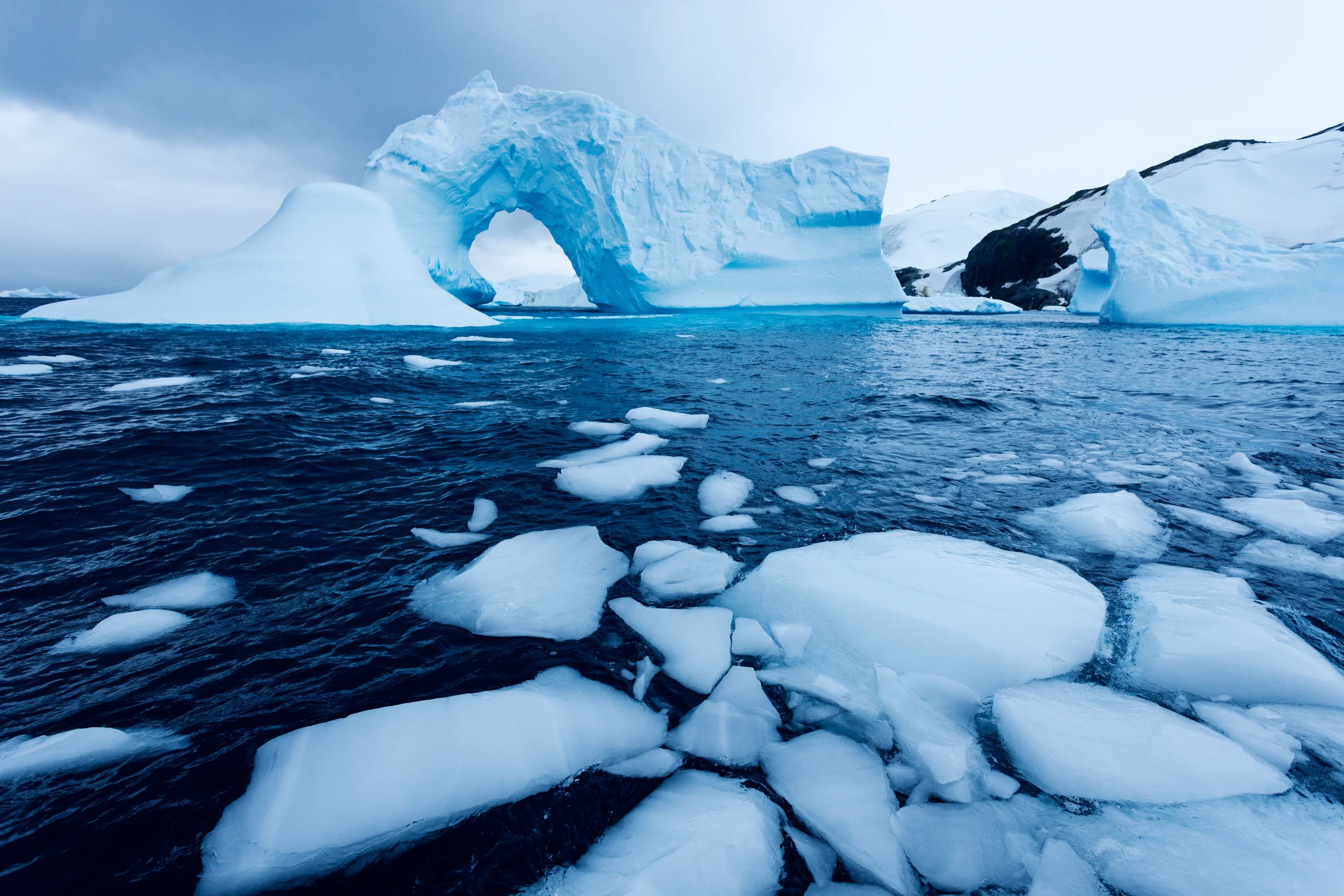
But warming is only one part of the problem. As the ocean absorbs carbon dioxide from the atmosphere, its chemistry changes and the water becomes more acidic. This process, known as ocean acidification, threatens marine organisms that depend on calcium carbonate to build shells and other structures.
Richardson notes that the affected organisms range from shellfish and lobsters to corals and microscopic planktons, like coccolithophores. Some of these tiny organisms help move carbon from the ocean’s surface to its depths. Over geological timescales, deposits of calcium carbonate produced by marine life contribute to formations such as England’s White Cliffs of Dover.
Changes in ocean chemistry can therefore affect much more than individual species. They can disrupt ecosystems and the processes that help regulate the planet.
The consequences may also reach people through the food they eat. Richardson said ocean acidification can change the nutritional composition of marine organisms, including their fatty acid content, potentially creating further effects on human health.
For tropical coral reefs, the outlook is especially troubling.
“Coral reefs are some of the most diverse, important and productive marine ecosystems, and very many people depend on animals associated with the coral reefs for nutrition,” Richardson said. “So losing the corals is something that we all should worry about. Most scientists believe that we’ve crossed the point where we can save the tropical coral reefs. And that means that you and I are living in a time where there’s never been humanity that has seen the ocean as acidic as it is today. And our children will be the first humans to live on a planet without coral reefs.”
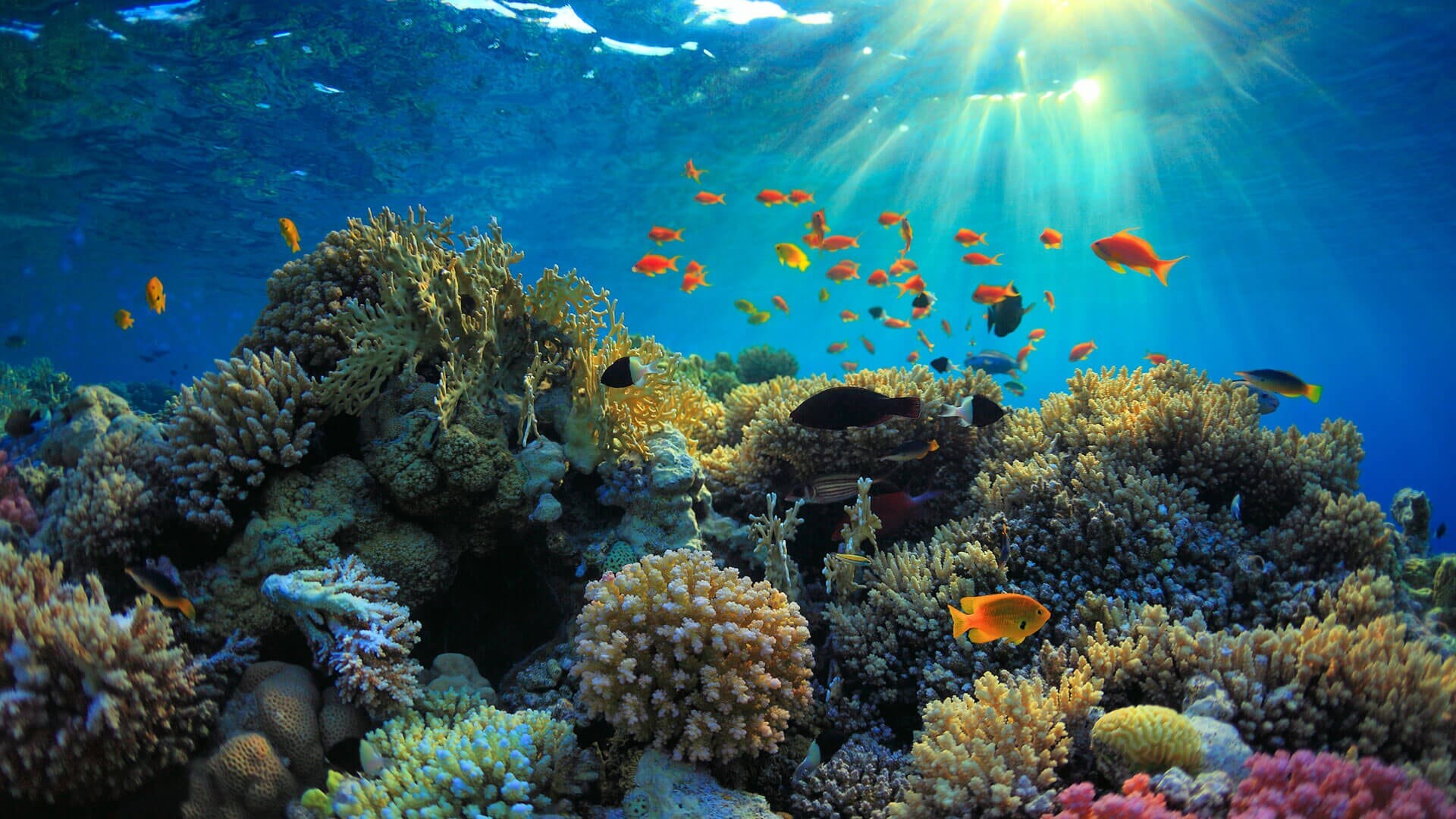
Richardson’s warning is not that the ocean has become too acidic for people to swim in. Its pH remains higher than that of shampoo. The problem is the speed at which its chemistry is changing, while marine life struggles to adapt.
“We don’t realize what an experiment that we’re doing here,” she said.
Life has existed on Earth for around 3.5 billion years, evolving alongside the planet’s physical and chemical conditions. Change itself is not unusual in the history of the Earth. The concern, Richardson explained, is the pace of the changes now being driven by human activity.
“When we change them as quickly as we’re changing them, life doesn’t have a chance to keep up and adapt to it.”
We are a part of nature, not above it
If the environmental crisis is unfolding over decades, can governments whose priorities often shift with each election respond quickly enough? Richardson believes they can, but she argues that doing so requires a fundamental change in how humanity sees its place in the natural world.
“We’ve been operating under the impression that we somehow are better than nature and that we can do it better than nature did,” she said.
She questioned the assumption that humans can simply engineer their way out of environmental problems without fully understanding the systems they are trying to change. The ocean’s chemistry, for example, has evolved over long periods, and marine life has adapted to those conditions. Attempts to manipulate such systems carry their own risks.
“I think we need to be more humble and move towards recognition of the fact that we are a part of nature and have to learn to live as a part of that system,” Richardson said.
For much of human history, communities relied primarily on the resources available around them. They had to understand the consequences of taking too much from their immediate environment. The global economy has changed that relationship, connecting consumers to ecosystems and resources thousands of kilometers away.
“The global market makes us be in contact with every other organism on this planet,” Richardson said. “So the whole planet must be our ecosystem.”
Yet economic models often treat environmental damage as an “externality”—a cost that falls outside the transaction being measured. Pollution, biodiversity loss or the depletion of natural resources may not be reflected in the price of a product, even though society ultimately bears the consequences.
Richardson argues that this way of thinking ignores a basic reality: Earth is a connected system, and its resources are finite.
“If you accept that this is a system, and it’s basically a closed system, we get energy from outside, but everything else we need is already on this planet, then you have to say there can’t be any externalities. Everything must be internalized.”
That is why she sees businesses as potentially important actors in changing the relationship between the economy and nature. Companies may have a stronger incentive than politicians to plan over decades because they want to remain viable for 40 or 50 years.
Some business leaders are increasingly recognizing that climate change, ecosystem disruption, biodiversity loss and access to resources pose long-term risks to economic development.
“There is a changing understanding that it is access to resources, that resources are real currency. It’s not money. Money has always been a proxy for the Earth’s resources,” Richardson said.
The challenge, then, is not simply to persuade businesses to be more environmentally conscious. It is to recognize that the economy itself depends on functioning natural systems.
Why international climate and biodiversity conferences still matter
Armenia is hosting the 17th meeting of the Conference of the Parties to the UN Convention on Biological Diversity, known as COP17, bringing together governments and other stakeholders to discuss how to protect nature.
Such gatherings often face criticism when they fail to deliver immediate, decisive change. Richardson believes that expectation misunderstands their role.
“Yes, I do think they help. I definitely think they help. We absolutely need them,” she said.
International agreements cannot resolve the climate or biodiversity crises overnight. But they can keep environmental issues on the global agenda, establish shared commitments and put pressure on countries to act.
“Think where we would be on climate if we didn’t have the Paris Agreement,” Richardson said. “They’re not going to solve the problem. But we’d be in a mess if we didn’t have these meetings where we could get the global eye, where we have a global forum where we’re together discussing this.”
For Richardson, the significance of these agreements extends beyond their immediate policy outcomes. They also reflect a gradual change in the way humanity values nature.
The UN agreement to protect 30 percent of land and ocean areas represents an important step, she said, even though translating those commitments into effective action remains difficult.
“That is the first time in human history that we’ve begun to give nature a value in its own right,” Richardson said. “That’s a huge step.”
She does not suggest that progress is sufficient or that the challenges are close to being resolved. Rather, she sees international cooperation as part of a longer journey, in which governments and societies gradually change their understanding of their responsibilities.
“Not everybody’s in the same place on that journey, and there’s still a long way to go. But I see progress.”
The planet’s future depends on what we do now
After years of studying the pressures facing the planet, Richardson remains concerned about the pace of change. But she also sees signs that more people are paying attention.
She pointed to the growing readership of research on planetary boundaries. The paper published in 2015 had been downloaded 274,000 times after eight years online, she said. The 2023 paper reached 840,000 downloads in three years.
For Richardson, the figures suggest that the scientific framework is reaching a much wider audience. The next challenge is turning that awareness into action.
She believes part of the problem lies in the way people talk about the environmental crisis. There is a tendency to search for a single solution—a technological breakthrough or policy that will fix everything. But the Earth is a complex adaptive system, and managing humanity’s relationship with it requires ongoing decisions and adjustments.
Richardson compared the process to addressing problems within a family. There is no single action that can automatically resolve every difficulty. Instead, people need a sense of the future they want, must try different approaches and continue with those that move them in the right direction.
“We keep talking about finding solutions,” she said. “The Earth is a complex adaptive system, just like your body, just like your family, just like the socioeconomic system we have.”
That is why she believes people should not wait for someone else to find a definitive answer.
“We’re going to have to manage our relationship to this planet from now and forever more if we’re going to succeed as a species on this planet,” she said.
“So instead of sitting back and waiting for somebody else to find a solution, we all should be doing small steps now.”
Richardson is 72 and says she continues to work around 60 hours a week. Asked what keeps her going despite the scale of the environmental challenges, she did not point to a scientific breakthrough or a political promise. She pointed to her family.
“What keeps me fighting … is that I have children and grandchildren. I have to.”
The planetary boundaries framework offers a way to understand how much is at stake. Whether it changes the course of humanity’s relationship with the Earth will depend on what people, businesses and governments do with that knowledge.
The Armenpress coverage of the STARMUS festival is supported by Team Telecom Armenia.