
 361.45


Armenpress exclusive: Alan Stern on Pluto, the search for alien life and what makes us human

7 minute read

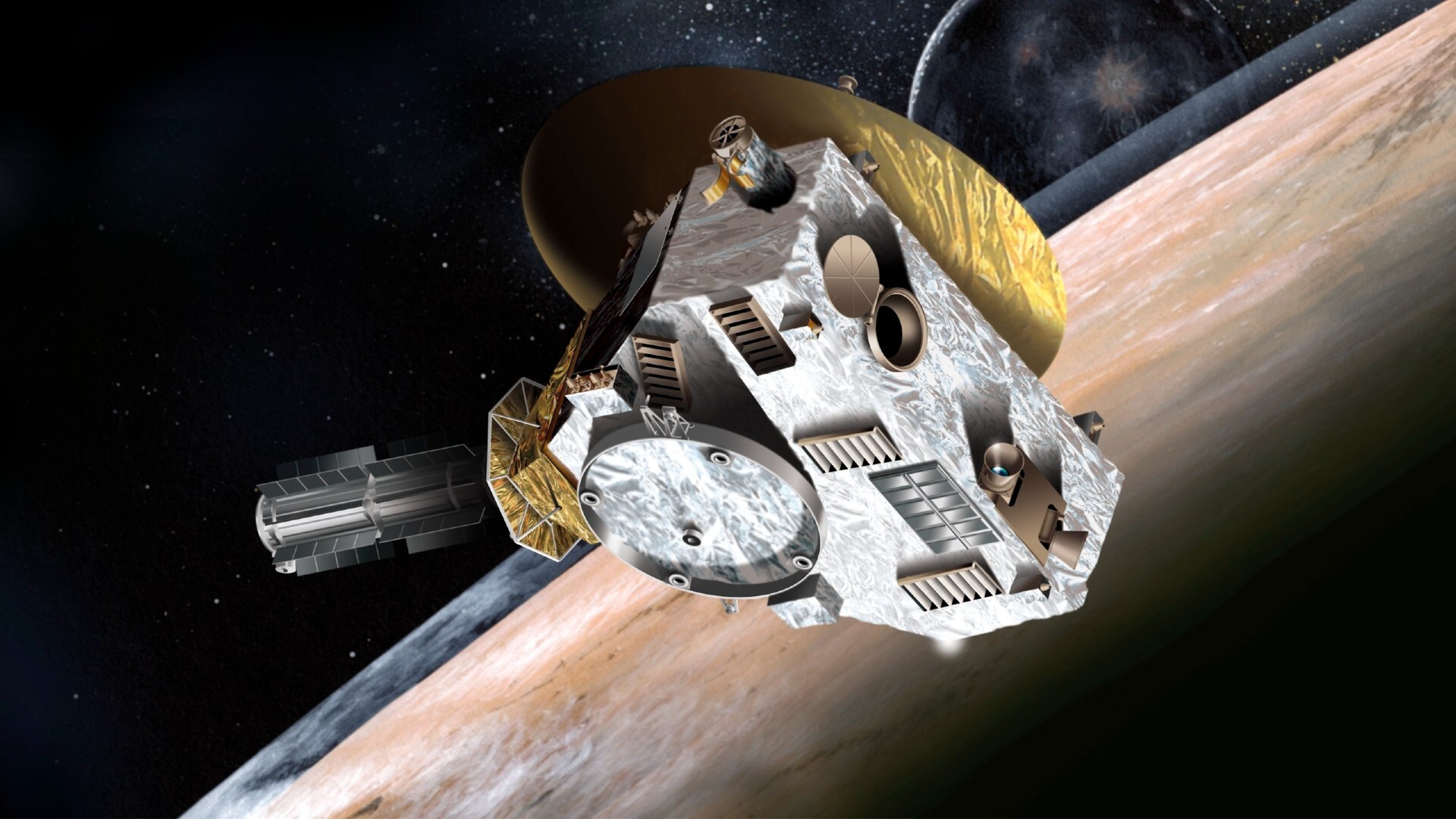
Imagine a tiny spacecraft setting off on a journey into the darkness of space, heading towards a mysterious world that no human had ever seen up close. On January 19, 2006, NASA’s New Horizons spacecraft began its voyage. For more than nine years, it travelled through space, carrying a question that had fascinated humanity for generations: what does Pluto really look like?
Then, on July 14, 2015, it finally arrived. A distant, mysterious world came into view, revealing icy mountains, strange landscapes and secrets hidden for billions of years. For the first time in history, humanity could see Pluto up close.
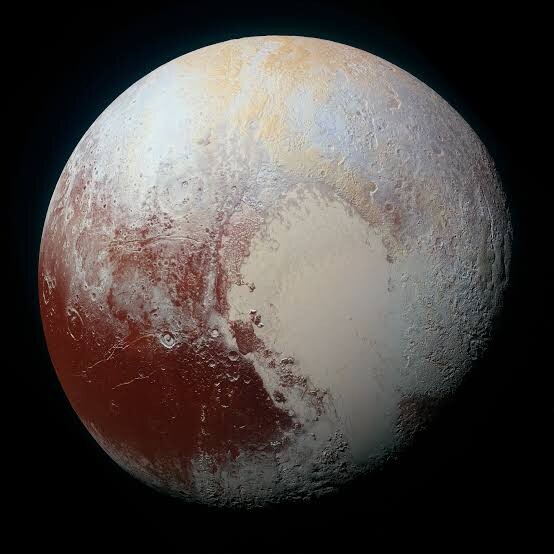
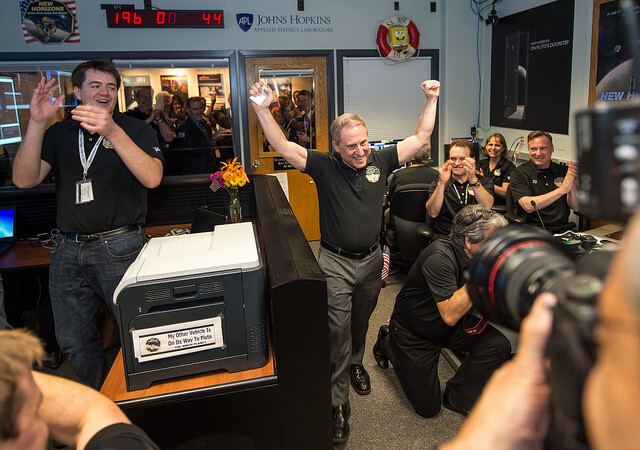
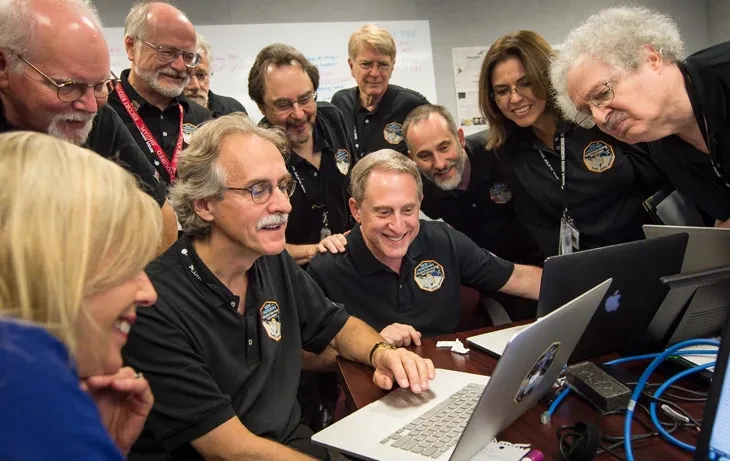
But the most beautiful part of the story, Alan Stern tells Armenpress, was not just the discovery itself. It was the joy it brought to people all over the world. More than a decade later, strangers still approach him at airports to say, “Thank you. This is what humans should be doing.”
Stern was the principal investigator of NASA’s New Horizons mission, the first spacecraft to explore Pluto up close. Today, the little traveller is still racing through the outer reaches of our solar system, sending signals back to Earth and carrying our curiosity into the unknown.
So, what makes us look up at the stars and wonder what lies beyond them? Could we discover life somewhere out there? And is Pluto really a planet, as Stern believes, despite its official classification as a dwarf planet? Armenpress spoke with Alan Stern during the STARMUS festival to explore these questions and the curiosity that continues to drive humanity towards the unknown.
Armenpress: What did you feel when New Horizons finally reached Pluto after such a long journey?
Stern: I felt happy and amazed by nature when it finally reached Pluto, but more than anything, I was happy because of the joy it gave so many people, not just on my team but also people across the planet. It was in every newspaper, on every website, on every newscast. And even now, 10 years later, people send me letters and emails and find me in airports and say, "Thank you. This is what humans should be doing." And that made me very happy.
When I was little, we used to call Pluto a planet. Now it’s called a dwarf planet.
Well, Pluto is a planet, and most planetary scientists, the actual professionals, consider the small planets planets. The term dwarf only means that it's small. The Sun, you know, is called a dwarf star—not a star, but just a small star.
Talking about New Horizons, where is it right now? Is it beyond the Kuiper Belt?
It is in the outer part of the Kuiper Belt. It's traveling very fast, and it will leave the Kuiper Belt in a few years, unless we find that it's bigger than we thought.
Is it still sending signals?
Every day.
Is it capable of sending pictures as well?
It can do that, and we expect it can do that for something like 15 more years.
What inspires you most about space exploration?
Personally, I am most inspired by space exploration because it creates a better future for humans and for society.
Do you think we can find convincing evidence of life in your lifetime?
It’s possible, particularly because I think we are on the verge of a real renaissance in medical technology. So, I think all of us are likely to have a longer, healthier lifespan than our parents because of this revolution. I do think that we’re very likely to find life in our universe, and even in our solar system. But it’s only an opinion. What we need is data.
What would disappoint you more: finding out that we are the only life in the universe, or that life exists elsewhere but we are the only intelligent beings?
I think that’s a false choice, if I may be frank. I think there are many other possibilities, including that there are many other intelligent life forms throughout the universe. Whatever the universe has done to create life or not to create life, to create simple life or intelligent life, it’s ours to find out. And for me, it’s not a matter of being disappointed by one outcome or another, but simply learning what has actually happened.
A big part of your career has been spent exploring the planets at the edge of our solar system. Why is that exploration important? What will it give us?
You know, what makes humans human is that we are explorers. We are inquisitive. All of the technological advances since the beginning of civilization have been because we are inquisitive. We make better tools. We make a better life.
The exploration of space is giving us many new possibilities for a better life. Look at all the wonderful communications that we have that did not exist before: satellite communications, all of our ability to monitor arms control and hopefully protect the peace a little better, and our ability to see the changes in the Earth's atmosphere due to pollution so that we could learn about it and correct it.
These all come from space, and so do many other things. In the future, I hope that we will move a lot of industry off the planet into space so that the Earth can be protected better. This all comes about thanks to space and space exploration.
And the last question - what, in your opinion, is the biggest scientific achievement of humanity in the 21st century?
Probably the creation of artificial intelligence.
The Armenpress coverage of the STARMUS festival is supported by Team Telecom Armenia.