
 361.36


COP17 Green Zone offers the public a diverse programme of activities and events
6 minute read

Armenia is hosting COP17 from 19 to 30 October, with discussions focusing on global biodiversity issues and challenges. During the conference, the Karen Demirchyan Sports and Concert Complex has become the Green Zone, which is also open to the general public.
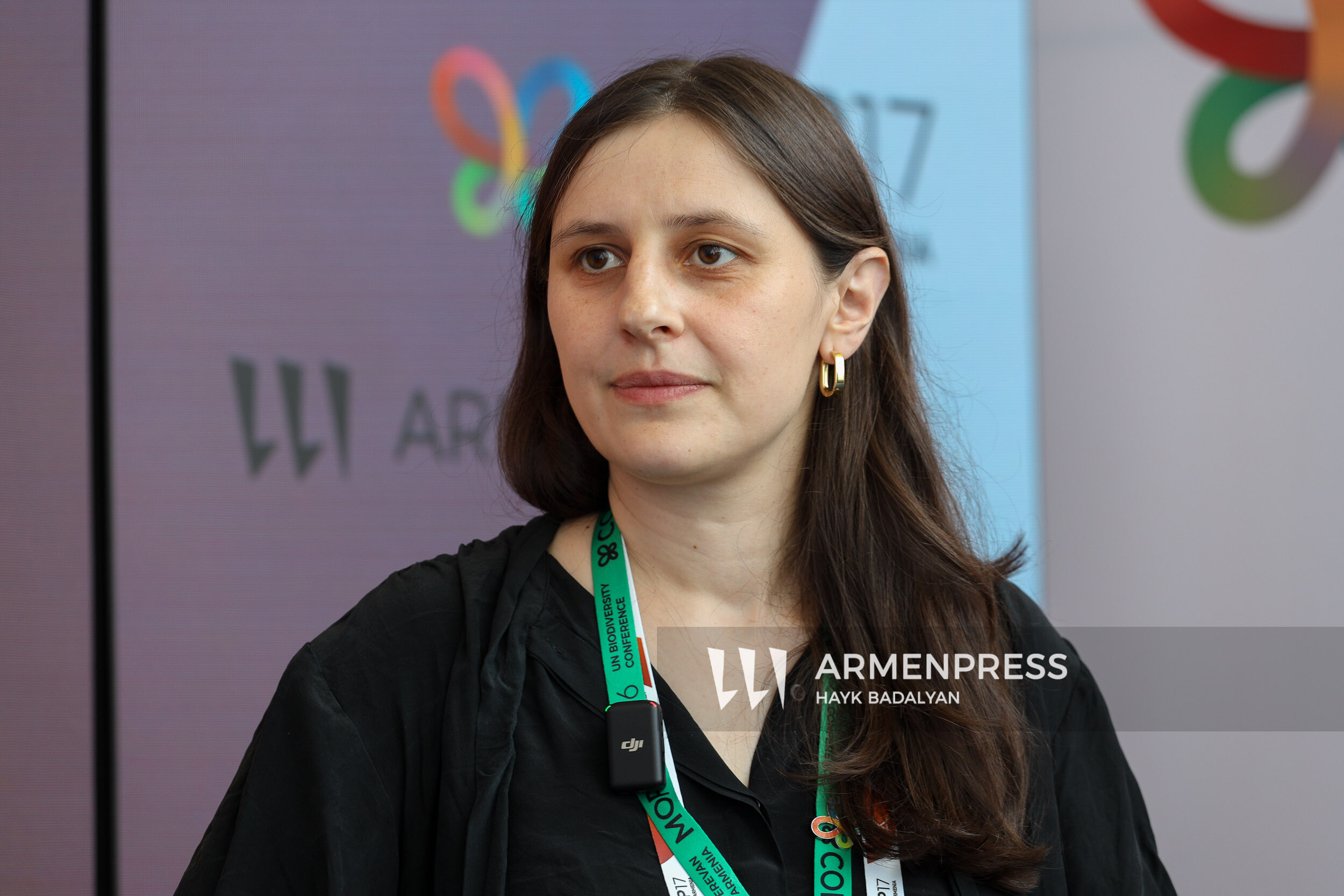
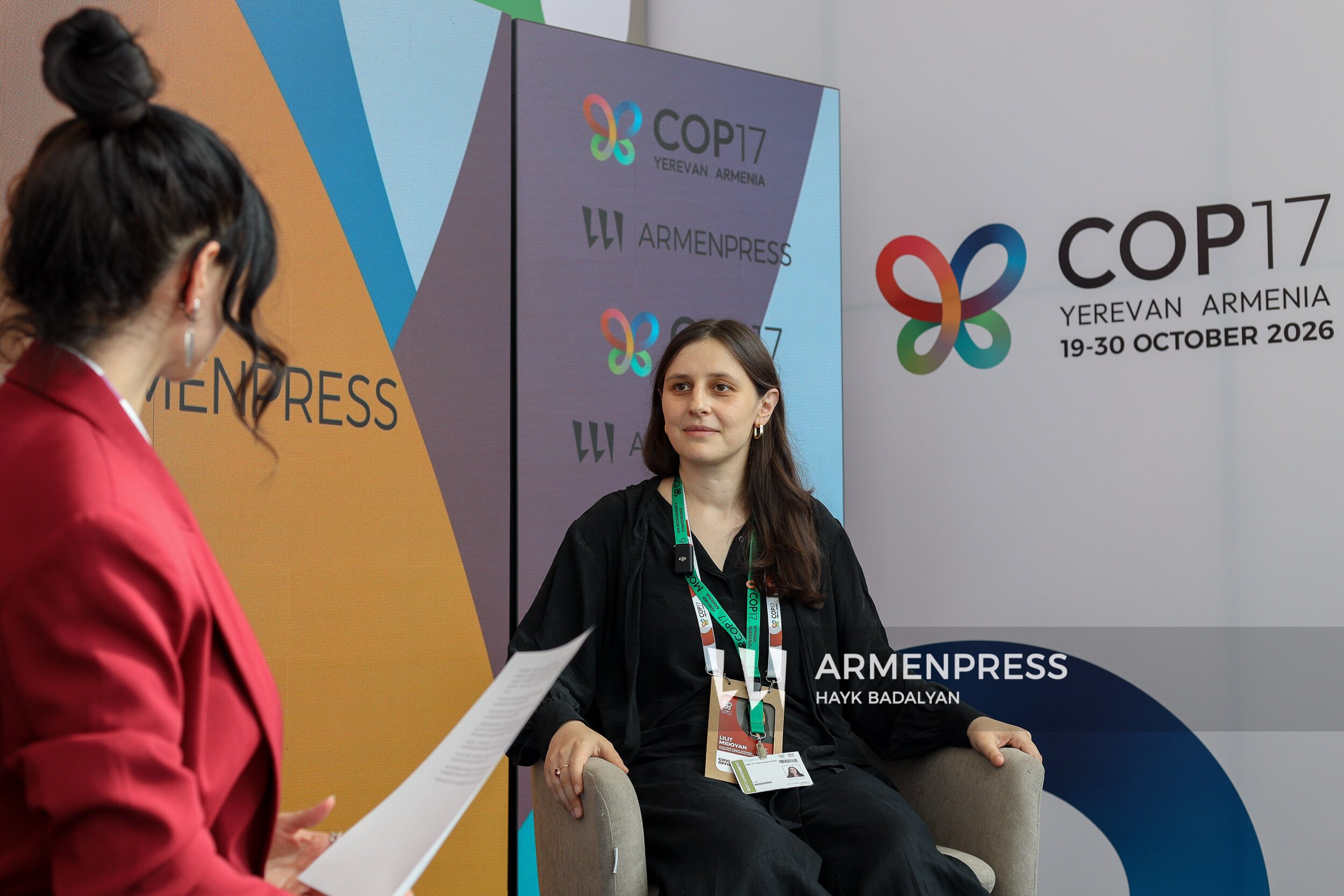
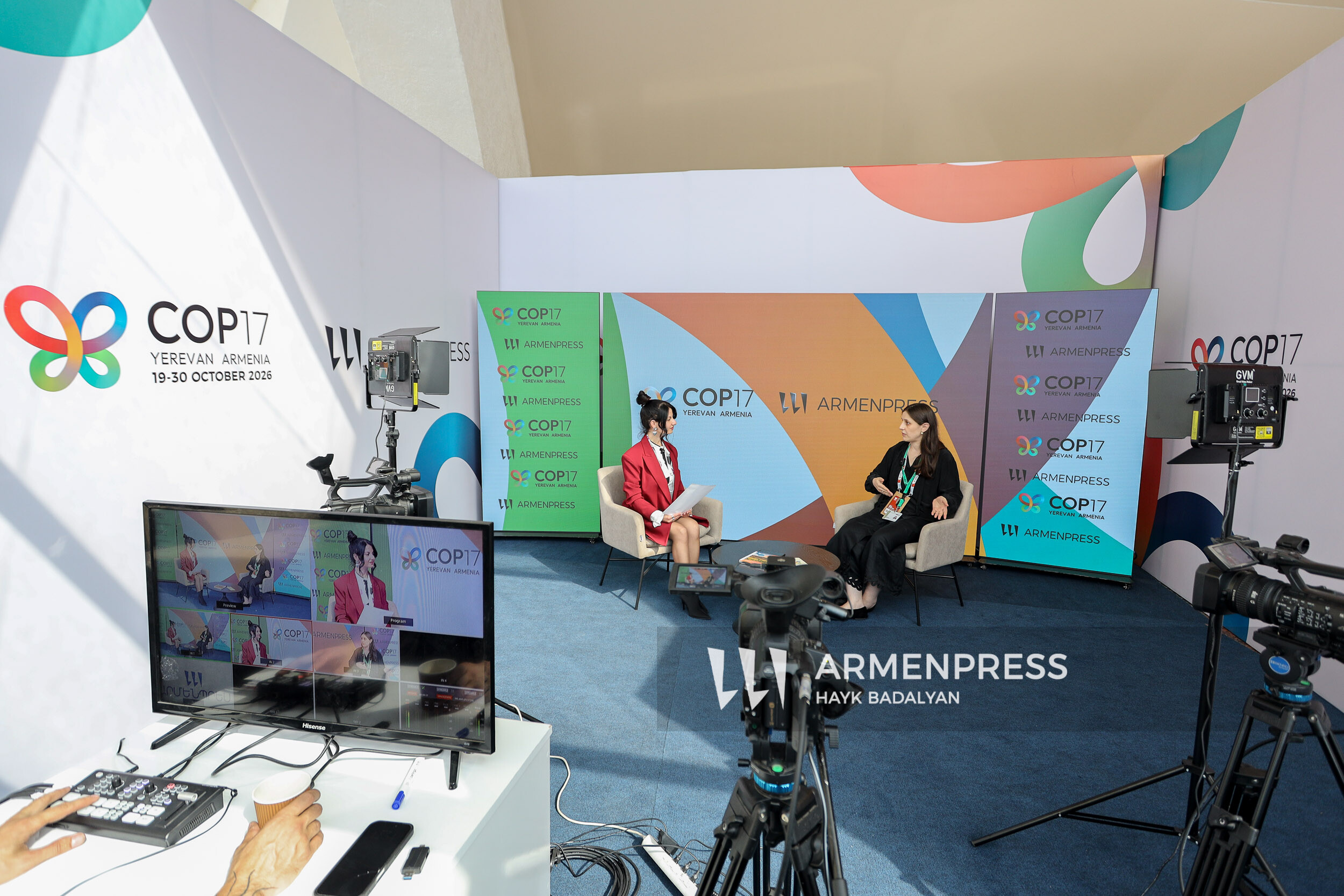
An Armenpress correspondent spoke to Lilit Midoyan, who is responsible for organising the Green Zone’s activities, about its programme.
Lilit, could you explain what visitors can see at the Green Zone’s pavilions?
Working with representatives of various companies, organisations and the public sector, we have sought to showcase both Armenia’s rich biodiversity and programmes supporting environmental protection and sustainable development.
We currently have more than 100 pavilions and a children’s educational area where parents can leave their children while they explore the rest of the Green Zone. These areas offer environmental and developmental games, and we have a sociologist and a psychologist who will work with the children.
We also have a science and education area featuring the coalition of universities on biodiversity, alongside several innovative projects whose products visitors can explore. These include a water filtration system.
There is also a cultural programme, with two stages and two workshop spaces offering a varied programme from 10:00 to 20:00.
You mentioned the activities for children. Am I right in understanding that the dedicated children’s pavilions aim to strengthen their sense of responsibility for caring for nature?
Yes. As I mentioned, we have different games for different age groups. The games teach children how to sort waste. We have games about Lake Sevan and illustrations themed around Armenia’s biodiversity. We have tried to help children learn about biodiversity from an early age. Armenia, despite being a small country in the Caucasus, has a biodiversity concentration of 60 per cent.
While walking around the pavilions, I saw several exhibitions. There is a strong cultural element too. Was it easy to bring biodiversity and culture together?
They may seem like separate fields, but they are not. We tend to think of nature and biodiversity as fields that exist in their own separate bunker, but that is not the case. Biodiversity is also present in culture. If we study dragon carpets or other types of carpets, we can see how extensively Armenia’s biodiversity is represented in carpet weaving too.
We have several pavilions showcasing Armenia. We should not forget Armenian cochineal either. The Matenadaran holds many books written using cochineal dye.
What discussions will take place here during the conference?
I would like to talk about the idea behind the Green Zone. It was specifically created as a space where civil society, journalists and anyone interested can be represented and raise their concerns through discussions, speakers addressing the sector’s issues on stage, and other formats.
The workshops and topics are very varied. The programme is available on the Green Zone’s official website.
COP in Armenia has attracted participants from a wide range of countries. We have welcomed many interesting people, and conferences have already taken place, with others still under way. I know many people who have registered specifically to attend Green Zone events, including quite a few foreign visitors. Could you tell us about that interest? Is it really that strong?
It really is. It is a little difficult to imagine an event of this scale taking place in Armenia. This is the largest international event held in Armenia since independence.
We currently have 15,000 registrations for the Green Zone, without even counting the Blue Zone. Speakers who have appeared in the Blue Zone will also be taking part in the Green Zone.
The Blue Zone is a restricted area, so this is a major opportunity for civil society to come here and engage with the international community.
I understand you have also taken part in a COP conference in another country. Have you adapted anything from that experience for Armenia?
You are right. I took part in the COP on desertification in Saudi Arabia, where I was also an organiser of the Green Zone. I represented a company responsible for technical matters.
I had just three months to bring the entire Green Zone to life. That experience was very useful when organising the COP Green Zone in Armenia, as I already knew what to expect. I have tried to adapt international experience to the local context as much as possible.
Thank you, Lilit. Please add anything else you would like to say.
I would like to talk about the slogan “Taking Action for Nature”. The Green Zone is precisely one of the places where the public can take action for nature by showcasing their projects, engaging with the international community and presenting all their solutions.