
 363.28


Rosselkhoznadzor to restrict imports of quarantine-regulated products from Armenia
3 minute read
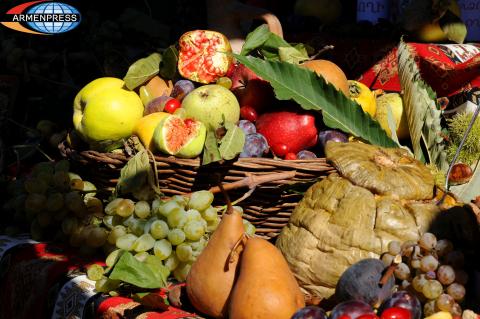
Russia’s Federal Service for Veterinary and Phytosanitary Surveillance (Rosselkhoznadzor) will impose restrictions on the import of quarantine-regulated products from Armenia starting June 12, 2026.
According to a statement issued by Rosselkhoznadzor, the measure applies both to products manufactured in Armenia and to goods shipped from the country.
The agency said transit of such products through Russian territory to other member states of the Eurasian Economic Union (EAEU) will also be restricted. “The ban will remain in force until a special algorithm is developed to ensure the safety and traceability of the supplied products,” the statement said.
Rosselkhoznadzor noted that the decision was taken due to the repeated detection of quarantine pests in imported goods.
“Since May of this year, the service has gradually restricted imports of certain categories of Armenian quarantine-regulated products and has repeatedly informed the Armenian side about disruptions in supplies. Despite this, detections of quarantine organisms have continued. In June, three cases of infestation by the khapra beetle were identified in walnuts, dried peaches and dried tomatoes imported from Armenia,” Rosselkhoznadzor said.
According to the agency, this allegedly indicates insufficient oversight by Armenia’s competent authority and undermines confidence in the country’s phytosanitary certification system.
“The ineffectiveness of Armenia’s Plant Quarantine and Protection Service poses a threat to the phytosanitary well-being of Russia and the EAEU,” Rosselkhoznadzor said, adding that the khapra beetle is a storage pest that is not present in Russia.
The agency stated that the pest can damage grain crops, oilseed crops, legumes, industrial crops and their by-products, as well as forest, ornamental and other plants.
“It can infest grain storage facilities, transport vehicles, raw material and flour warehouses, mills, feed plants, confectionery factories, malt storage facilities and other sites. It can destroy up to 70% of stored products,” the statement said.
Rosselkhoznadzor also noted that economic damage to the Russian Federation could arise not only from crop losses and the costs of containment and eradication measures, but also from the possible loss of export markets in countries where the khapra beetle is not classified as a quarantine pest.
In recent months, Russia has restricted or completely banned imports of a number of Armenian products, citing the discovery of various violations. Such measures intensified in the period leading up to Armenia’s parliamentary elections.