
 362.34


Washington agreements, established peace open innumerable opportunities for Armenia - David Allen

24 minute read

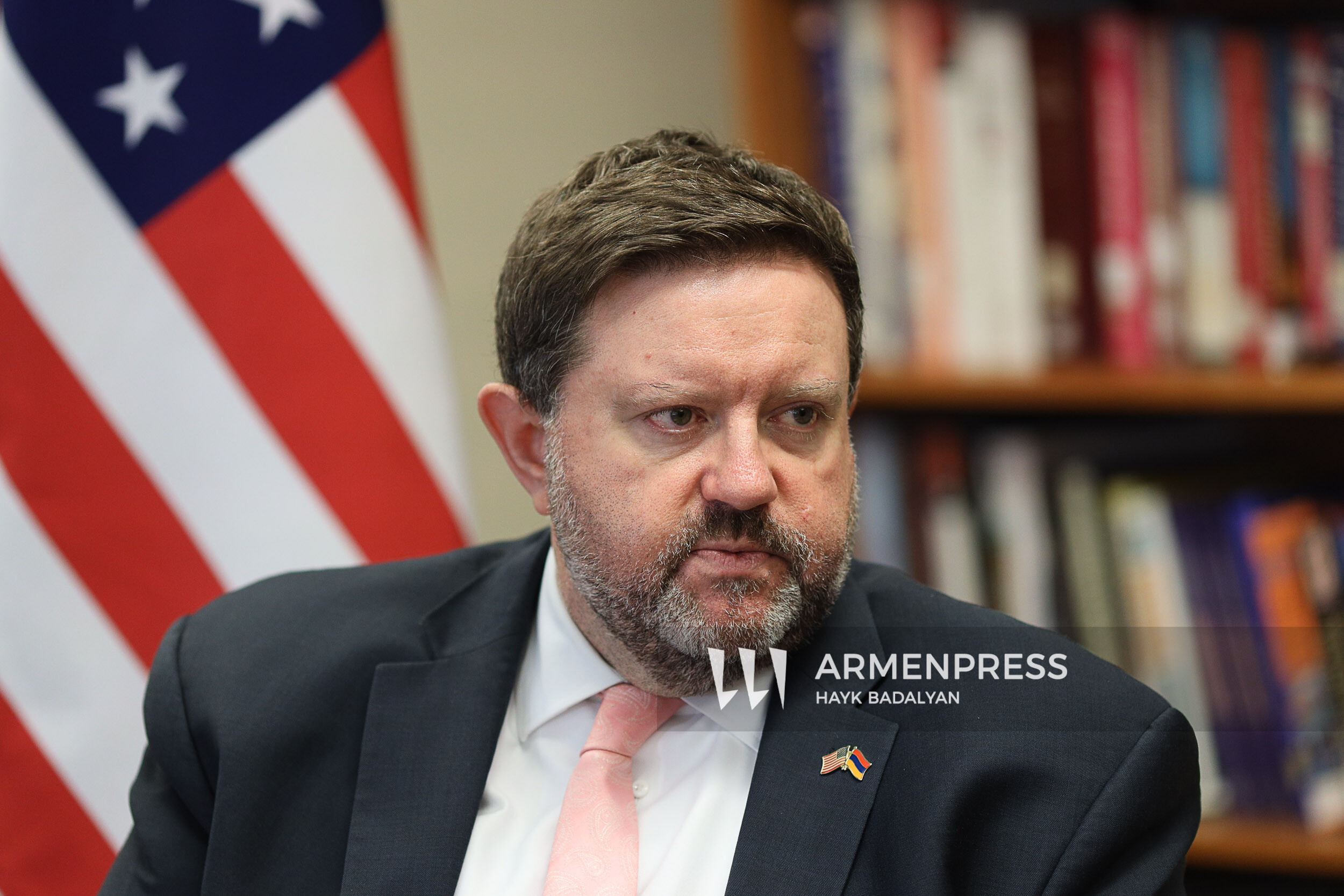
David Allen, Chargé d’Affaires of the United States Embassy in Armenia, is convinced that the peace process between Yerevan and Baku is already yielding tangible results in a short period of time. In his assessment, the declaration signed in Washington on August 8, 2025, has transformed the atmosphere in the South Caucasus, creating a solid foundation for lasting peace, economic development, unblocking of communications, and prosperity.
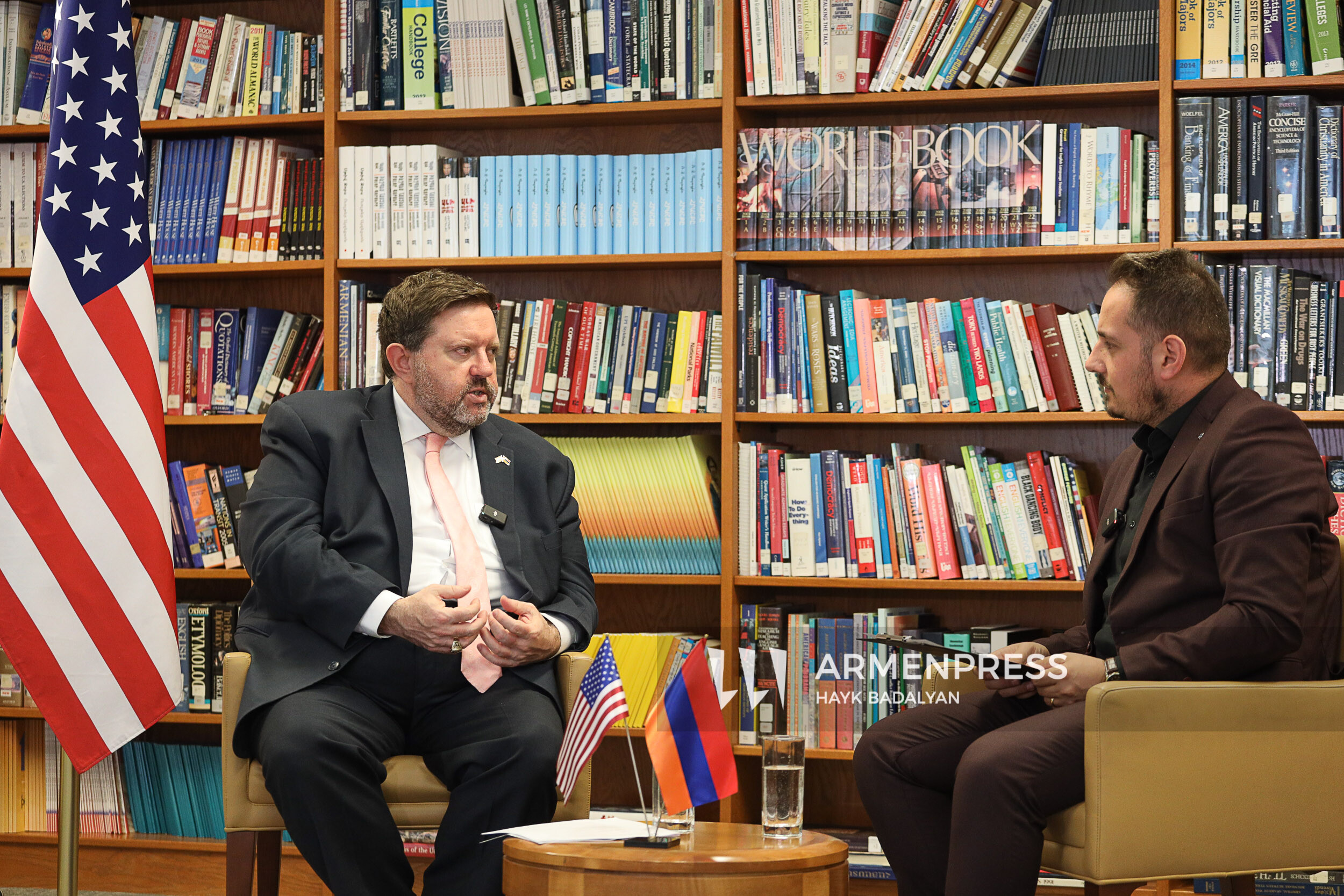
David Allen spoke about this in an interview with Armenpress, addressing the dynamics of Armenia-U.S. political and economic relations, the further potential of bilateral partnership, the peace established between Armenia and Azerbaijan through U.S. mediation, and Washington’s role in ensuring stability and security in the South Caucasus region.
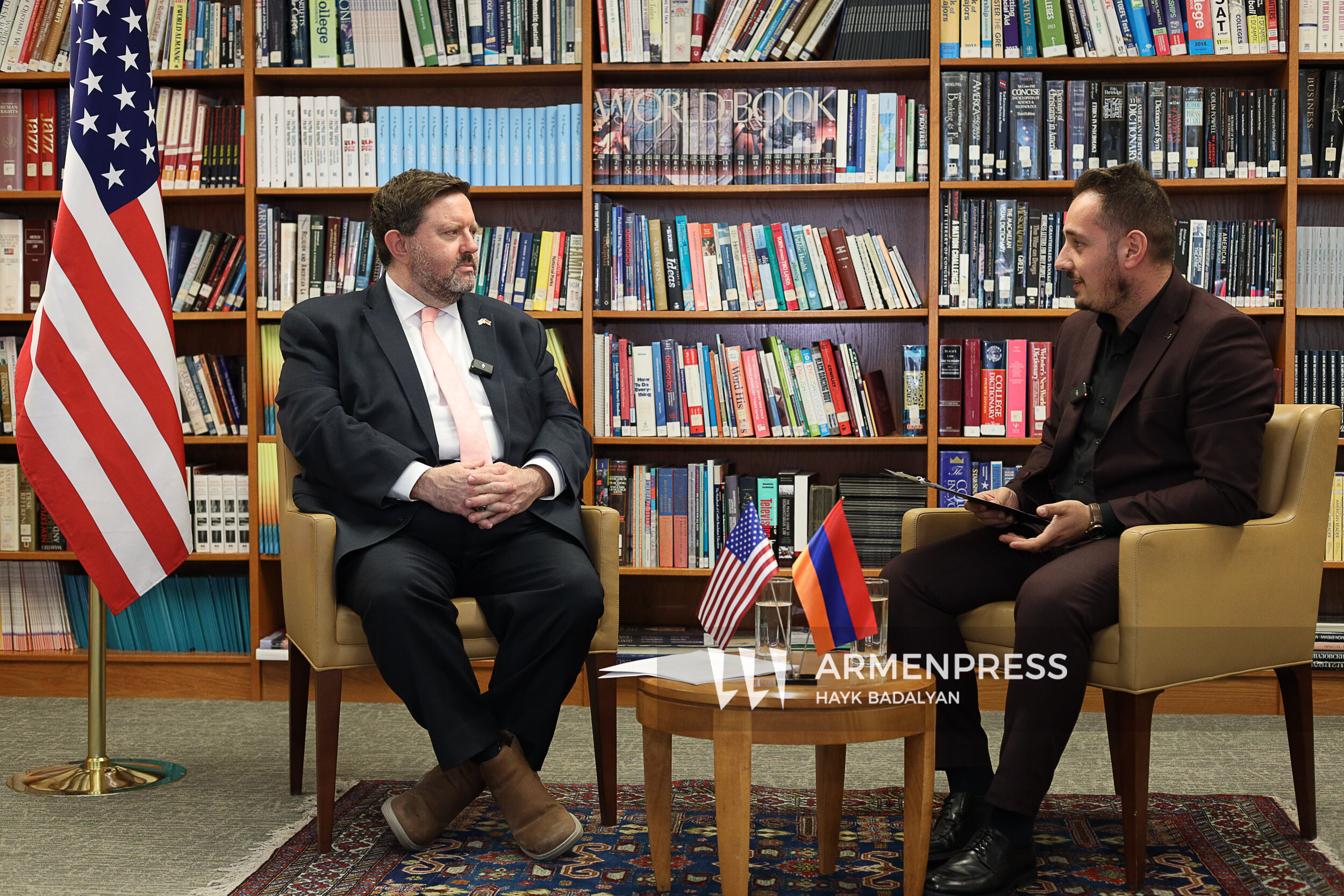
He expressed the view that this is one of the most important moments in Armenia’s history, and that there is a real opportunity to consolidate lasting peace and then take advantage of all the other opportunities that peace brings.
The interview was conducted on May 15.
Mr. Allen, how would you assess the current level of political dialogue and relations between the Republic of Armenia and the United States? What important aspects would you underline in this regard and what prospects do you see for the future in the relations of our countries?
In my opinion, and I think in a lot of people's opinion, the U.S.-Armenia relationship has never been stronger.
Just in the last 12 months, if you think of some of the things that have happened, starting with the August 8 Peace Summit in Washington, the Vice President's historic visit to Armenia in February, since then we've had a couple of fairly large commercial deals. We're moving forward on TRIPP implementation. We're working to implement the Bilateral Memorandum of Understanding from Washington.
We're very busy. We're very engaged. We have very good partnerships here.
And I think that the future of U.S.-Armenia relationship, clearly it's very bright. It's very positive, and I think good things are going to continue to happen in the coming months and years. So do you see any certain prospects for further developing our relations? Well, yeah, I think the Vice President's visit in particular was a seminal moment.
It opened a new era, if you will, of U.S.-Armenia relationships. Since then, as part of implementing those Memorandum of Understanding, for example, we've had some major advances in our commercial relationship, our economic relationship. Just a couple of things that I can think of.
And, of course, this is, in large respect, it's the U.S. private sector. But YouTube, for example, just recently announced that Armenia, that the YouTube partnership program was coming to Armenia, which will allow Armenian content creators to monetize or to reap financial benefits from the content that they put on YouTube. We've had what amounts to potentially a $4 billion to $5 billion deal on an AI center being built near Yerevan by an American consortium.
We've had some major U.S. interests in Armenia's mining sector. And that's just on the commercial side. On the political side, the Prime Minister and the President and the Vice President all have very good relationships.
And this doesn't even start to get into questions about benefits to Armenia and the United States that we think will come once the TRIPP, the Trump Route for International Peace and Prosperity is fully up and running, when peace is fully recognized or realized with Azerbaijan, when Armenia's relationship with Turkey is normalized. And that will all open, I think, some very significant new opportunities for Armenia and also for the United States.
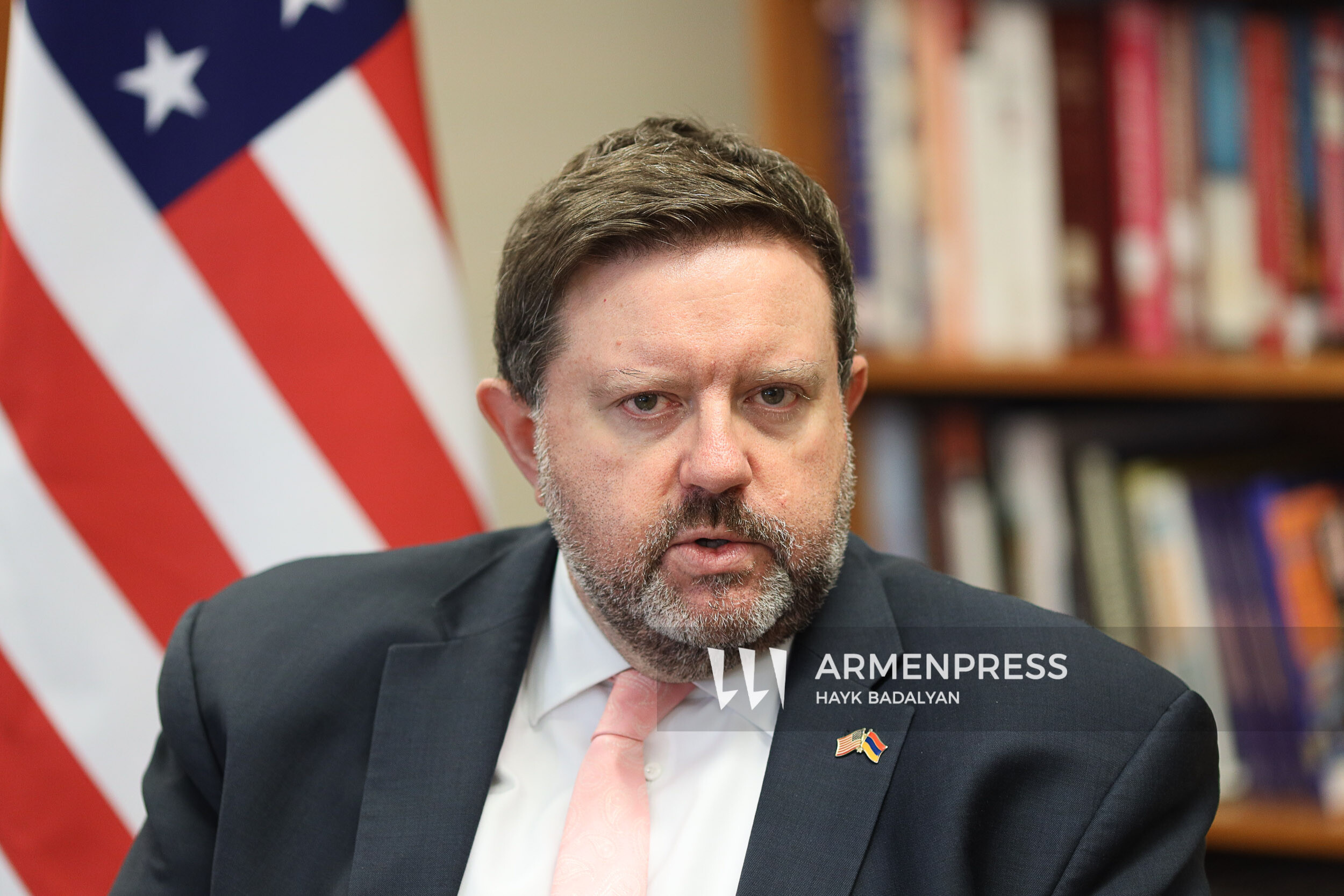
You mentioned about the Vice President's visit. This was a truly historical event in bilateral relations. So how would you evaluate the significance of the Vice President's visit to Armenia and what new opportunities it may open for bilateral relations between the United States and Armenia?
Well, I think the most important part of the Vice President's visit is that it really demonstrated the importance of Armenia and the relationship with Armenia at the highest levels of the U.S. government. I think that there are people who want to say that the August 8th summit was nothing more than a photo opportunity and that the United States, and in particular the President or the Vice President, are not committed to those understandings and those agreements.
And I certainly hope that the Vice President coming here personally, the first ever time that that has happened, the highest U.S. government official to ever visit Armenia since the country's independence, that should be seen as a sign that the United States is committed at the very highest levels of this government to Armenia, to our relationship with Armenia, and to implementing the agreements that were reached in Washington and were signed on August 8th. A lot of those opportunities, a lot of those things that I've talked about already in this interview are, I think, made possible by the Vice President's visit, the AI data center. We've issued a couple of export licenses to allow U.S. technology to come to Armenia.
It's the first time ever that those types of export licenses have been issued for Armenia. And really, it's not very common even outside of this region. I think there's only been two or three other countries that have received those export licenses.
The YouTube partnership program, is actually another great example. That is something that Armenia has pursued for a very long time. And it was the Vice President's visit that, to a large extent, unlocked that possibility as well.
It was announced during his visit. We've reached agreement on this so-called 1-2-3 agreement, which allows closer cooperation and exchange of information on civil nuclear matters, which will become increasingly important as Armenia makes decisions about replacing the Metsamor power plant.
The Ministry of Internal Affairs, just announced that they're moving forward with biometric passport identification documents, which will make them more secure. It's actually an American company that will be making those documents.
I think we're still moving in the right direction. I think it's going to continue to grow, and we're going to continue to see these types of opportunities.
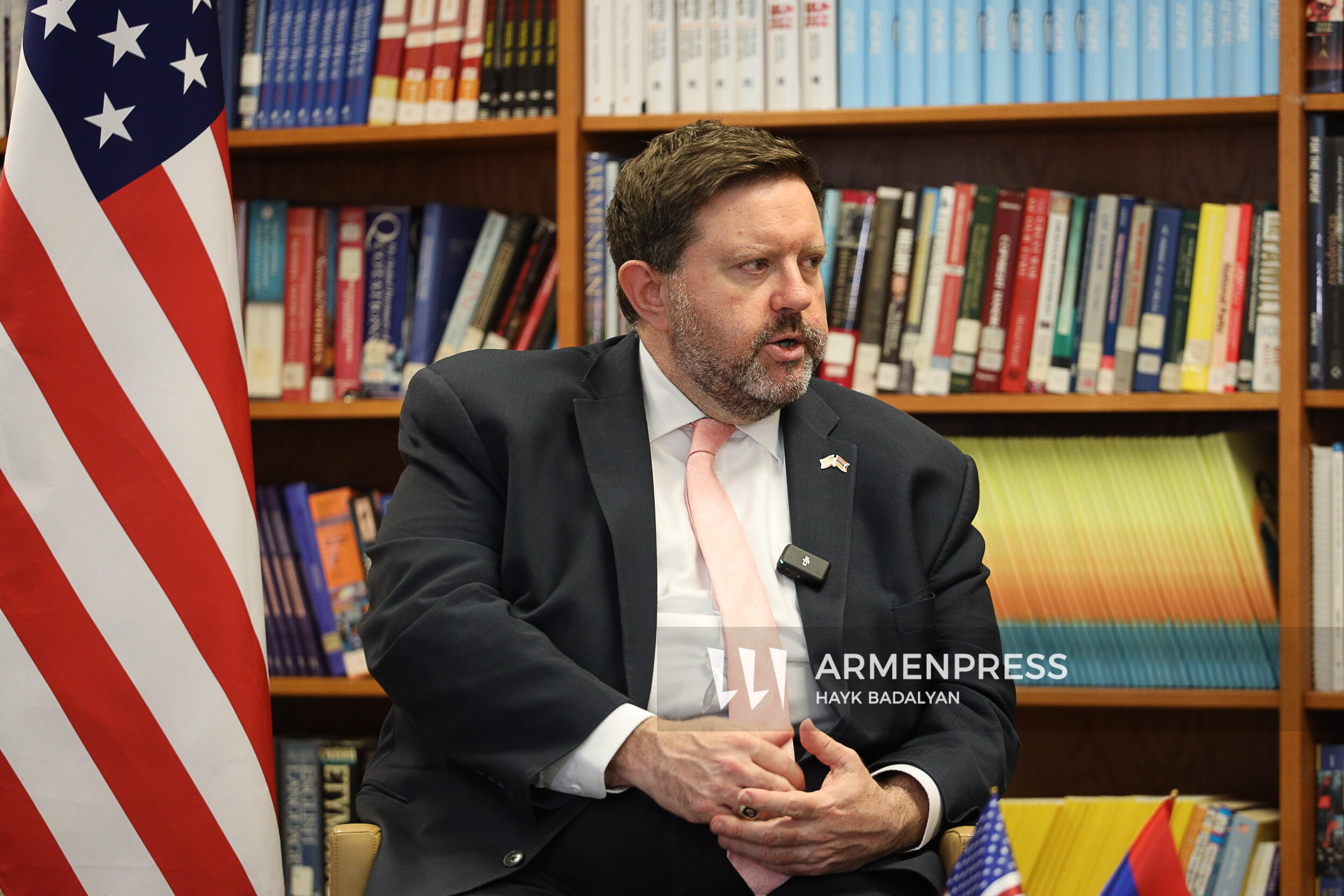
In August 2025, as you mentioned already, the peace declaration was signed between Armenia and Azerbaijan in Washington, which was also witnessed by the President of the United States. How does the U.S. see its role in ensuring peace and stability in the South Caucasus, and what can it give to the people of these two countries, Armenia and Azerbaijan?
President Trump has made very clear that he wants to be the president of peace. Of course, Armenia-Azerbaijan is only one of several peace initiatives that he has undertaken. This has certainly been one of the successful peace initiatives, and I don't think that it's hard to see some of the changes that have occurred in really the short amount of time since August 8. One of the best examples that I can think of is many of your viewers will remember that this time last year, there were literally hundreds and hundreds of alleged ceasefire violations on the Armenia-Azerbaijan border, where one side was claiming that the other side was firing at them.
Since August 8, there have been, I believe, none. So for a really, I think, tangible and important sign that things have changed. I mean, look no further than last week here in Yerevan, the European Political Community meeting, where for the first time ever you've had a very, very senior Turkish delegation, but also an Azerbaijani delegation.
And think about that for a minute. You know, Azerbaijanis coming to Armenia for a political meeting, and it being okay, right, normal. President Aliyev spoke.
Who would have predicted a year ago that any of that would have happened? And I think it's a direct result of the August 8 agreement. It's a direct result of the decisions that Prime Minister Pashinyan and President Aliyev have made, either together or in concert with one another. This is, I think, a seminal moment in Armenia's history.
There is a real opportunity, in our view, to cement a lasting peace, and then to take advantage of all of the other opportunities that that peace provides. And here I'm thinking about eventual normalization with Turkey, unblocking of borders, the ability to perhaps export Armenian products to not just Azerbaijan, not just Turkey, but into Europe, the economic benefits of increased trade relations. And then, of course, just the fact that for the first time, perhaps in a very long time, Armenians will not have to worry.
And I know that this has been particularly worrisome over the course of the last five or six years since 2020. It really ends the worry or the concern about future military action against Armenia. And so all of that taken together, I think, really provides opportunity for Armenia and Armenians to be in this very stable position where you can start, perhaps for the first time in a long time, thinking about the future and Armenia's future as perhaps, in regards to the rest of the world, the relationship with Europe, the relationship with the United States, the relationship with other partners of your choice.
So I think that there are innumerable, really, opportunities that August 8th, the U.S. involvement, and the peace process have really brought into the picture and that are very possible as this process moves forward.
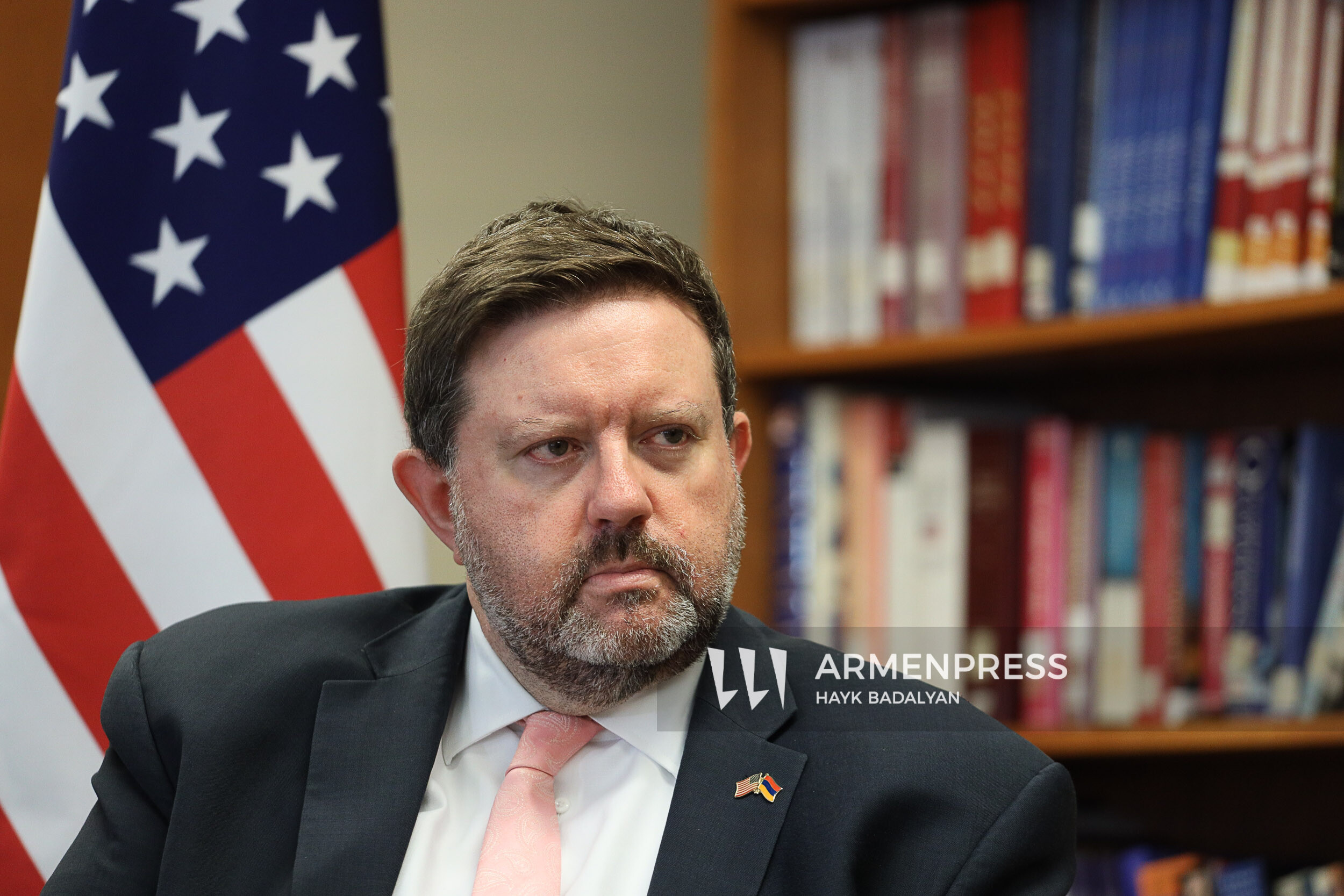
So according to one of the provisions of the August 8th declaration, Armenia and the United States will work together towards creating a Trump Route for International Peace and Prosperity in the territory of the Republic of Armenia. And approximately a month ago, the State Department of the United States announced that Trump's administration remains committed to make this program, to make this initiative a reality. So how would you comment on this and what essential elements would you like to add to this statement?
Thank you for that question. So I can confirm the United States remains absolutely committed to the implementation of TRIPP, as we call it. I know that there are questions about when will construction start and when we will actually see trains.
And those, I think, are very legitimate questions. And what I would ask your viewers to keep in mind is that these are really complicated political and legal and other types of engineering, technical issues that really have to be worked out and that we have to get right at the start if this is going to be successful. And so I think one of the reasons that perhaps people are not seeing as much activity as they hope to see publicly is because a lot of work is being done behind the scenes to make sure that we get these issues right.
And in fact, just this week, I can tell you today that there is a large team from the State Department and the U.S. International Development Finance Corporation that is in Yerevan. They have been here all week long working with your government, talking to your government about one of the very important agreements, the intergovernmental agreement between the United States and Armenia about TRIPP. And this is the agreement that in large part will lay out the commitments of each country and what type of issues the governments will deal with versus, say, the TRIPP development company that will be created.
So there is progress being made. It's not necessarily visible, but it's happening. I should also mention, I guess, this week that the company that is doing the engineering feasibility study of the route is also in Armenia this week, and they're here to have not—they've had initial meetings with your government, but this is the next series of meetings.
They're at the point where they are very close to being able to start fieldwork, which means that they will go to Syunik, and they will actually physically start looking at the route to determine things like what is the state of the infrastructure, are the bridges usable, do the tunnels maintain stability, all of that kind of stuff. And as those types of things move forward, then we're going to be able to start making specific plans, or rather the TRIPP development company most likely will be able to make specific plans about what we really need to do there to bring the Trump route into actual physical existence. And so, again, my point to your viewers would be the U.S. is committed.
Things are happening. We're going to need to ask for a little more patience as we work out the legal and the technical issues, but I'm very confident that at some point in the future, and we would all like it to be very soon, hopefully we'll be able to make it go faster, but there will be construction. There will be rail laid in Syunik, and eventually there will be trains.
TRIPP will be real, and I am very confident because I know that the president, the vice president, Secretary Rubio, this embassy, we are all very committed to making sure that this happens and that we do our part to help both make it happen and make it happen as fast as we possibly can.
Mr. Allen, I would like to talk a little bit about the economic part of our relationship. So how would you describe and evaluate the economic relations between the Republic of Armenia and the United States nowadays, and what opportunities, prospects do you see for the future development of those two?
I would describe our economic relationship as good and getting better, getting stronger.
U.S. companies have always been here. U.S. companies have always been interested in Armenia. I think we're only seeing that interest grow, and I've already talked about a few of the companies, Firebird. There have always been American companies in Armenia. What we're seeing right now, I think, is much more interest, though, from U.S. companies in this country. And because, in some respects, because of the political developments, but we really feel like a vibrant political relationship has to be underpinned by a vibrant economic relationship. And we're there, and we're going to keep on being there.
The tech industry here is incredible. Many, many U.S. companies and very big, very recognizable U.S. companies are already here. We have more that want to come here.
Every day, my commercial team talks to American companies that are interested in Armenia. And every day, we are trying to do our part to make sure that they have good information, that they understand that this is the Armenia of today, not the Armenia of yesterday, that Armenia is open for business and welcomes foreign investment, welcomes American investment, and that this is really a great place for them to think about coming and investing and working.
So what specific steps and actions, in your opinion, must be done in order to further develop relations between our countries and cooperation in the near future? And in which areas do you see the greatest unfulfilled potential that there is between our countries?
Much of the focus will remain on TRIPP and making sure that that is real, because I think we all recognize that, to a large part, it is establishing regional peace, regional stability, regional trade, unblocking of communications.
That is really the key to prosperity, not just for Armenia, but I think for, in fact, the entire region. So from a more regional or strategic standpoint, our focus will be doing our part to make sure, or to contribute, I suppose is the better way to say it, to all of those things and to the future of the region in that way. If we're talking about Armenia specifically, on the political side of our relationship, it is very strong, and I think it will continue.
And in terms of next steps, largely we will just continue to do what we are doing now. Of course, we have an election coming up. We will see the results of the election and then adjustments if necessary.
But I see no reason to believe that the political relationship will do anything other than improve. Economically, as I said, we're strong. We can always get stronger.
And I think we would all like to see more bilateral trade. We would like to see opportunities for American companies here. Conversely, we would like to see Armenian investment in the United States.
And I'm aware of at least a couple of Armenian companies that, in fact, are already investing in the U.S. and others that are interested in investing in the U.S. And so we'll see how those relationships continue to develop. Of course, it's the commercial, it's the private sector that makes those decisions. And so as American companies see Armenia as a good place to come, a good place to do business, then they will come.
And as Armenian companies understand the opportunities in the United States, they'll make decisions about whether this is right for them or not. In terms of specific sectors, I think we will continue to see U.S. interest and increased cooperation, increased work in the tech sector.
The civil nuclear field is potentially quite interesting. And again, Armenia will make its own decisions about how it will move forward in terms of, say, replacing Metsamor. But U.S. technology is available.
We think it is the best technology in the world. We think that it is very appropriate for what Armenia needs and what Armenia would like to do.
I suppose the third sector I will talk about, again, is mining. You know, I know Armenia has a fairly extensive network of mines. There are mineral resources here.
And there, too, I think American companies are interested in being here. I think you will see continued U.S. interest in the mining sector.
Thank you so much for this opportunity and for the comprehensive conversation. And if you have anything to add, please.
I would say, in terms of things to add, just thank you for the opportunity. To your viewers, thank you for the opportunity to be here in Armenia.
My colleagues and I really enjoy it here. It is, I think, the highlight of my career to serve in Armenia. This is a place where good things are happening.
We have good partners. We have exciting opportunities. Thank you to all of our Armenian partners for the opportunities that we have to do that.