
 364.18


MEP calls for common EU defense and security policy

12 minute read

Cyprus MEP Costas Mavrides has emphasized the need for the European Union to develop a common policy in the field of defense and security.
In an interview with Armenpress’ Brussels correspondent, Mavrides stated that such a policy should not be directed against any particular country but should aim to protect the EU, its Member States, and especially the external borders.
The MEP also addressed Turkey’s continued occupation of the northern part of Cyprus and the EU’s stance on the matter.
- Mr. Mavrides, this year marks the 51st anniversary of the Turkish invasion of Cyprus which is a deeply painful chapter in European history. Looking back, what do you see as the most lasting political and humanitarian consequences of that invasion that still affect the island and its people today?
- Many times, we forget that since 2004, Cyprus has been part of the European Union officially, because the Republic of Cyprus, with all its territory including the northern part which is under illegal Turkish occupation, is part of the Republic of Cyprus. Although it is de facto controlled by the Turkish army illegally, all of the territory remains part of the Republic of Cyprus and, therefore, part of the EU.
So, if you ask me what is perhaps the only promising factor after more than half a century, 51 years since the Turkish invasion, I would say it’s the European perspective. That is the only hope we have, both Greek Cypriots, Turkish Cypriots, Armenians, Maronites, Latins, and so on.
Although having said that, I must say there is great disappointment among Cypriots in general, especially within the Republic of Cyprus. Because despite the fact that Turkey invaded the island in 1974, expelled all the Greek Cypriots from their homes and homeland. I myself am a refugee child from 1974, who managed to survive with my sisters. We are now in 2025, and the disappointment is strong.
Whenever we compare how the EU treated Ukraine, a country not even in the EU but under Russian aggression, with many sanctions imposed on Russia and yet when it comes to Turkey, there are no sanctions at all. I can tell you very plainly that it’s extremely difficult for me to explain this to the citizens of Cyprus, Greece, and even beyond.
- In fact, according to you, the European Union has not taken sufficient steps to support Cyprus, both politically and diplomatically, or to hold Turkey accountable for that country's continued military presence in the north.
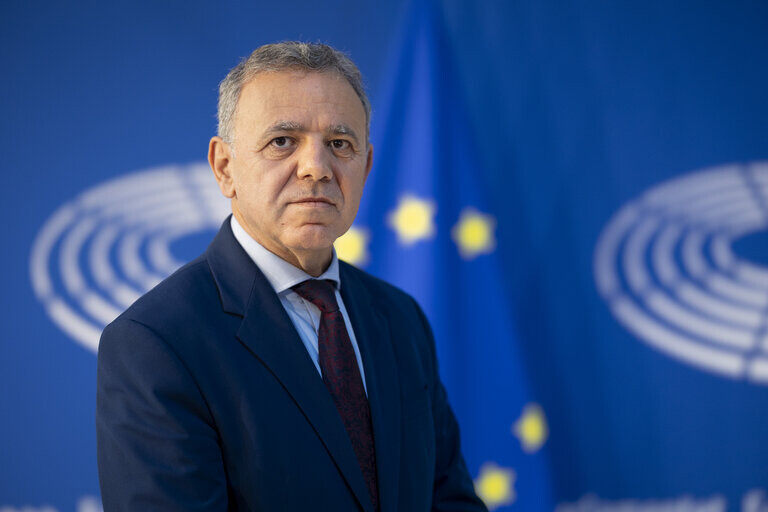
I would state it positively: not only has the EU disappointed us, but I strongly believe that if there were political will, there are many things the EU could do.
I’ll give you an example. Turkey, especially in recent decades, relies heavily on energy, its geopolitical agenda, but especially on trade and its economy with the EU. The EU — the 27 Member States — is by far the number one importer of Turkish goods. Therefore, we have leverage. Leverage that we never use.
We could use this leverage to press Turkey to find a settlement in Cyprus, a settlement that would remove the illegal Turkish occupying troops, dismantle the so-called “Turkish Republic of Northern Cyprus”, a state declared and recognized only by Turkey, and end all these illegalities.
And I repeat one more time: all of this is happening within the European Union. That is very disappointing.
- There is an ongoing debate in Brussels about the EU’s ambition for greater “strategic autonomy.” In your view, how capable is the Union today of acting independently and effectively on critical foreign policy issues, especially in complex conflict zones like Cyprus or the South Caucasus?
- I do believe there is capability, and I also believe there’s a growing awareness that we must take some major steps toward a common foreign policy, starting with a common defense and security policy.
That’s something I’ve advocated for many years and now, finally, I feel justified. Because even in my political group, and in the European Parliament, I was often alone, or with only a few others, arguing for this.
Yes, we are divided, even here. Some including the European Commission and powerful Member States want the common foreign policy to be guided by Germany and the Baltic states. Therefore, when it comes to security and defense, they primarily view it as a tool against Russia.
But that’s not how we the Mediterranean countries, including Cyprus, see it. We want a common defense and security policy not to be built against someone, but to defend the EU, to defend Member States, and especially to defend our external borders.
Here’s a real example. As a member of the Security and Defense Committee, I’ve argued about this extensively in recent months. I keep repeating that if we want to win the hearts and minds of EU citizens, we need to show them what exactly we are trying to defend, not just who or what is threatening us. The threats are many.
If the Baltic States and Poland feel that Russia is a threat, that’s their right. But for us, in the Mediterranean, for example, Malta or Cyprus, Russia is not the main threat. Our threat is neo-Ottoman Turkey.
So we face different threats, and we cannot design an EU security policy that focuses only on one threat. This is a divisive issue.
- The EU’s Common Foreign and Security Policy is often criticized for lacking coherence and assertiveness. What concrete reforms or strategic shifts do you believe are necessary to strengthen the EU’s ability to respond to occupations and violations of international law?
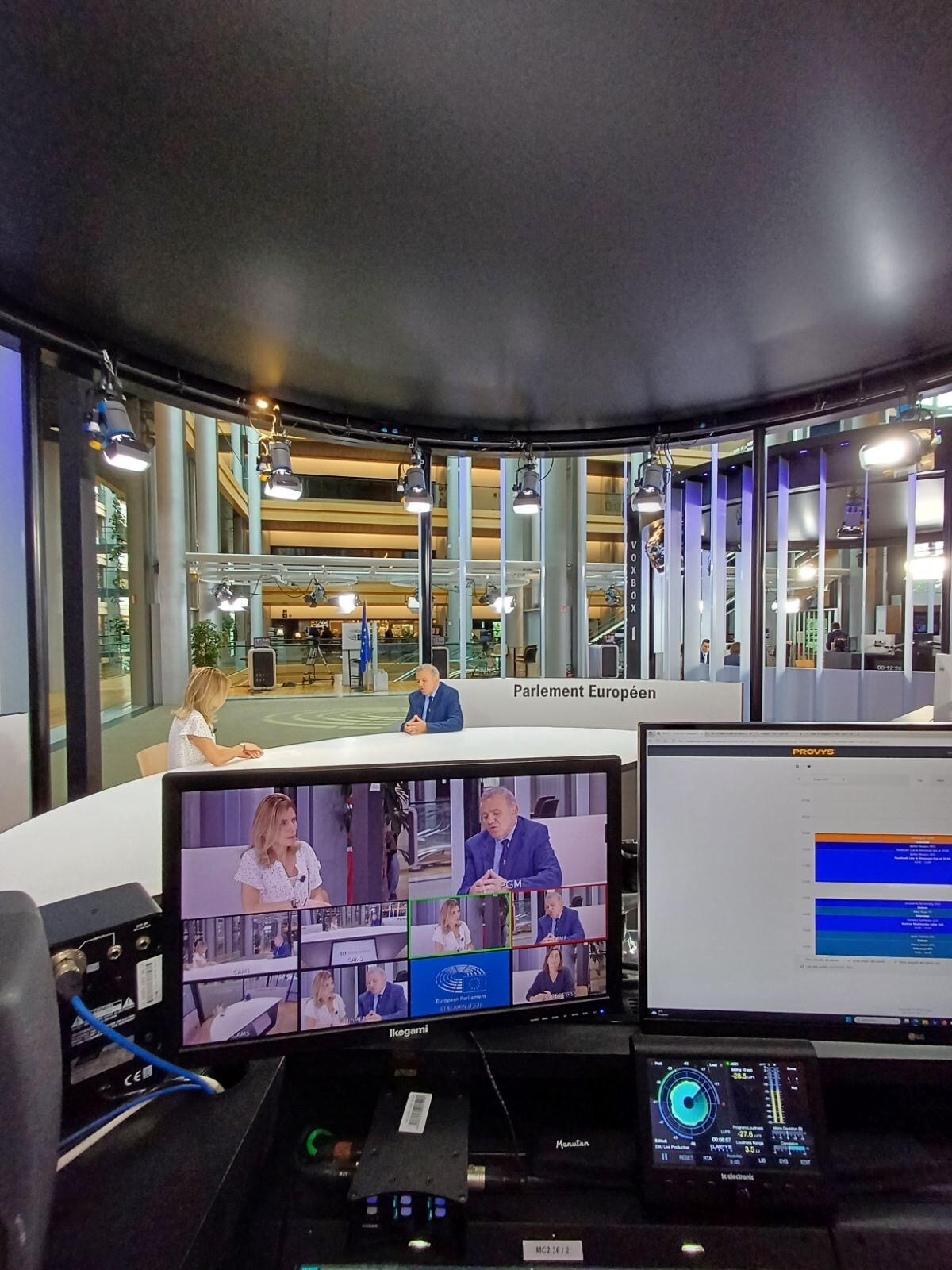
That’s a very good question. What I’m about to say may not be easy to achieve, but it’s the way forward if we want a strong EU.
Of course, we want to defend our interests. But we must also remember our values and our democracy must be placed next to our interests.
Here’s one example I strongly support: when it comes to defense and security, there is a €150 billion fund — EU money that will be loaned to Member States to support their national armies. I don’t believe that’s the right direction.
We may have national armies, but at the same time, we need to build up EU-level institutions for defense and security.
Here’s a real-world example: we have Frontex, the EU’s border and coast guard agency. Why not strengthen it — give it the people, the resources, the equipment — and assign it the clear mission of protecting the EU’s external borders?
That’s how we build up European institutions, instead of relying only on national forces.
If we follow this model, then we also answer the question: Who will protect Cyprus from neo-Ottoman Turkey? Who will protect Poland in case of Russian aggression? The answer should be: an EU institution.
Of course, that doesn't exclude national armies. But politically, it's crucial to have EU institutions playing a role.
A few years ago, during the pandemic, we held the Conference on the Future of Europe. One of the most powerful messages from that event was this: we must empower the European Parliament. We are the only body directly elected by EU citizens. And we need more powers. Right now, we vote and we often take the correct political positions but they remain symbolic.
- A strong example of what you’re describing is the European Parliament’s resolutions on Armenia and Nagorno-Karabakh, and its condemnations of Azerbaijan. Concerning the South Caucasus, what specific tools diplomatic, economic, or otherwise does the EU already possess, or still need to develop, to become a more credible actor and peace broker in the region?
The example of Armenia and Nagorno-Karabakh, and the Azerbaijani regime’s actions, are very similar to what neo-Ottoman Turkey is doing and to other expansionist regimes. These actors disregard international law entirely.
But I don’t want to speak theoretically. I want to be very concrete.
After 10 years in the European Parliament, here’s what I propose: If we believe that crimes against humanity have been committed - ethnic cleansing, cultural genocide, and so on - by the Azerbaijani regime, then we should connect our trade relations with the jurisdiction of the International Criminal Court.
And if someone, say President von der Leyen, believes no crime has been committed, then I say: let’s take the case to the ICC and let them decide.
If Azerbaijan is innocent, they have nothing to fear. Let justice decide.
We must move beyond just open or closed-door talks. There are specific national interests that influence some EU offices or Member States. And unfortunately, these are often prioritized over values, international law, and EU principles.
That’s why we end up with hypocrisy — why the same EU that publicly defends values, human rights, and democracy continues to sign energy deals with a regime that commits crimes against humanity.
So yes, I strongly believe in the European Union. But I am also very critical when special interests poison our foreign policy.