
 361.93


Minister highlights Amulsar mine’s economic benefits and environmental standards
3 minute read
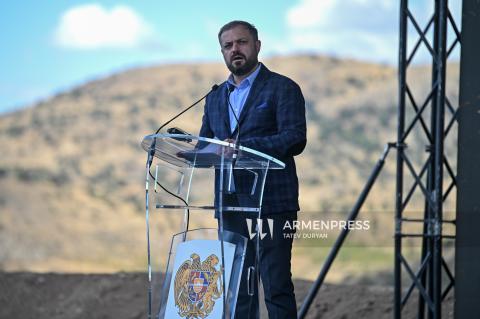
The Amulsar gold mine is expected to generate $130 million annually in taxes, duties and royalties for Armenia’s state budget and could boost the country’s GDP by around 1.5% per year, while also setting new standards for the mining industry, Economy Minister Gevorg Papoyan said Saturday.
Speaking at the launch ceremony for operations at the Amulsar mine, Papoyan said more than $750 million had been invested in the project, with production of more than 210,000 ounces of gold planned during the operational phase.
“According to our calculations, taxes, duties and royalties alone will amount to $130 million in payments to the state budget. In addition, of course, the government owns 12.5% of this project, meaning that we have a stake. This is also important,” Papoyan said.
He described the project as an important example of public-private cooperation, emphasizing the opportunity to organize production in Armenia in line with international standards while also meeting environmental requirements.
According to Papoyan, the significance of the Amulsar gold mine project extends beyond investment and tax revenues.
“This is not simply a story about major investments, many jobs and substantial tax revenues. It is also a story about standards, a story about mining standards,” the minister stressed.
He said the environment created through the project had brought new brands, standards and a business culture to Armenia, creating development opportunities for other sectors of the economy as well.
Referring to support for communities, Papoyan recalled the memorandum signed at the Ministry of Economy, under which the mine's operator, Lydian Armenia, will provide support to communities, making their residents direct beneficiaries of the project as well.
“I think and am confident that, as a result, not only will thousands of direct and indirect jobs be created, but an economic engine will also emerge that will open up a new path for the entire region, particularly for Vayk, Jermuk and Sisian,” Papoyan said.
The minister thanked everyone who had participated in implementing the project, emphasizing that the process had not been easy.