
 360.3


Armenia and Russia have considerable potential for biodiversity cooperation, says envoy at COP17
11 minute read

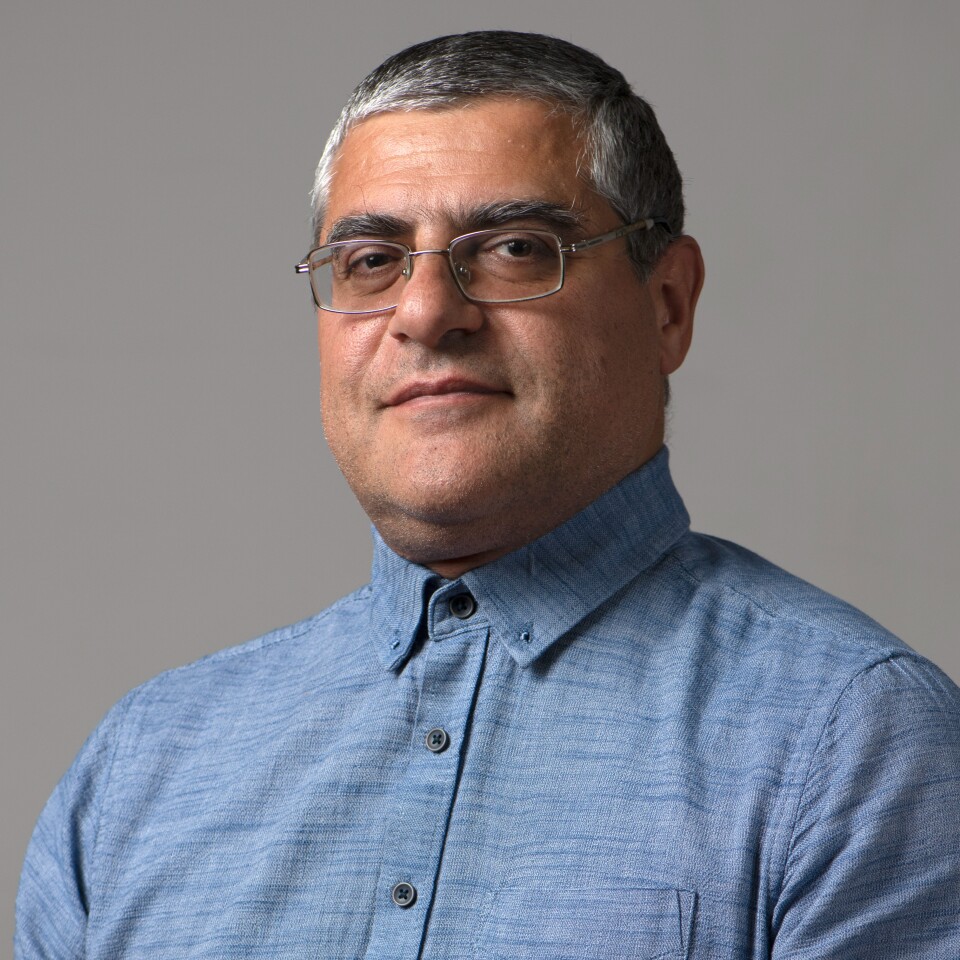
Sergey Kononuchenko, Russian Foreign Ministry Ambassador-at-Large and the Russian Foreign Minister’s Special Representative for Climate, believes that Armenia and Russia have considerable potential for cooperation in the field of biodiversity.
Below is the full text of Sergey Kononuchenko’s exclusive interview with Armenpress on the sidelines of COP17 in Yerevan.
Armenpress: Mr. Kononuchenko, what are your impressions of the ongoing COP17 in Yerevan?
Kononuchenko: To be honest, as someone who is not only a representative of the diplomatic service but also a participant in various environmental conventions, I must say that this event has been organized to an excellent standard. The Armenian side has approached the organizational work with great enthusiasm and dedication. We have encountered no difficulties with accommodation or transportation. Everything has been carefully thought out, and all the necessary venues are conveniently located close to one another.
At events like these, which often last much longer than scheduled, a very human question inevitably arises: where can one get something to eat? After all, no matter how well prepared we are, our energy is not inexhaustible. Fortunately, there is excellent Armenian food here, authentic national cuisine, so it is always possible to grab a bite in a very warm and hospitable atmosphere.
For the first time, within the framework of the Convention on Biological Diversity, specifically at the Conference of the Parties being held in Yerevan, we have had the opportunity to organize a Russian pavilion, where we welcome everyone. I know there is considerable interest in it. Thank you very much for your hospitality. I have already expressed similar words of appreciation to the COP17 President, Armenia’s esteemed Minister of Environment.
The organization of the individual negotiating tracks has been carefully thought out, particularly to ensure that they do not overlap. Not all delegations are large enough or have sufficient staff. Even our delegation, although relatively large, finds it difficult to cover all the specialized tracks at forums of this kind. Since all these tracks are extremely important, many delegations simply lack the human and other resources needed to attend every one of them. In this case, however, everything has been planned excellently, and I would like to express my sincere gratitude to the organizers.
Armenpress: The Russian Federation’s delegation participated in the meetings of leaders and environment ministers held as part of COP17. Who headed the Russian delegation, what issues did you raise, and what proposals did you put forward, particularly at the ministerial meeting?
Kononuchenko: At the initiative of the Armenian presidency, a Leaders’ Summit was organized, attended by the heads of state and government of a number of Convention Parties, as well as a meeting of environment ministers. This is an extremely important event, and it is not the first time such a gathering has been organized within the framework of the conferences of the parties to the Rio Conventions. This practice is also followed in the context of the United Nations Framework Convention on Climate Change and the Convention to Combat Desertification and Land Degradation.
This is a very important event because the biodiversity-related issues discussed at the summit, as well as within the framework of the Conference of the Parties to the Convention on Biological Diversity, are of great significance. Moreover, the participation of representatives of different countries at a higher level in such events helps raise awareness of these issues, particularly those related to biodiversity.
When biodiversity issues are discussed, the subject is not limited to flora and fauna. On the contrary, we address a much broader range of issues falling within the scope of the Convention, particularly genetic resources. As you know, the concept of genetic resources, their value and the question of access to them encompass such fields as agriculture, medicine, pharmaceuticals and even cosmetics production. In short, a whole range of economic issues is discussed under a convention that might, at first glance, appear to concern environmental matters alone.
The Russian delegation at COP17 was headed by Ruslan Edelgeriev, Aide to the President of the Russian Federation and Special Presidential Representative for Climate and Water Resources. This is a very high-level appointment. The position of presidential aide is equivalent to that of a deputy prime minister. It should be noted that this position is higher in rank than that of a government minister, underscoring the great importance the Russian Federation has attached to this event. Accordingly, the head of the Russian delegation, Ruslan Edelgeriev, took part in the event, particularly the Leaders’ Summit, where he presented Russia’s experience, including in environmental protection and biodiversity conservation.
We are ready to share the results we have achieved in this field. A new initiative has been proposed that we consider very interesting. It involves using unmanned aerial vehicles to track and monitor the migration of both common and rare wildlife species.
In addition, we have extensive experience using so-called camera traps, as we focus on many priority species listed in the Red Data Book, such as the snow leopard, the Persian (Asian) leopard and the Siberian crane, a distinctive crane species. In certain locations, volunteers and other stakeholders install camera traps. The collected data are then processed using specialized software to map the migration routes of rare animal species, such as the snow leopard, the white crane, the tiger and the Pallas’s cat.
This enables scientists to examine the life cycles and breeding patterns of these rare animals from an entirely new perspective, which, in turn, contributes to their conservation and population growth.
Armenpress: What specific cooperation exists between the Republic of Armenia and the Russian Federation in the field of biodiversity, and what prospects do you see for further cooperation in this area?
Kononuchenko: We are open to and ready for further cooperation. Although the Russian Federation currently faces certain difficulties in its interaction with the leadership of the United Nations Development Programme, this in no way affects our relations with Armenia, our key partner.
I believe there is considerable potential, given our shared approaches and the fact that our specialists still speak the same language and have been trained using the same methodologies. This applies not only to biodiversity experts but also to specialists in other fields, including climatology. We speak the same language, understand each other very well and share a common knowledge base. Moreover, we have the potential, including accumulated technological capabilities, to respond to natural disasters. I am confident that the path to further cooperation remains open, and we are always ready to work together.
Armenpress: The UN Climate Change Conference COP31 will soon take place in Türkiye. How is the Russian Federation’s delegation preparing for this event?
Kononuchenko: This is a global mechanism, a universal platform and the principal forum for addressing climate change. Although bilateral and trilateral contacts certainly take place on its sidelines, the main focus is on negotiations over documents that concern all countries.
In recent years, these Conferences of the Parties have naturally focused on what is known as ensuring a smooth energy transition. We are well aware that the terms “green economy” and “decarbonization” are now widely used. In this context, the key question is how we will carry out this energy transition and decarbonization. Some countries advocate an accelerated approach, which in this case entails a rapid process of abandoning hydrocarbons.
The Russian Federation and a number of other countries believe that a hasty and insufficiently considered abandonment of hydrocarbons could lead to more serious negative consequences in the foreseeable future than global climate change itself.
We are ready to discuss how to transition to low-emission development, but we insist that the primary objective must be to ensure the socioeconomic development of all countries, regardless of whether they possess what are known as traditional energy resources, namely hydrocarbons.
All types of energy resources must be used, including coal, oil and natural gas, as well as renewable energy sources, such as solar panels and wind turbines, and nuclear energy.