
 361.14


CITES: Armenia strengthens oversight of trade in wild animals and plants
4 minute read

Illegal trade in wild animals and plants is a serious threat to biodiversity. Tackling it requires effective oversight, international cooperation, clear legislation and modern tools.
During the 17th UN Biodiversity Conference, COP17, Hovhannes Martirosyan, Head of Armenia’s Environmental Protection and Mining Inspection Body, and Tatevik Kirakosyan, Acting Head of the Environment Ministry’s Bioresources Management Department, discussed steps to implement the convention’s requirements in Armenia with CITES Secretary-General Ivonne Higuero.
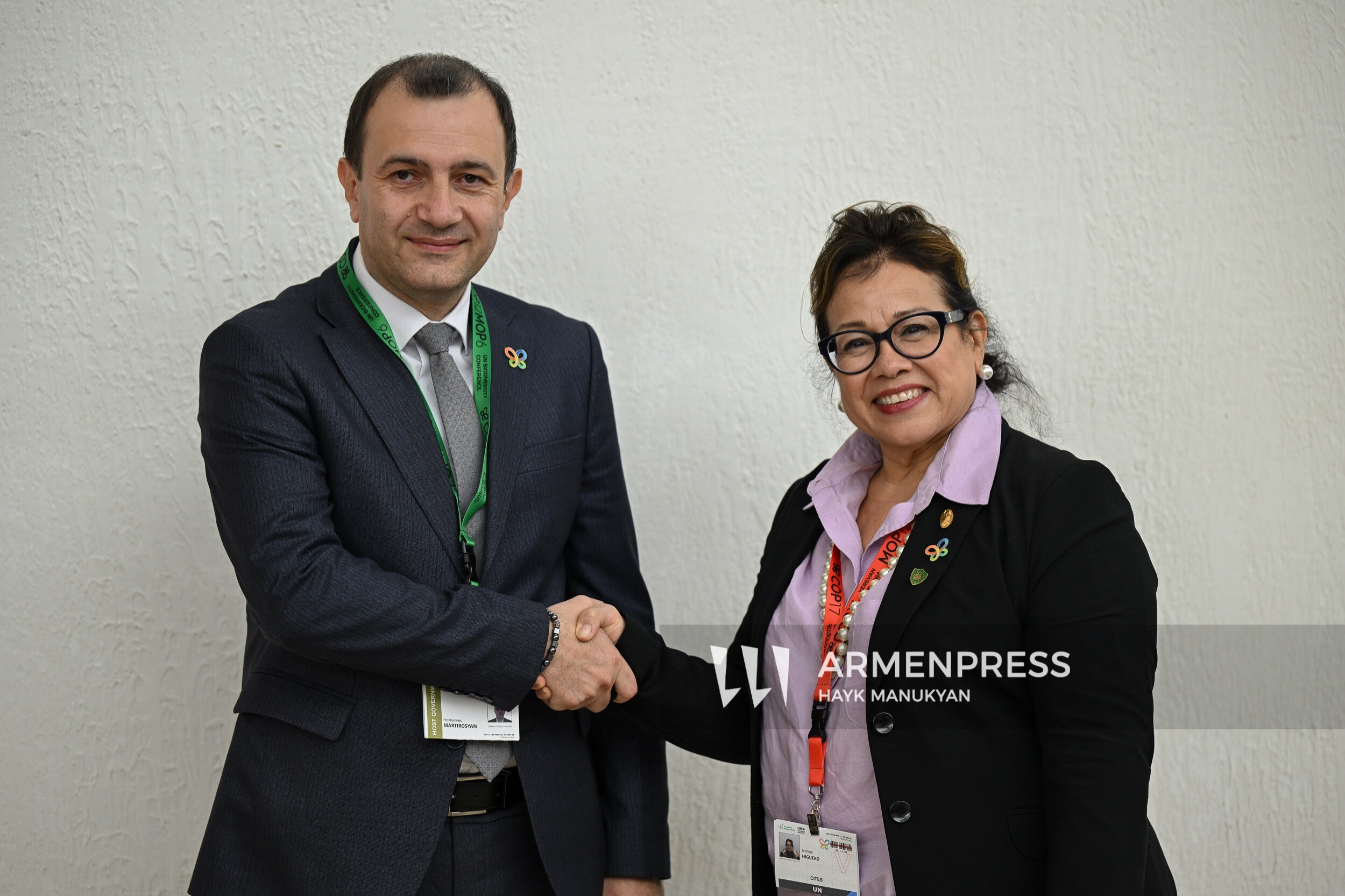
“Our main objective is to ensure that wild plants and animals remain in their natural habitats, do not disappear and are preserved for both us and future generations. International trade and overexploitation are among the main challenges facing wildlife. Armenia has considerable potential for cooperation and exchanges of experience with CITES. One of our most important tasks is to ensure that legal trade is sustainable and does not threaten wild animals and plants. We are pleased to see that Armenia has already digitalised its permit issuance process. We see that significant work has been done in this area and hope Armenia will take further steps to prevent illegal international trade,” Ivonne Higuero told Armenpress.
Armenia joined the convention in 2008. Legislative and regulatory work undertaken since 2023 has improved the country’s standing in the convention’s compliance assessment system, moving it into Category 3. Work is now under way to reach Category 1.
“We discussed Armenia’s legislative and regulatory work, including the inspection body’s activities. Effective implementation of the convention also depends heavily on the work of the body responsible for oversight. Intensive efforts are currently under way to reach Category 1. Several legislative drafts have been prepared concerning the prohibition of trade conducted in violation of the convention’s provisions and the application of corresponding penalties,” said Tatevik Kirakosyan, Acting Head of the Environment Ministry’s Bioresources Management Department.
Regulations arising from the Law on Fauna adopted in 2023 also cover permit procedures for keeping animals in captive and semi-captive conditions, including species listed in the Red Book. Preventing illegal circulation is among their objectives.
“During the meeting, we discussed important issues relating to the import, export and circulation of wild animals in Armenia. The Secretary-General praised Armenia’s work over the past two years and expressed support for developing public administration in this area. The minister had proposed hosting the next COP22 in Armenia in 2031. I made the same proposal, and there is considerable initial willingness and interest,” Hovhannes Martirosyan said.
Martirosyan said several large predators had been relocated to specialised facilities this year. The meeting also explored options for ensuring their continued care and suitable conditions.