
 360.93


Silk Road legacy shapes growing partnership between Armenia’s Garni and China’s Dunhuang
11 minute read

Separated by thousands of kilometers yet united by a shared historical legacy, the Armenian city of Garni and China's Dunhuang have each served as important crossroads of civilization for centuries.
Now, as ties between Armenia and China continue to grow and the Belt and Road Initiative and other future-oriented projects gain momentum, the two cities aim to strengthen and formalize their relationship. In 2025, Garni Mayor Tigran Poghosyan attended a forum in Dunhuang, where both sides signed a letter of intent to establish sister-city relations.
Both communities flourished through the exchange of goods, ideas, religions, and cultures along the Silk Road, leaving behind remarkable cultural and architectural treasures.
Dunhuang is located in Gansu Province, which is known for its rich Silk Road heritage, the UNESCO-listed Mogao Caves, and the colorful Zhangye Danxia Rainbow Mountains.
Stretching across a narrow corridor between the Tibetan Plateau and the Gobi Desert, the province has long served as a vital strategic link connecting central China with Central Asia.
Garni is perhaps best known for its eponymous classical colonnaded temple. Built in the Ionic order, the Garni Temple is the best-preserved monument of pre-Christian Armenia and the only standing Greco-Roman-style pagan temple in the country.
Asked about updates on the finalization of the sister-city relationship, the Foreign Affairs Office of the People's Government of Gansu told Armenpress that the two cities have established regular mechanisms for official liaison, the exchange of festival greetings, and coordination of events, continuously strengthening their ties through ongoing exchanges.
Officials from Gansu Province also signaled their readiness to advance the formal establishment of the sister-city relationship.
“To date, our city has included Garni Community of Armenia’s Kotayk Province in the list of key cities for cultivating friendly exchanges. Leveraging a series of major international cultural events scheduled for the second half of the year, we have officially extended invitations to Garni Community to participate, further consolidating a regularized and long-term pattern of friendly exchanges between the two cities,” the Foreign Affairs Office of the province told Armenpress during a visit to Lanzhou, the provincial capital.
The local government further highlighted the “high degree of alignment for cooperation” between the two cities.
“As renowned historical and cultural cities along the Silk Road, Dunhuang and Garni share similar resource endowments and complementary industrial strengths, presenting a high degree of alignment for cooperation. Building upon a solid foundation of preliminary exchanges, both sides have identified six pragmatic cooperation projects that are actionable, feasible, and measurable.”
The areas of cooperation include the High-Level Visits and Official Strategic Cooperation Project, the Cultural Heritage Protection and Digitalization Exchange Project, the Two-Way Linkage and Promotion Project for the Cultural and Tourism Industry, the Youth and Arts & Humanities Exchange Project, the Collaborative Innovation and Development Project for Intangible Cultural Heritage (ICH) and Cultural Creative Products, and the Exchange Project on Urban Governance and Ecological Sustainable Development.
According to the Gansu Province Foreign Affairs Office, by leveraging major diplomatic events and cultural tourism festivals, both sides will conduct two-way visits and online consultations with officials as well as relevant departments to continuously deepen official strategic mutual trust.
“Taking the implementation of the Letter of Intent for sister-city relations as a key driver, the two cities will comprehensively promote project matchmaking, resource sharing, and experience exchange across various fields. This will stimulate multi-level interactive exchanges, continuously consolidate the foundation of sister-city cooperation, and advance the process of formally establishing sister-city relations in an orderly manner,” the Chinese side said.
The partnership will also feature the exchange of historic heritage protection experience.
“Leveraging Dunhuang’s mature technologies in cultural relic restoration, wind and sand control, and digital collection and storage, and combining them with Garni Community’s rich resources in ancient Roman stone ruins and mosaic relics, both sides will conduct regular online exchanges of museum experts and share protection case studies. Technical support will be provided for the digital archiving of Garni’s ancient sites.”
Furthermore, two-way on-site study tours and technical cross-training will be organized at appropriate times, along with joint research on site conservation projects, the Gansu Province Foreign Affairs Office said.
“Leveraging our city’s comprehensive cultural and tourism industry chain and market-oriented operational experience, combined with Garni Community’s characteristic resources in mountainous ecology, ancient architecture and folk customs, and archaeological study tours, both sides will exchange promotional materials and set up promotional windows for each other.”
In an effort to boost tourism, the two cities will jointly create premium transnational Silk Road study tour routes, dispatch cultural and tourism professionals for exchange and learning, and mutually invite each other to participate in key cultural and tourism exhibitions and dedicated promotional events in both cities, according to authorities in the Chinese province.
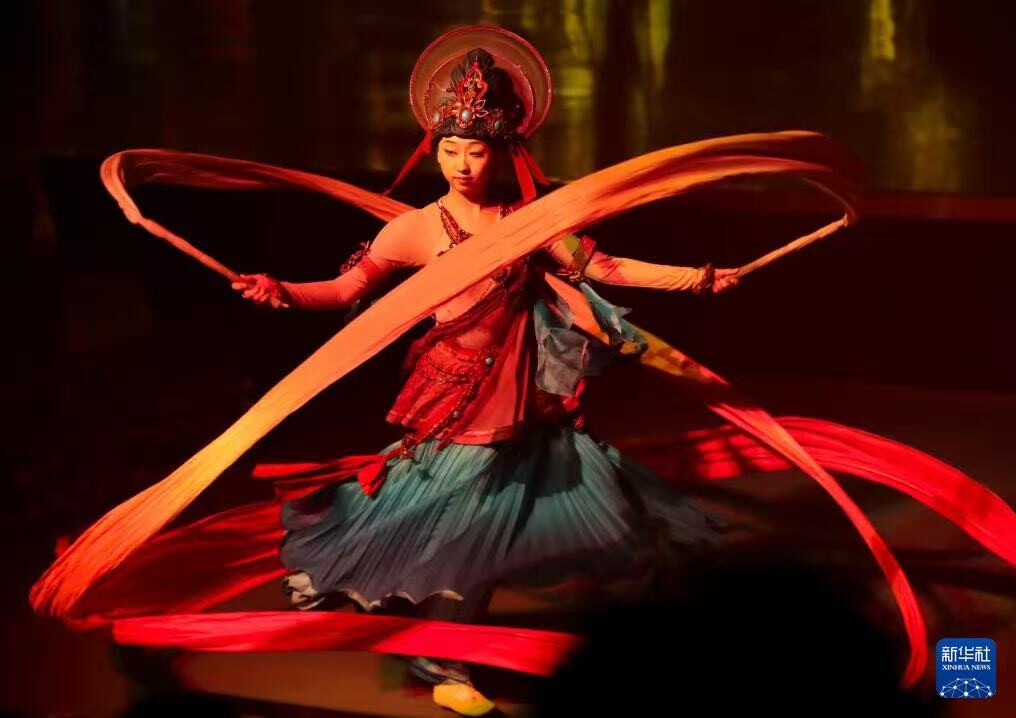
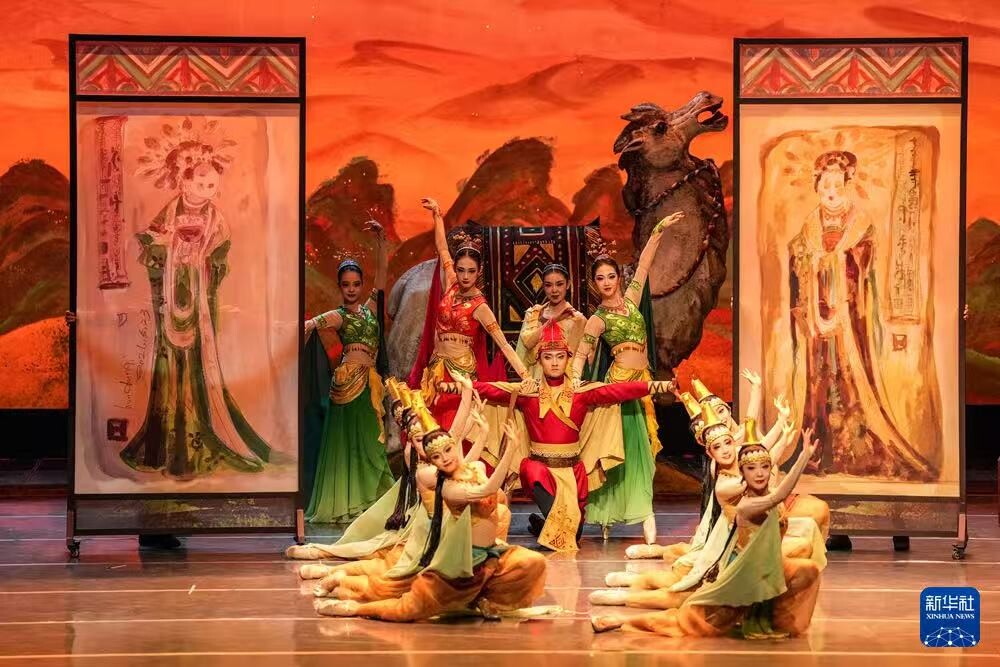
“Grounded in the development philosophy of civilizational integration and peaceful dialogue between the two cities, the two sides will promote the pairing and friendship of primary and secondary schools in both places. Regular transnational letter-writing interactions and online study exchanges will be organized. The two sides will jointly host online joint exhibitions of youth calligraphy, painting, and folk art, and dispatch art troupes to participate in major cultural and artistic events in both cities, continuously consolidating the foundation of grassroots friendship.”
The two cities will jointly develop co-branded cultural and creative products, learn from each other’s operational models in the Intangible Cultural Heritage (ICH) industry, and promote each other’s characteristic cultural products through exhibition platforms in both cities, thereby realizing the industrialization of cultural resources.
“Leveraging our city’s mature R&D system for Dunhuang IP cultural products, market-oriented operations, and overseas promotion, combined with Garni Community’s characteristic traditional skills in basalt stone carving, mosaic handicrafts, and traditional weaving, both sides will exchange ICH creation materials and pattern elements.”
Drawing on Dunhuang's experience in desert ecological restoration, the refined management of heritage sites, and the green development of Gobi cities, alongside Garni Community's strengths in mountainous ecosystem protection and the integration of rural cultural tourism with agriculture and livestock farming, the two sides will regularly exchange practical experience in ecological governance, urban landscape management, and sustainable cultural tourism development. They will also conduct two-way exchanges on urban governance to support both historic and cultural cities in advancing refined, green, and high-quality development.
“Moving forward, our city will focus on the above six actionable projects. Leveraging key cultural, tourism, and diplomatic platforms, we will steadily advance two-way visits, project matchmaking, and the implementation of pragmatic projects. We will also advance the approval and formal establishment of sister-city relations in an orderly manner, striving to create a model of local friendly exchanges and mutual learning among civilizations between Gansu Province and Armenia,” the Gansu Province Foreign Affairs Office told Armenpress.
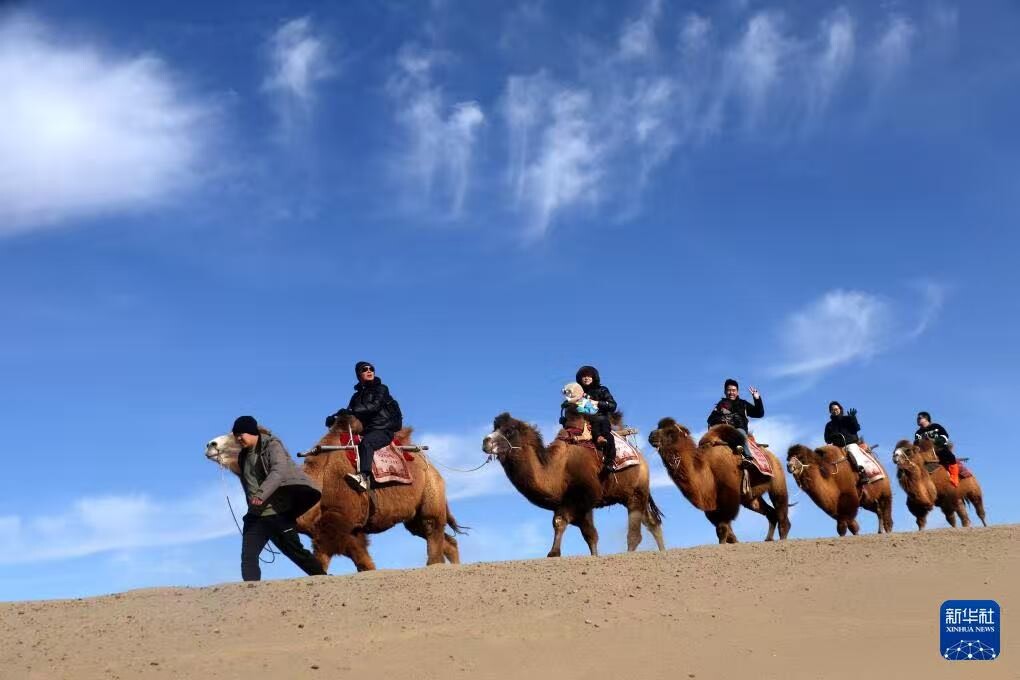
At the heart of Gansu's historical importance is the Hexi Corridor, often referred to as the "golden passage" of the ancient Silk Road. This approximately 1,000-kilometer mountain-and-desert route linked central China with the western regions, serving as a crucial trade and cultural corridor.
Dunhuang was a major stop along the ancient Silk Road, occupying a strategic position at the crossroads where the northern and southern routes around the Taklimakan Desert converged. It also served as the western gateway of the narrow Hexi Corridor, through which one could travel directly to the ancient Chinese capitals of Chang'an (today's Xi'an) and Luoyang.
The UNESCO-listed Mogao Caves, also known as the Thousand Buddha Grottoes, are located in Dunhuang.